A 10mm listing tells you less than it looks like it does. The cartridge is the same in every one of them, but the guns split into four families that share almost nothing beyond the chambering, and the ammunition splits into two performance tiers that share nothing beyond the name on the box.
Both splits come from the same piece of history. The 10mm Auto was built to a specification, adopted by the agency that wrote it, found to be more than that agency wanted, and then cut down into a different cartridge that replaced it. Everything odd about buying one today traces back to that.
The cartridge nobody could quite build a gun for
Norma of Sweden designed the 10mm Auto in 1983 for the Bren Ten. Jeff Cooper contributed to the original concept, and Norma then loaded it harder than his specification called for, which set the pattern for everything after.
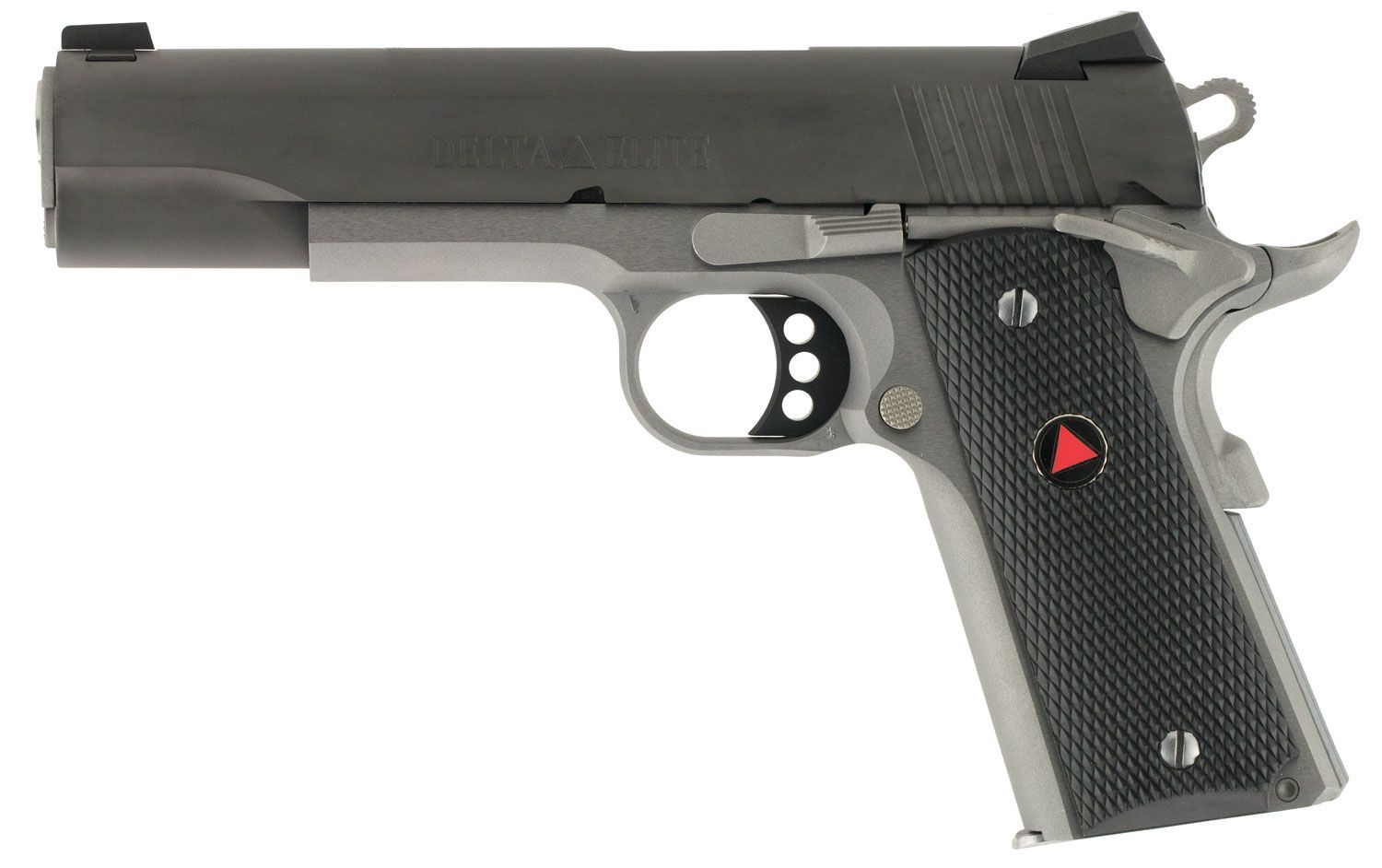
The Bren Ten did not survive its own manufacturing. Quality control and production problems dogged it, its maker was bankrupt by 1986, and the cartridge was left with essentially no gun to fire it. Colt's Delta Elite arrived in 1987 and is the reason the 10mm did not simply disappear at that point.
Invalid Date
More Articles
Hold onto that when you notice how many 10mm listings are 1911 pattern guns. It is not nostalgia. The 1911 is where the cartridge went when its purpose-built pistol failed, and the catalogue still reflects it.
The FBI round trip
The 1986 FBI Miami shootout sent the agency looking for more terminal performance than it was getting. It selected the 10mm in 1989 and adopted the Smith & Wesson Model 1076 in 1990.
Then the FBI Firearms Training Unit developed a version of the cartridge with a smaller powder charge, to bring recoil down to something a full range of agents could shoot well. Smith & Wesson and Winchester looked at that reduced load, worked out that a shorter case could reach the same numbers, and produced the .40 S&W. Most of American handgun design for the next two decades followed from that decision.
Year
What happened
1983
Norma designs the 10mm Auto for the Bren Ten
1986
Bren Ten's maker goes bankrupt; the Miami shootout
1987
Colt Delta Elite keeps the cartridge in production
1989
FBI selects the 10mm
1990
FBI adopts the S&W Model 1076; Glock 20 and S&W Model 610 arrive
1997
FBI begins issuing .40 S&W
2015
FBI returns to 9mm
Read the last three rows together. The agency that commissioned the 10mm spent seven years with it, replaced it with a cartridge derived from its own downloaded version, then abandoned that too. The 10mm outlived both decisions by finding a use nobody at the FBI was interested in.
The load matters more than the gun
SAAMI sets maximum pressure for the 10mm Auto at 37,500 psi, and a representative full-power load pushes a 180 grain bullet at 1,300 ft/s for 708 ft⋅lbf of energy. That is the figure the cartridge's reputation is built on.
Nothing requires a box marked 10mm Auto to be loaded anywhere near it. The FBI's reduced load was, by definition, 10mm ammunition producing .40 S&W performance, and commercial loads still run the full width of that gap. Ammunition sitting on one shelf, all of it correctly labelled, can be separated by a margin that would count as a different cartridge anywhere else.
The listing will never tell you this. A 10mm bought for woods carry or handgun hunting is being bought for the top of that range, and a pistol set up to cycle light practice ammunition is not necessarily set up for the heavy stuff, or the reverse. This is the one place in the catalogue where the ammunition decision is larger than the gun decision.
The .40 S&W problem, and the one place it is not a problem
Because the .40 S&W came out of the 10mm, the two share a bullet diameter, and the obvious question follows. For a semi-automatic the answer is no.
Both cartridges headspace on the case mouth, and the .40 S&W is about 0.142 inches shorter. Chambered in a 10mm semi-auto, its case mouth never reaches the front of the chamber, so the round headspaces on the extractor instead, with a jump of that same 0.142 inches before the bullet reaches the rifling. If the extractor does not hold it firmly against the breech face, the primer can back out or rupture. It sometimes functions, and it is still not a thing to do.
10mm Auto
.40 S&W
Origin
Norma, 1983, for the Bren Ten
Smith & Wesson and Winchester, from the FBI's reduced 10mm load
Case length
the longer of the two
about 0.142 in shorter
Headspaces on
case mouth
case mouth
In a 10mm semi-auto
correct
headspaces on the extractor, do not
In a 10mm revolver on moon clips
correct
works, the clip holds the round
The revolver is the exception, which is why the section on revolvers below is not a curiosity.
Glock's three sizes
The model numbers are not sequential in any way that helps.
Model
Introduced
Role
Glock 20
1990
full size, the baseline 10mm
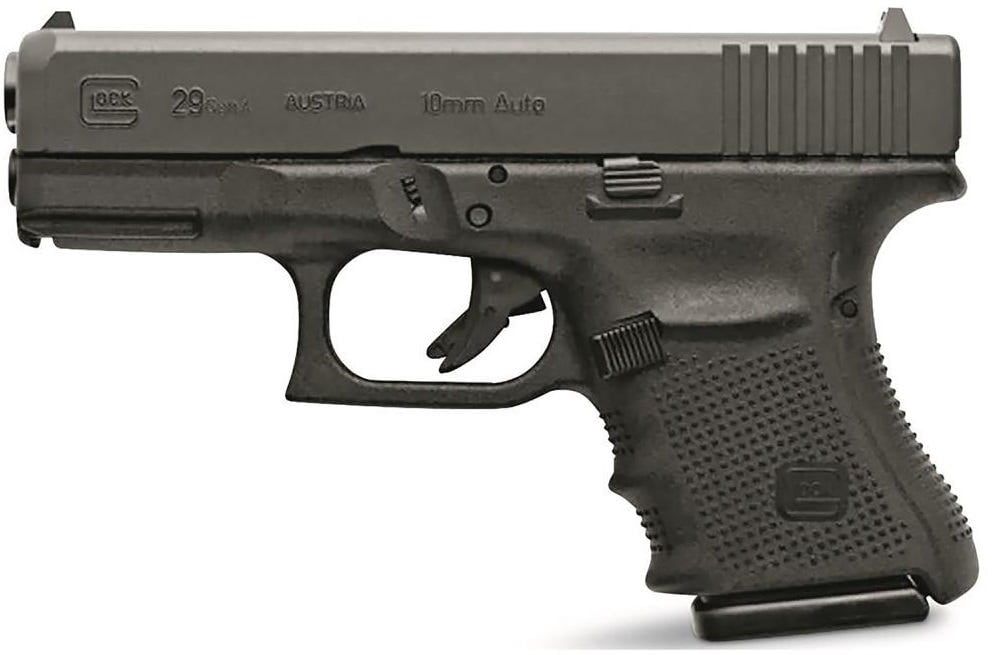
Glock 29
1996
subcompact, the concealment option
Glock 40
2015
long slide, 6.02 in barrel, aimed at hunting
The G40's numbers are worth knowing, because it is a genuinely different proposition from the other two: 9.49 inches overall, 28.15 oz unloaded, 15 rounds, and a sight radius of 8.19 inches, which is what the optic cut and the hunting pitch are built around.
Watch for two suffixes, because both are dated features rather than generations. SF means short frame, a reduced trigger reach Glock introduced in 2007. C means compensator ports cut through barrel and slide, which started with the 17C in 1996. Glock's first generation ran from 1982 to 1988 and covered the 17 and a small number of close relatives, so a listing offering a Gen 1 G20, G20C or G29SF is describing a gun that cannot exist. This catalogue was carrying four of them until they were corrected.
Where the 1911s went
The single largest block of 10mm listings is 1911 pattern, spread across more makers than any other family here.
Maker
What they build in 10mm
Colt
Delta Elite, the 1987 original, still in production
Kimber
full-size and hunting-oriented 1911s
Rock Island Armory
the volume end of the 1911 market
Springfield Armory
1911 patterns and modern polymer both
Nighthawk
custom-shop 1911s including the Bob Marvel
Girsan, Tisas
imported 1911 patterns in Commander and full size
Les Baer, Fusion
small-shop hunting and match builds
Sig Sauer sits outside that list with its own modern designs, and Smith & Wesson's M&P 2.0 in 10mm is the mainstream polymer alternative to the Glock 20. Tanfoglio's steel-framed guns are the other pattern worth recognising, and they reach the catalogue under enough importer brandings to look like more makers than they are.
Carbines, which is where the cartridge makes most sense
Give the 10mm a sixteen inch barrel and the velocity argument that never quite worked in a pistol starts working. The catalogue's carbine surface is unusually varied for a cartridge this niche.
Carbine
Notes
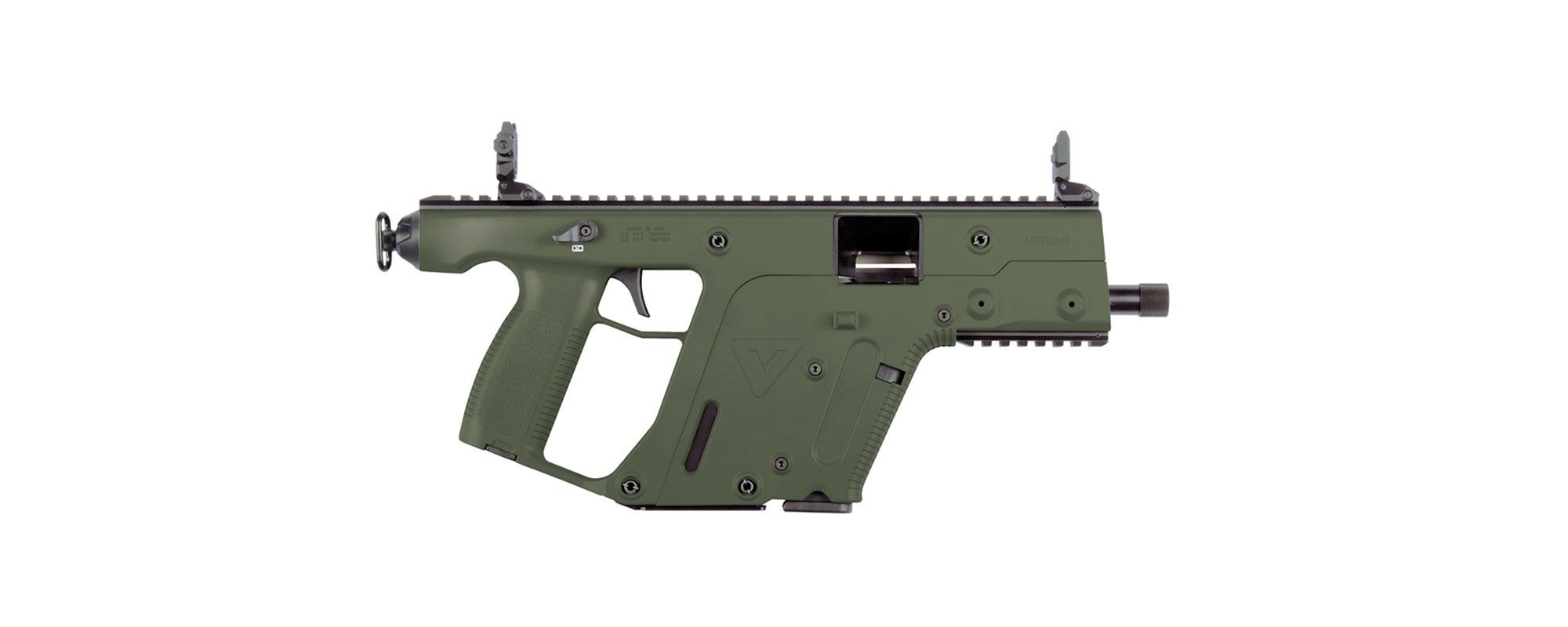
KRISS Vector
the recoil-mitigating action, in carbine and pistol form
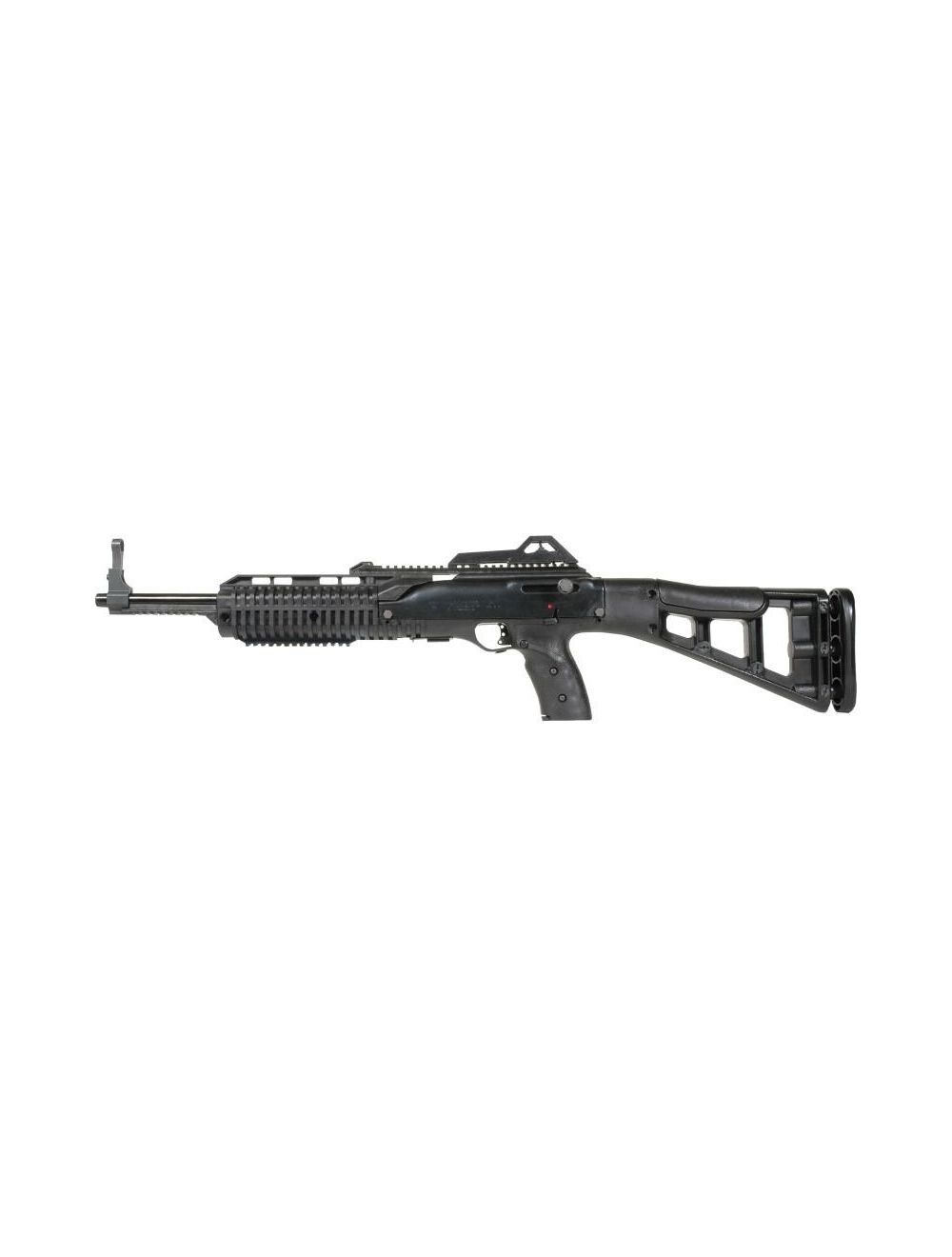
Hi-Point 1095TS
the cheap end, and the reason a 10mm long gun is accessible at all
Ruger LC Carbine
grip-fed, Glock magazines in its 10mm chambering
TNW Aero Survival
takedown design from 2012, chambered in 10mm from 2016
Just Right Carbines
side-charging, Glock magazine fed
CMMG Banshee MK10
AR pattern, radial delayed blowback
Check magazine compatibility first, exactly as across the whole pistol-calibre carbine category. Glock pattern dominates without being universal, and the Vector and the Aero Survival each arrived at the cartridge by their own route.
Revolvers, and the clip you cannot skip
The 10mm is rimless, which is a problem for a revolver: there is no rim for the extractor star to push against. Every 10mm revolver solves it with full moon clips that hold the rounds in a disc and come out carrying the empties. Buy them in quantity or the gun is a single-loader.
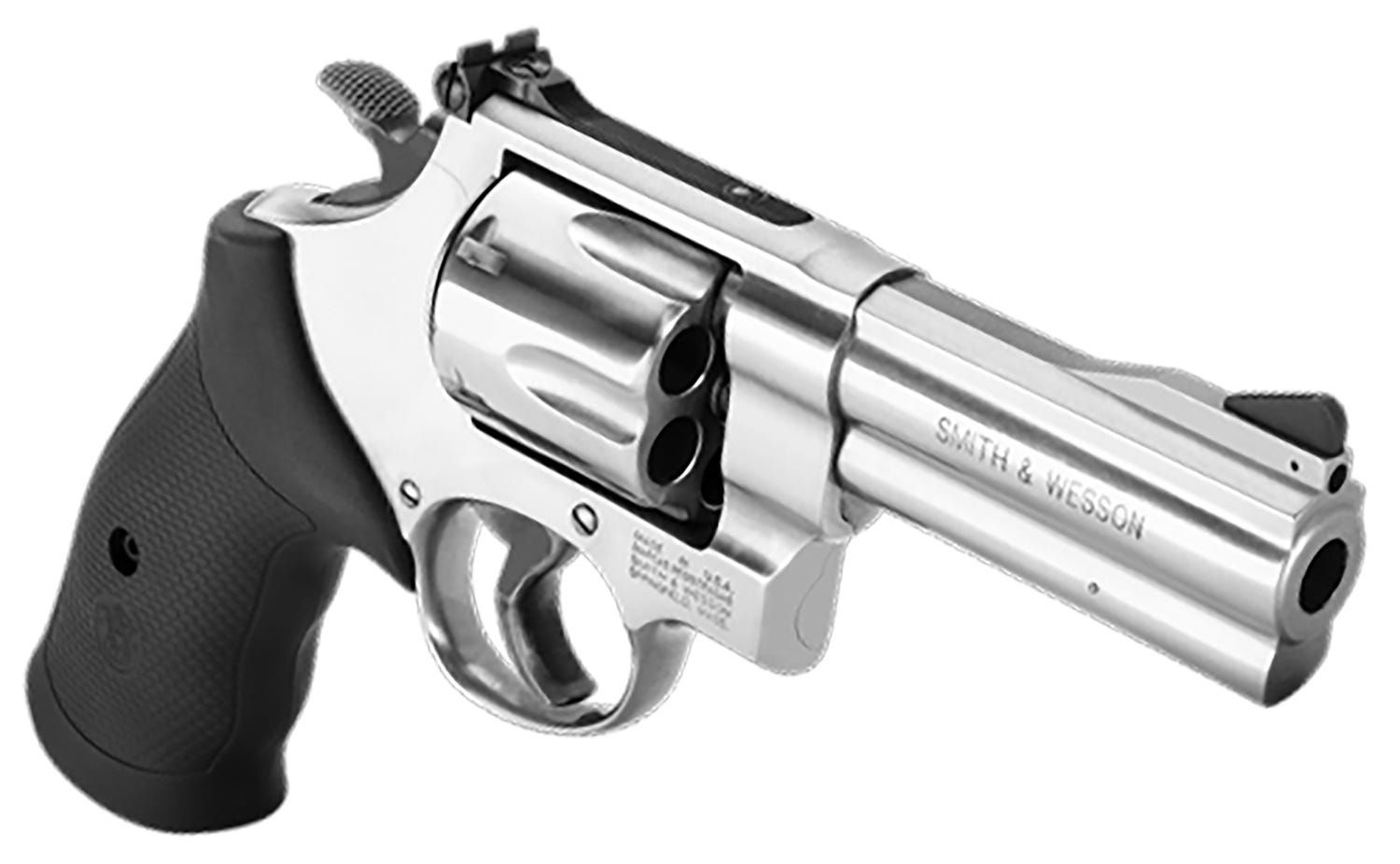
Smith & Wesson's Model 610 is the original, six rounds, first out in 1990, discontinued in 1992 when 10mm interest collapsed, then reintroduced in 1998 and again in 2019. Ruger came much later, putting the Super Redhawk in 10mm in 2018 with a 6.5 inch barrel and full moon clips, and has since taken the chambering down into the GP100 frame. Cimarron will sell you a single action in it, which is the least likely thing on this list.
The 610 closes the loop opened at the top of this article. The .40 S&W is a shorter cartridge of the same diameter, and the clip rather than the chamber mouth is holding the round, so the Model 610 will chamber and fire it. The revolver built for the round the FBI gave up on will also shoot the round they invented to replace it.
Reading a 10mm listing
Step
What to read
Why
1
Family
1911, modern polymer, carbine or revolver decides everything downstream
2
Barrel length
Glock's model numbers mislead about size; the barrel does not
3
Magazine or clip
Glock pattern on most carbines, moon clips on every revolver
4
Generation markings
SF and C are dated features, not generations
5
Ammunition
the tier you intend to shoot, decided before the gun
The size words are the trap in the middle of that. Full size, compact and subcompact get used loosely across this category, and the G20 in particular gets called compact by listings that have not looked at it. Check the barrel length against the model name rather than trusting the adjective.
Then decide the ammunition, because that is what determines whether you have bought the cartridge the reputation belongs to, or the one the FBI asked Smith & Wesson to build instead.
Nick Sawinyh - Nick Sawinyh is a father, husband, hobby farmer, and gun enthusiast from Kentucky. He founded GunsNation and writes most of what appears on this blog.