Every design decision in the .300 Blackout points at one goal, and the goal was not ballistic. Robert Silvers, running research and development at Advanced Armament Corporation, worked with Remington Defense to build a .30 calibre cartridge that would run in an AR-15 while changing as little of the rifle as possible. He got it down to one part.
Not the bolt. Not the magazine. Not the buffer or the gas system. Only the barrel.
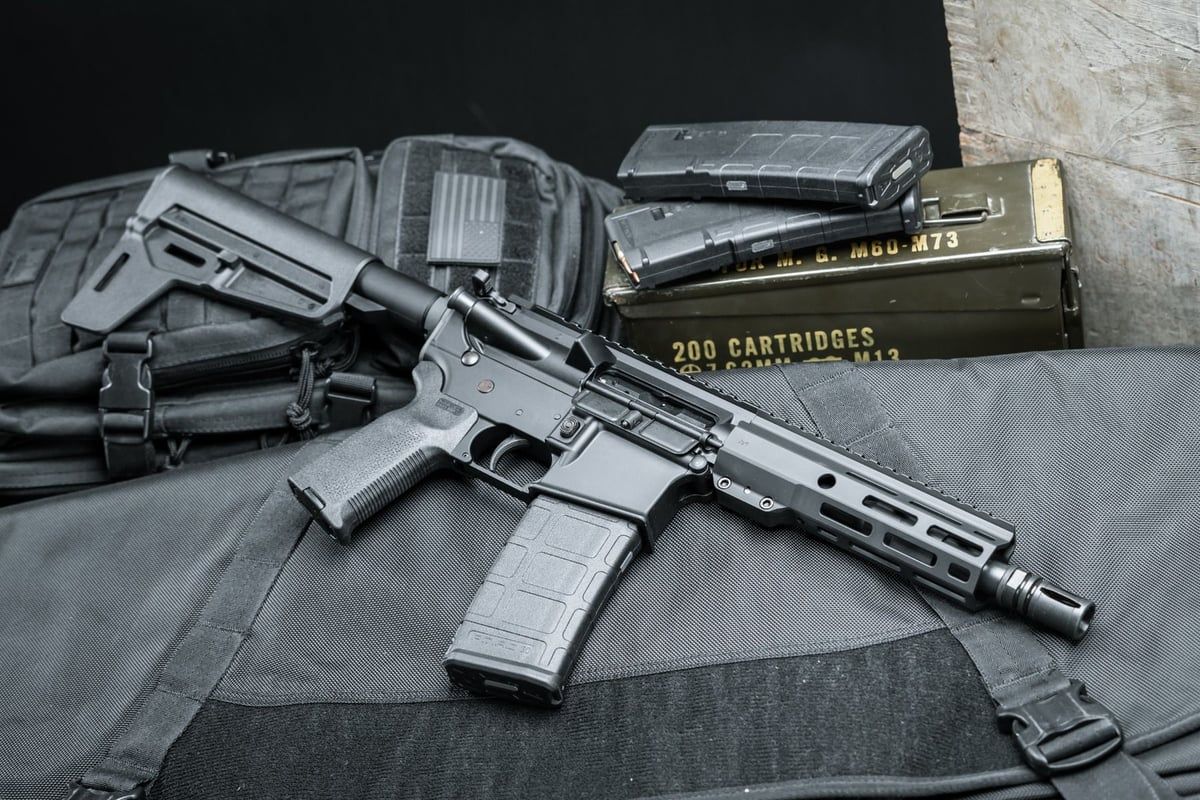
Those are standard AR magazines in that photograph, at standard capacity, next to a rifle that fires a .30 calibre bullet. That is the whole product, and everything else about buying one follows from it, including the part that can destroy the gun.
What it is, in one table
Detail
Designed by
Robert Silvers at AAC, with Remington Defense
Designed
2009
SAAMI approval
17 January 2011
Invalid Date
More Articles
C.I.P. approval
19 May 2015
Parent case
.221 Fireball, itself from the .223 Remington
Parts shared with 5.56
magazines and bolt, everything except the barrel
Supersonic loading
115 to 125 grain at roughly 2,200 to 2,300 ft/s
Subsonic loading
220 grain at roughly 1,010 ft/s
Those two loadings deserve a second look, because no other common rifle cartridge splits like that. A 220 grain bullet at 1,010 ft/s is a different projectile doing a different job from a 115 grain at 2,300, and both are correctly labelled .300 Blackout. Buying the rifle does not settle which one you are shooting, and the twist rate and barrel length interact with that choice.
The short-barrel argument, which the catalogue confirms
The reason the cartridge exists is that 5.56 gets worse quickly as the barrel shortens. Its performance depends on velocity, and velocity comes from barrel length. Chop an AR down to seven inches and 5.56 gives up a great deal of what makes it work.
The .300 Blackout was built around a shorter barrel from the start, and the catalogue shows the industry took that seriously.
Barrel length
Records
under 10 in
93
10 to under 13 in
64
13 to under 16 in
16
16 in and over
215
Of the 388 records with a barrel length recorded, 173 come in under 16 inches. Nearly half the .300 Blackout guns in this catalogue are short-barrelled, which is a completely different distribution from any conventional rifle cartridge, where a short barrel is a compromise rather than the point.
The individual lengths cluster tighter than the buckets suggest. At 16 inches the count is 148 records on its own, with another 34 at 16.1. Below that the popular numbers are 10.5, with 26 records, then 7.5 with 20, then 9 with 18 and 8 with 16. Almost nothing sits between 13 and 16, which is the same shape the shotgun market shows around its own thresholds: builders pick a number and the market standardises on it.
The hazard is the design goal, viewed from the other side
A .300 Blackout cartridge will physically chamber in a 5.56 barrel. The case body came from the .223 Remington, so the part that the chamber grips is the same. What differs is the bullet, which is .30 calibre and will not go down a .223 bore.
SAAMI's position on this is not hedged. Firing .300 Blackout in a .223 chamber is unsafe, because "the bullet has nowhere to go, which can cause the rifle to explode resulting in risk of injury or death".
Every property that makes the cartridge convenient contributes to this. The magazines are shared, so a loose round moves between them; the bolt is shared, so the round feeds; the case head is shared, so it chambers. The only part that would stop it is the barrel, and the barrel is the only part that was changed.
Combination
Result
.300 Blackout ammunition, .300 Blackout barrel
correct
5.56 ammunition, 5.56 barrel
correct
.300 Blackout ammunition, 5.56 barrel
chambers, and SAAMI calls it unsafe
5.56 ammunition, .300 Blackout barrel
will not chamber correctly
Owners who run both keep the ammunition physically separated, and mark magazines. That practice exists because of the design, not in spite of it.
What the catalogue actually holds
Action
Records
Semi-automatic
313
Bolt action
45
Not recorded
51
The semi-auto majority is expected. The 45 bolt actions are the interesting group, because a bolt gun gives up the one thing the cartridge was invented to preserve: compatibility with the AR-15.
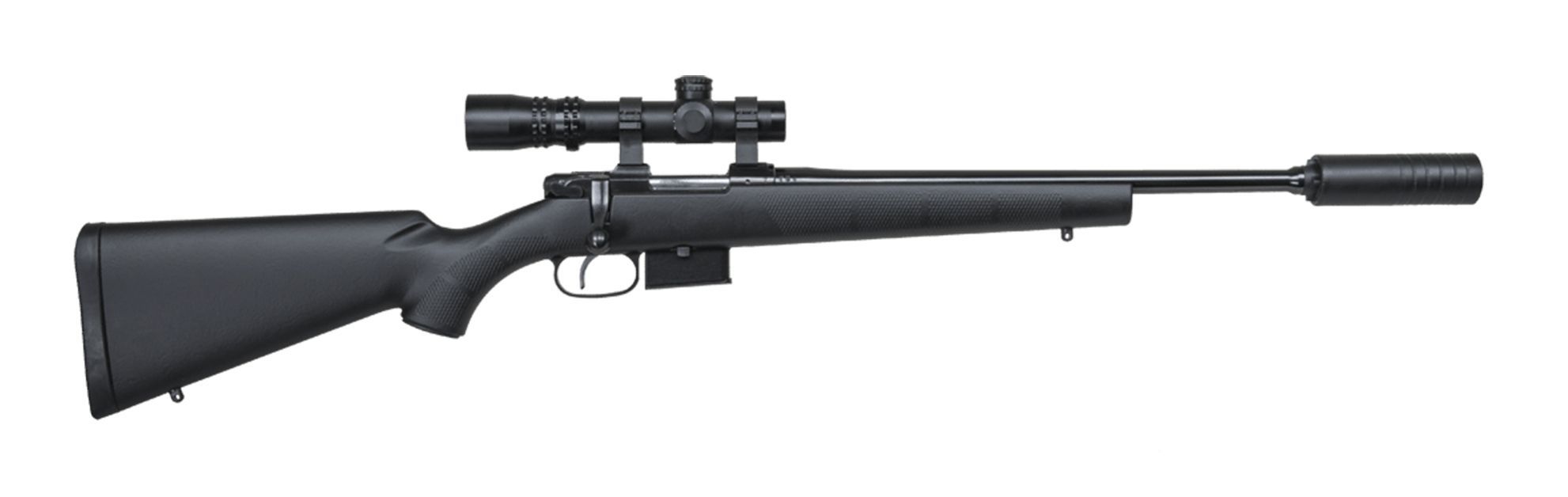
What a bolt action buys instead is the subsonic case. A manually operated action does not need gas to cycle, so it does not care that a 220 grain subsonic load produces very little of it. Savage, Howa, CZ and Christensen all build one, and the pattern across them is short barrels and threaded muzzles.
The brands that carry it
Maker
What they build in .300 Blackout
CMMG
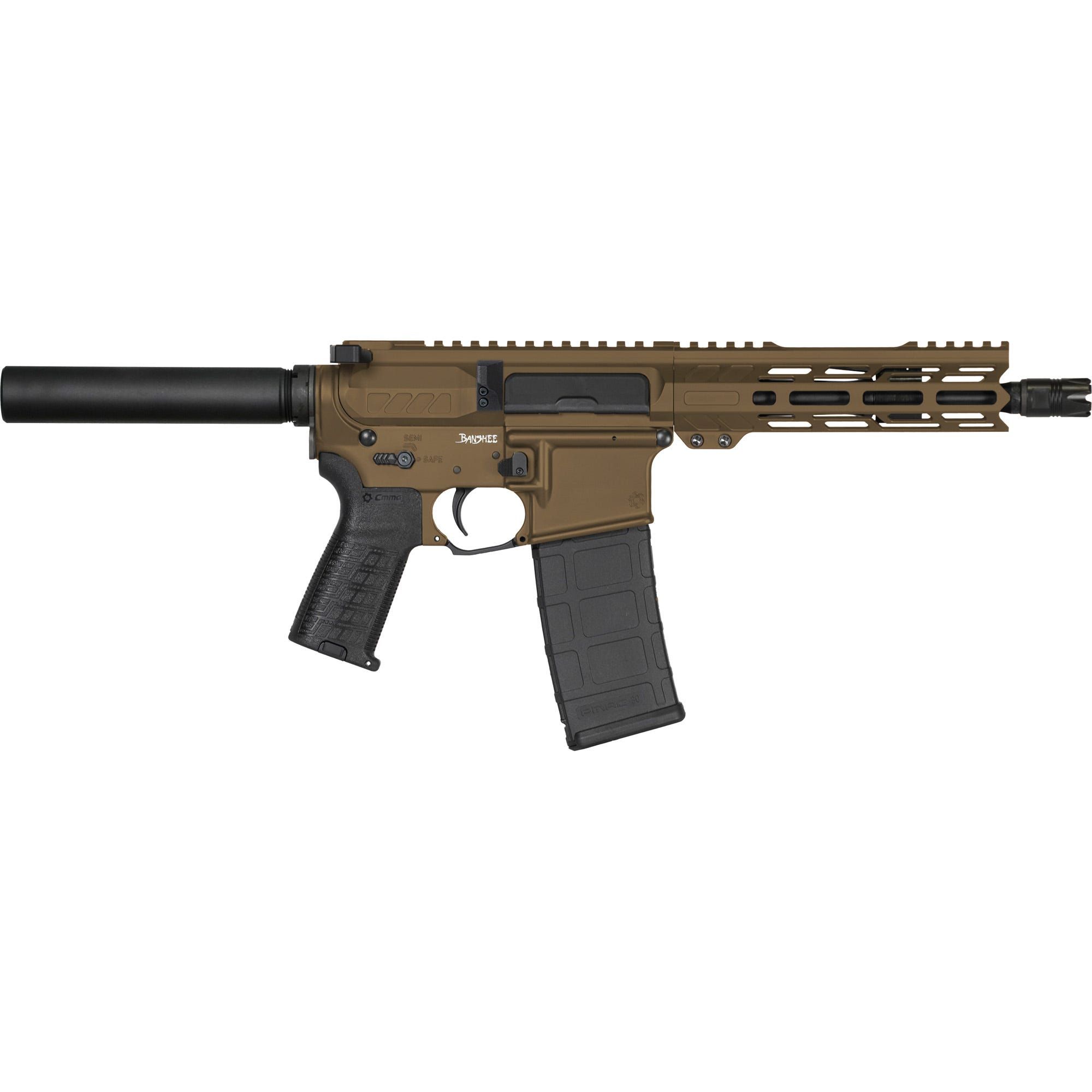
Banshee pistols and carbines, the radial delayed blowback line
Diamondback
DB15 pattern rifles at the accessible end
American Tactical
volume AR-pattern rifles and pistols
Maxim Defense
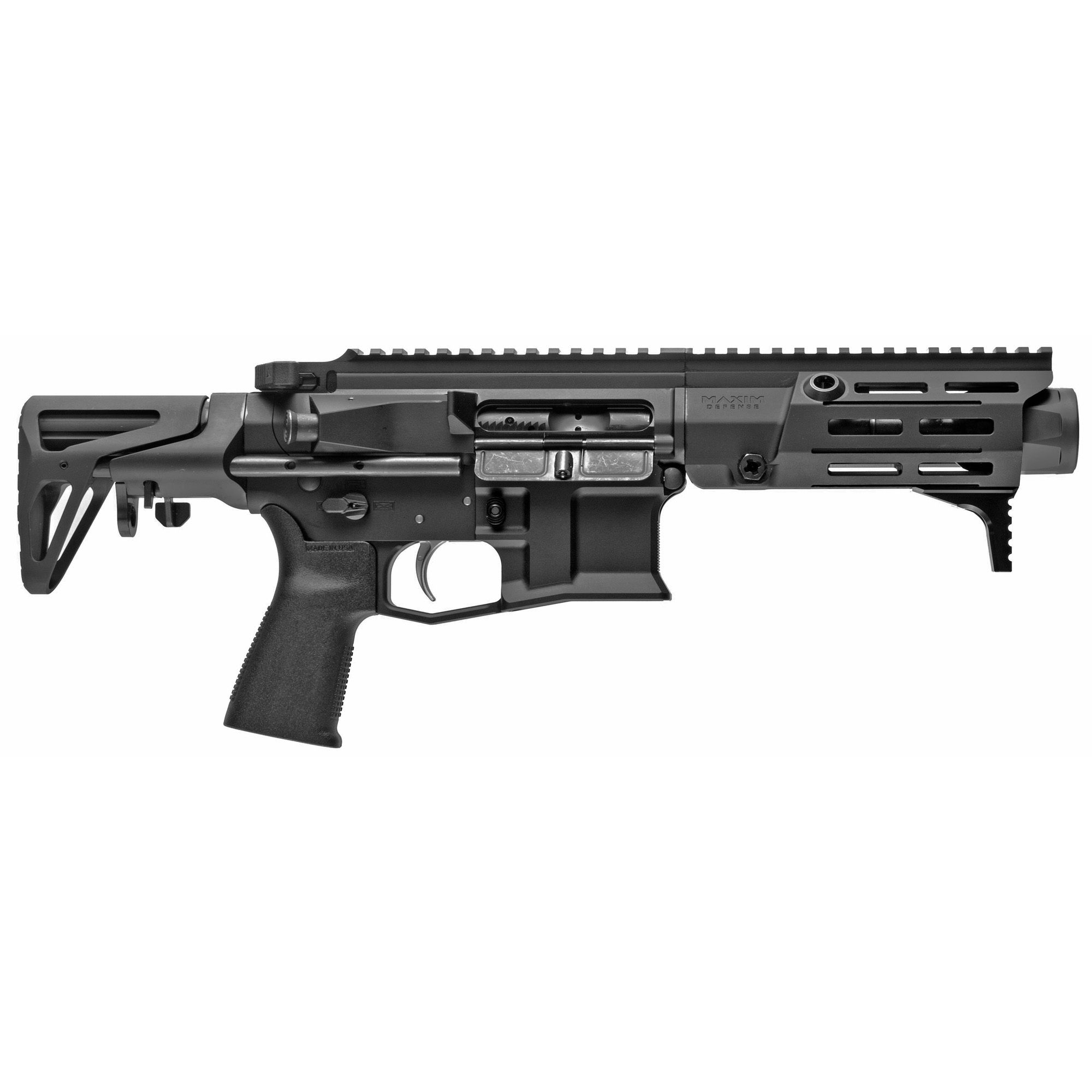
very short PDX pistols built around the cartridge
Savage, Howa, CZ, Christensen
the bolt-action side
Ruger, Bushmaster, Anderson, Fostech
conventional AR uppers and complete rifles
The AR side of that list is deep because building a .300 Blackout rifle means sourcing a barrel and otherwise assembling an AR-15. That low barrier is why the surface is 409 records across a cartridge barely fifteen years old, and it is also why quality varies more here than in cartridges that demand a purpose-built action.
Reading a .300 Blackout listing
Step
What to read
Why
1
Barrel length
the cartridge works short; 16 in is the majority but not the design centre
2
Twist rate
subsonic 220 grain loads need a fast twist to stabilise
3
Threaded muzzle
the suppressed subsonic use case assumes one
4
Action
semi-auto for AR compatibility, bolt for subsonic without gas concerns
5
Gas system length
pistol-length on short barrels, and it decides whether it runs subsonic
The listing will usually give you the first three and rarely the last two. Twist rate in particular goes missing constantly, and it is the specification that decides whether the gun will shoot the heavy subsonic ammunition that is half the reason the cartridge exists.
The name is the one thing not to read. A .300 Blackout upper and a 5.56 upper look identical from the outside, which is the achievement and the hazard in the same sentence. Check the barrel marking on the gun itself, because the catalogue can be wrong: a 5.56 ATI Milsport was sitting in two .300 Blackout tags on this site until this article was researched.
Nick Sawinyh - Nick Sawinyh is a father, husband, hobby farmer, and gun enthusiast from Kentucky. He founded GunsNation and writes most of what appears on this blog.