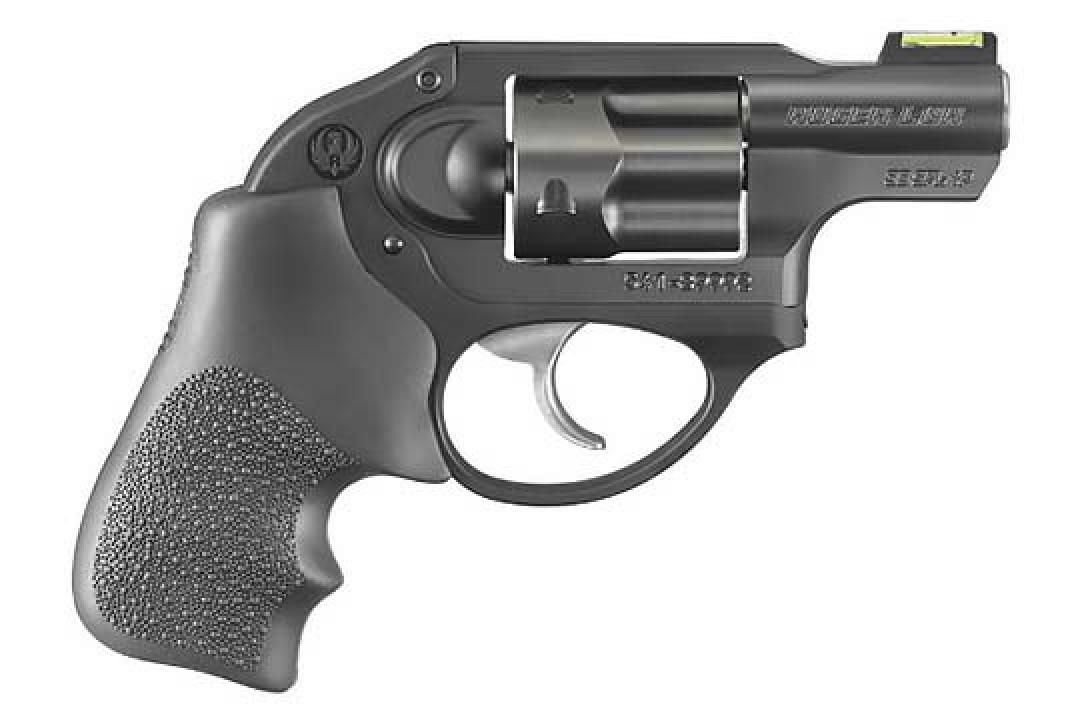
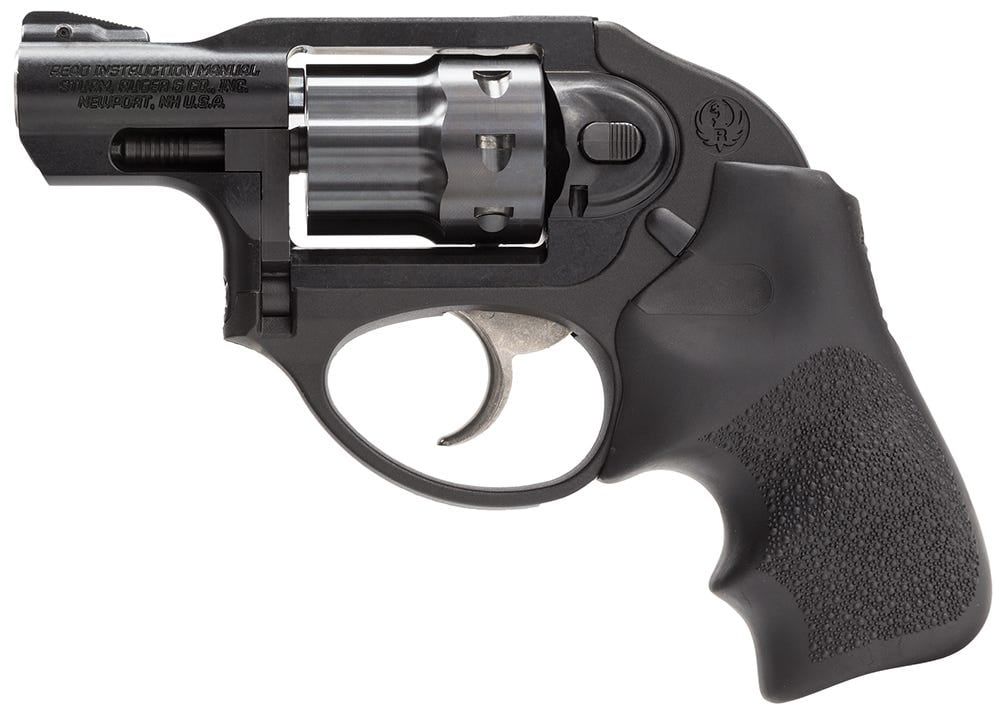
Someone says they have a hammerless revolver. You still do not know what they are holding.
They might mean a lightweight polymer-framed carry gun bought last year, with the hammer sealed inside the frame so it cannot catch on a pocket. Or they might mean a small top-break their grandfather left them, made before the First World War, with a bird's head grip and a caliber marking that no longer means what it says.
Both are correctly called hammerless. They have almost nothing else in common, and one of them may be dangerous to load.
Three things the word actually means
Type
What it is
Examples
Fully enclosed
Hammer entirely inside the frame, no way to cock it manually, double-action only
Ruger LCR, S&W 442 and 642, Taurus 856CH
Shrouded
Hammer mostly covered, with a small spur left exposed so it can still be thumbed
S&W 638, various Bodyguard models
Period name
An 1890s product name for the first generation of concealed-hammer revolvers
S&W Safety Hammerless, Iver Johnson, U.S. Revolver Co, H&R
Invalid Date
More Articles
The first two are engineering descriptions. The third is a brand name that happens to use the same word, and it is the one that sends people looking for information about a modern carry revolver and finding pages about antiques instead.
The 1890s family
Smith & Wesson's own account is the clearest. The Safety Hammerless, advertised in 1892, was the first double-action revolver with a concealed hammer. Inside the factory it was called the New Departure. In August 1894 the company shipped one of the first of what became known as Bicycle Guns: .32 Safety Hammerless revolvers with barrels of an inch and a half or two inches, meant to be carried and drawn easily.
Read that list of features again. Concealed hammer, double action only, tiny barrel, made to disappear in a pocket. That is the specification sheet of a modern carry revolver, written in the 1890s.
The design spread immediately. Iver Johnson built enormous numbers of small top-break revolvers, as did the U.S. Revolver Company, Harrington & Richardson, and a long tail of smaller firms. Most were chambered in .32 S&W or .38 S&W. Most broke open at the top to eject. Many carried a grip safety, a lever in the backstrap that had to be squeezed before the trigger would function, which is where the "safety" in Safety Hammerless comes from.
They were made in the millions and sold cheaply, which is why they turn up in estates today. President McKinley was shot with a .32 Iver Johnson in 1901.
If you inherited one, read this part
An antique top-break is usually not a shooter, and this is the single most important thing to know about the category.
The cartridges are the first problem. .38 S&W is not .38 Special. They are different cartridges with different dimensions, and the older one is shorter and slightly wider. A .38 Special will not chamber properly in a gun built for .38 S&W, and forcing the issue is how people get hurt. The same applies to .32 S&W against later .32 cartridges.
The metallurgy is the second. Many of these guns were built for black powder pressures or for the earliest smokeless loads. The steel is a century old, it has usually been stored badly, and top-break latches wear in ways that are hard to see. Modern ammunition of the right nominal caliber can still be loaded well beyond what the gun was designed to contain.
The third problem is that a great many of them were never good. The famous names built decent guns. The long tail of imitators, sold under dozens of trade names, did not.
So: have it looked at by a gunsmith who knows pre-war revolvers before you assume anything, and treat it as a family object rather than a defensive tool. That is the correct assessment of a worn machine built for a cartridge nobody stocks.
The modern family
The modern hammerless revolver solves one specific problem: a hammer spur catches on clothing when the gun is drawn from a pocket.
That is the whole design brief, and everything else follows from it. If the hammer cannot be reached, the gun cannot be fired single-action, so it is double-action only, so the trigger pull is long and heavy on every shot. Manufacturers accept that because the intended use is close range and fast, not deliberate and precise.
Choice
What you gain
What you give up
Fully enclosed
Nothing to snag, can be fired from inside a coat pocket
No single-action option at all
Shrouded spur
Can still thumb the hammer for a deliberate shot
A small spur that can still catch
Exposed hammer
Full single-action capability, easier at distance
Snags on the draw
The fully enclosed guns have another property that gets mentioned less often. Because nothing reciprocates outside the frame, they can be fired from inside a coat pocket without the action being blocked by fabric. A semi-automatic cannot reliably do that.
Hammerless is not the same as snub-nosed
These two words get used as if they were interchangeable. They describe different things.
Snub-nosed refers to barrel length. Hammerless refers to what the hammer does. A revolver can be one, the other, both or neither.
Gun
Snub-nosed
Hammerless
S&W 642
Yes
Yes, fully enclosed
S&W Model 36
Yes
No, exposed hammer
Ruger LCR
Yes
Yes, fully enclosed
S&W 638
Yes
Partly, shrouded spur
A full-size target revolver
No
No
Most of the overlap is real, because both features serve concealed carry, and that is why the words drift together. But a Model 36 is a snub-nosed revolver with a perfectly ordinary hammer on it, and plenty of people describing "my grandfather's hammerless .38" are actually describing a Model 36.
Working out which one you have
Four checks, in order.
Look at the top strap. If the gun hinges open at the top, with the barrel tipping down and the cylinder coming with it, you have a top-break, and top-breaks in this size are almost always pre-war. A modern carry revolver swings its cylinder out to the left.
Look for a grip safety. A lever in the back of the grip that must be squeezed is a strong indicator of the 1890s generation.
Read the caliber marking literally. ".38 S&W" and ".38 S&W Special" are different cartridges despite the similar names, and the shorter one dates the gun.
Look at the frame material. If it is polymer, or if the frame is obviously aluminium alloy with a steel cylinder, it is modern.
Nick Sawinyh - Nick Sawinyh is a father, husband, hobby farmer, and gun enthusiast from Kentucky. He founded GunsNation and writes most of what appears on this blog.