The M14 was the standard rifle of the United States Army from 1958 to 1967, a run of nine years that makes it the shortest-serving standard American service rifle of the modern era. It sits between the M1 Garand, which ran through a world war, and the M16, which has run ever since.
Springfield Armory, Inc. has been building the semi-automatic civilian version, the M1A, since 1974. It passed fifty years of continuous production in 2024, which is more than five times as long as the military rifle it copies ever served.
That gap is the reason the catalogue is confusing. Almost everything sold under these names today descends from a design the army gave up on quickly, and the civilian market kept developing it for half a century afterwards.
What the M14 actually was
Detail
Adopted
1957
Standard US Army rifle
1958 to 1967
Replaced
the M1 Garand
Invalid Date
More Articles
Cartridge
7.62x51mm NATO, commercially .308 Winchester
Key changes from the Garand
select fire, and a 20-round detachable box magazine in place of the 8-round en bloc clip
Replaced by
the M16, from 1967, phased out by 1970
Still in service as
a sniper and designated marksman rifle
The Garand relationship is the important row. The M14 is not a new design, it is a Garand with the two things soldiers complained about fixed: the clip that had to be loaded whole and ejected empty, and the lack of automatic fire.
Fixing the second created the problem that ended it. A 7.62x51 rifle firing automatically is close to uncontrollable, the cartridge simply carrying too much recoil for the job, and the rifle was also long and heavy in a jungle war. Both facts pointed at a smaller cartridge, and the M16 arrived carrying one.
What survived was the accuracy. Once nobody was asking it to fire automatically, the M14's virtues were the ones a marksman wants, and variants stayed in service in that role long after the rifle stopped being standard issue.
The barrel length names the model
Springfield's civilian line is easy to read once you know that the model names map almost perfectly onto three barrel lengths.
Barrel
Records
Models
22 in
52
Standard Issue, Loaded, National Match, Super Match, M21 Tactical
18 in
9
Scout Squad
16.3 in and 16 in
12
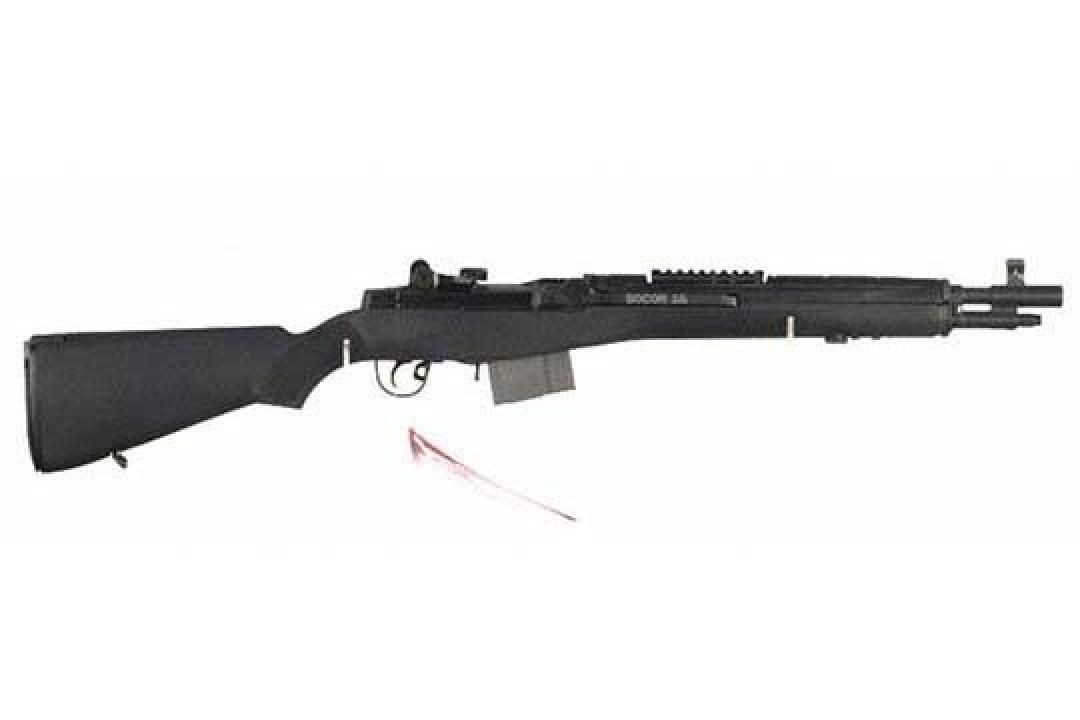
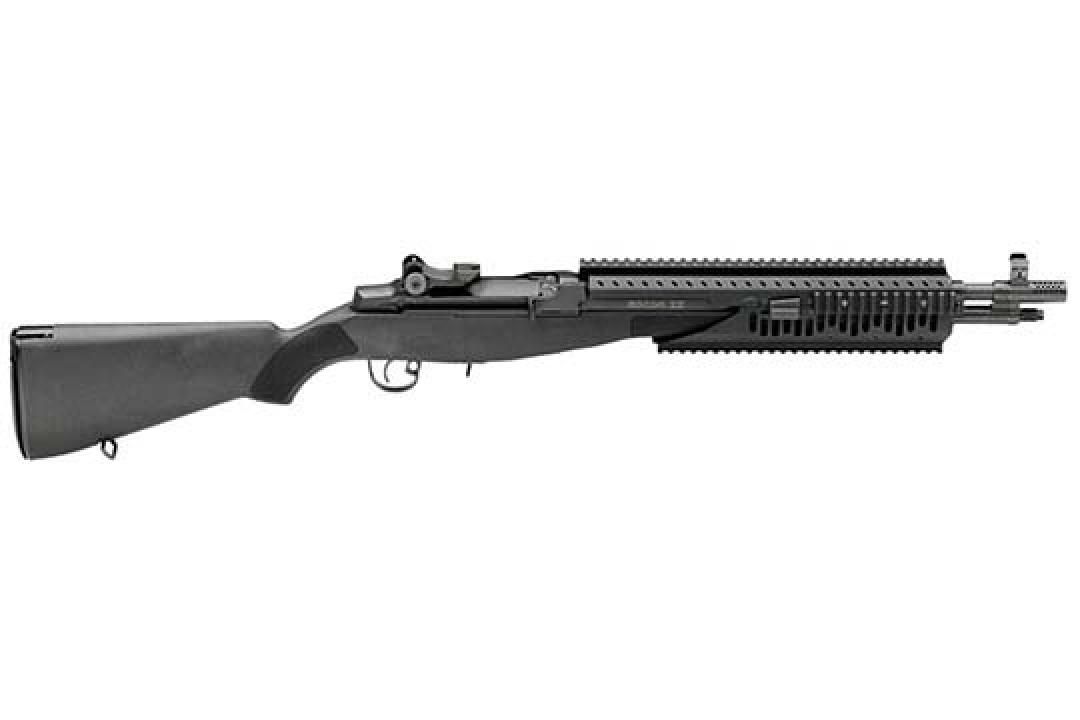
SOCOM 16, SOCOM 16 CQB, SOCOM II
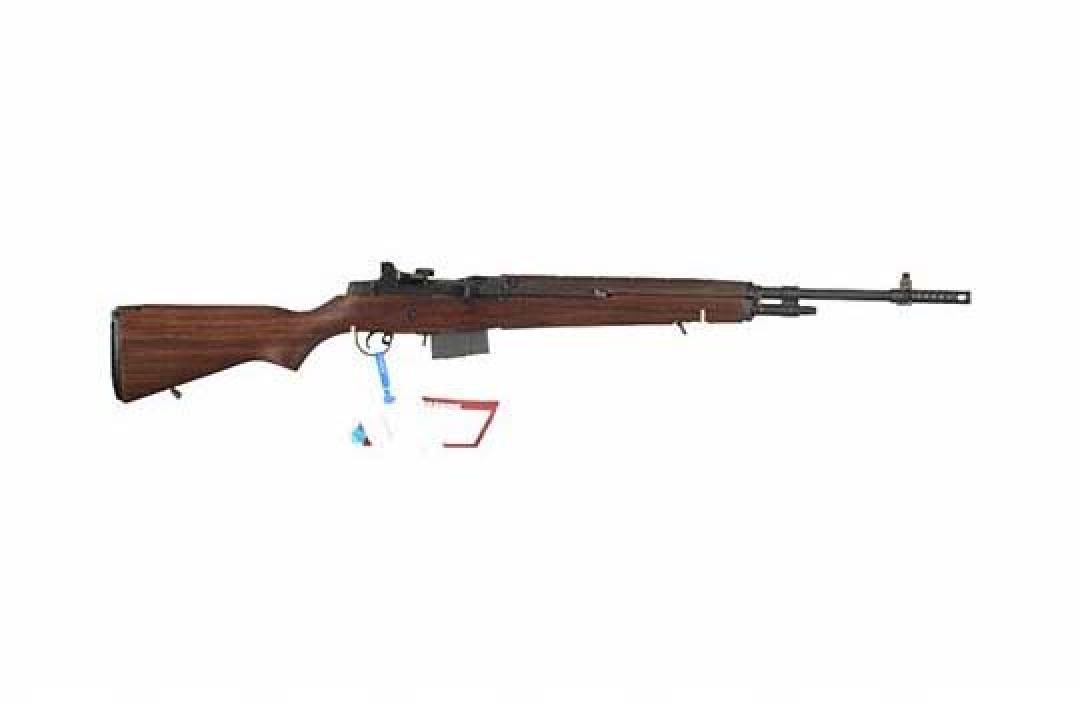
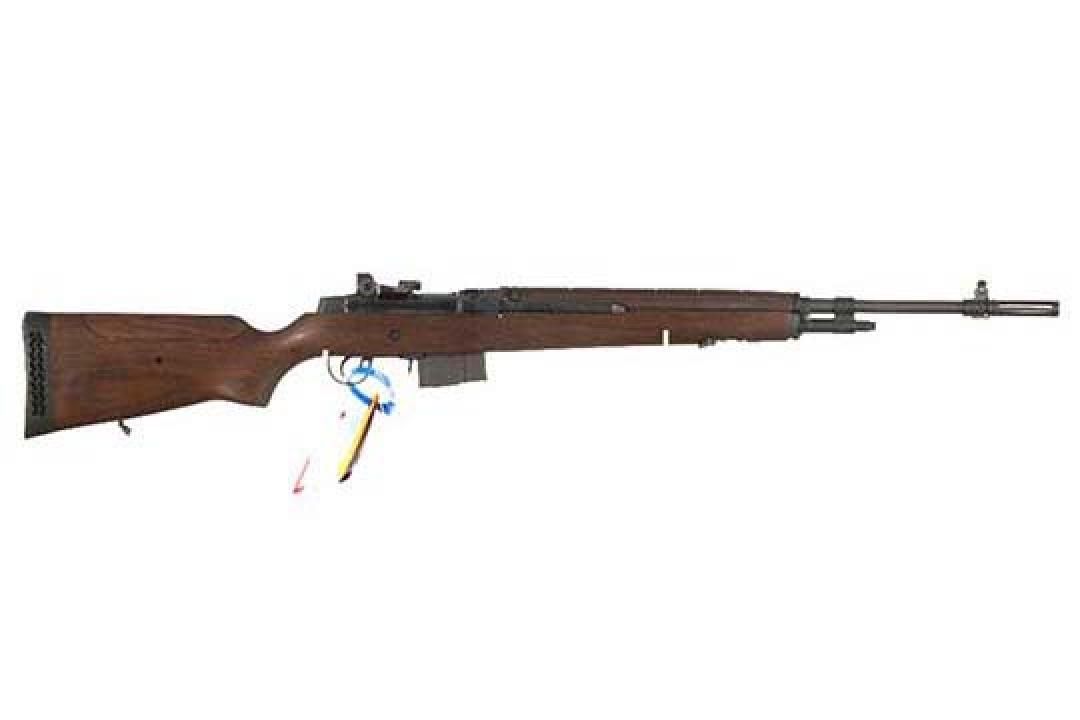
Nothing else in the range sits between those numbers. The 22 inch guns are the full-length rifle as the army issued it, differing from each other in the barrel's quality and the sights rather than in shape. The Scout Squad shortens it and moves the sight forward. The SOCOM cuts it much further and adds a muzzle brake to make the result tolerable.
Cutting the barrel on a 7.62x51 rifle is not free, and the SOCOM's specification says so out loud.
Length
What you gain
What you pay
22 in
the sight radius and velocity the design assumes
a long, heavy rifle
18 in
a handier rifle, forward-mounted optic
some velocity, a shorter sight radius
16.3 in
genuinely compact for the cartridge
muzzle blast, which is why it wears a brake
The 22 inch group is by far the largest at 52 of 73 records, which says something about who buys these. The M1A is bought as a full-length rifle far more often than as a short one, in a market that otherwise moved to short barrels years ago.
What separates the 22 inch guns
Since they share a barrel length and a shape, the differences are in the parts you cannot see from a photograph.
Model
What distinguishes it
Standard Issue
the baseline, as close to the issued rifle as the line gets
Loaded
match-grade barrel and trigger, national match sights
National Match
tighter barrel and sights, a match trigger, hand assembled
Super Match
heavy match barrel, usually a premium stock
M21 Tactical
the designated marksman configuration, adjustable stock
The progression from Standard Issue upward is a progression in barrel and trigger quality rather than in anything structural, which is why photographs of the range look repetitive and the specifications do not.
Four things that are not an M1A
Searching a catalogue for these names is unusually hazardous, because the strings collide with several unrelated things. Every one of these turned up while assembling the tag for this article.
What turns up
What it actually is
M14x1 LH, M14X1LH
a muzzle thread pitch on suppressor adapters and mounts
.458 SOCOM
a completely different cartridge, usually in an AR-15
M14Y, M14 Youth
a Rock Island and Armscor .22 LR bolt-action youth rifle
M1A1 Paratrooper
an M1 Carbine variant, a different gun in a different cartridge
The muzzle threads are the worst of the four by volume: eight records in this catalogue match "M14" and are threaded adapters with no gun attached to them at all. The M1A1 Paratrooper is the most understandable confusion, since M1 Carbine, M1 Garand, M14 and M1A are four different rifles whose names all begin the same way and only two of which are related.
Name
What it is
M1 Garand
the WWII service rifle, .30-06, 8-round en bloc clip
M1 Carbine
a separate lighter rifle in .30 Carbine, not a Garand
M14
the Garand's successor, 7.62x51, 20-round magazine
M1A
Springfield Armory's semi-automatic civilian M14
Reading an M1A listing
Start with the barrel, because it names the model. Then read the stock material, since walnut and synthetic are both current and the choice is aesthetic rather than functional on this rifle. Then the sights, which is where the National Match and Super Match money goes.
The one specification worth chasing that listings frequently omit is whether the rifle has been bedded, because a bedded stock is most of what separates a match M1A from a standard one, and it is not visible in any photograph.
A pair of notes on this catalogue specifically. The tag for these rifles was misspelled until this article was researched, and it rendered on the live page as a garbled string rather than the model name. A further eight genuine M1As, including both SOCOM 16 variants and two anniversary editions, were sitting in the catalogue attached to no tag at all. Both are fixed, and the surface is now 79 records rather than 71.
Nick Sawinyh - Nick Sawinyh is a father, husband, hobby farmer, and gun enthusiast from Kentucky. He founded GunsNation and writes most of what appears on this blog.