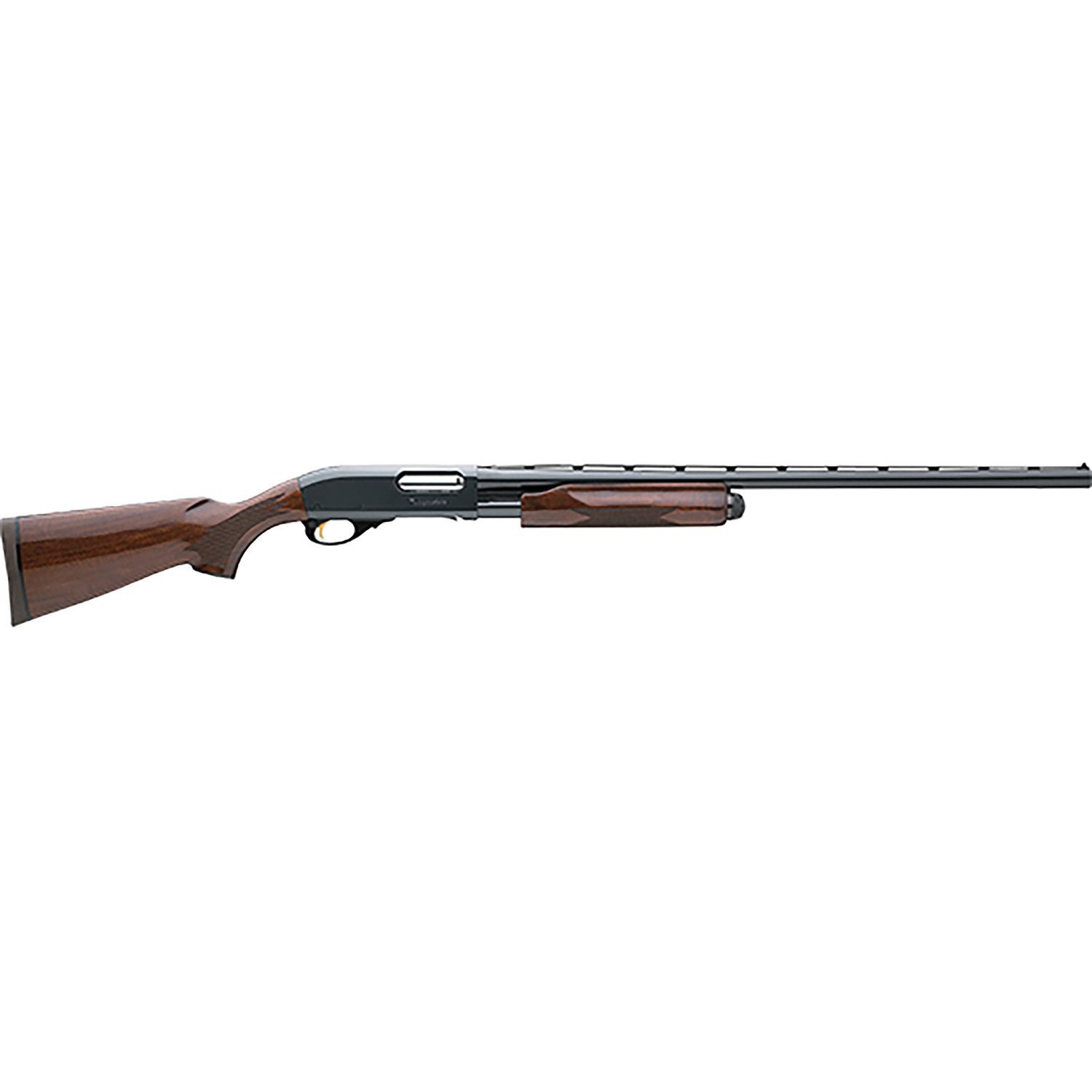
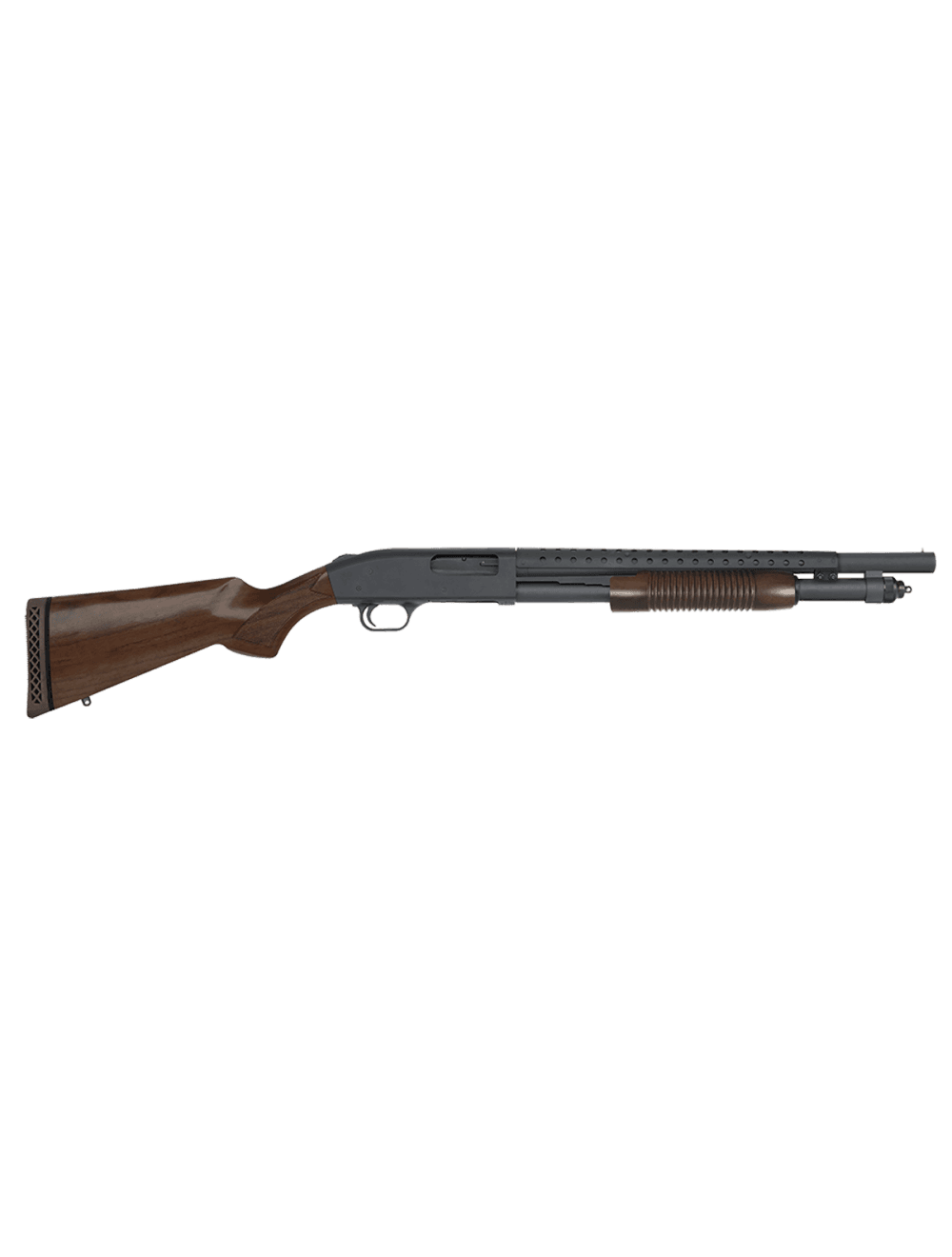
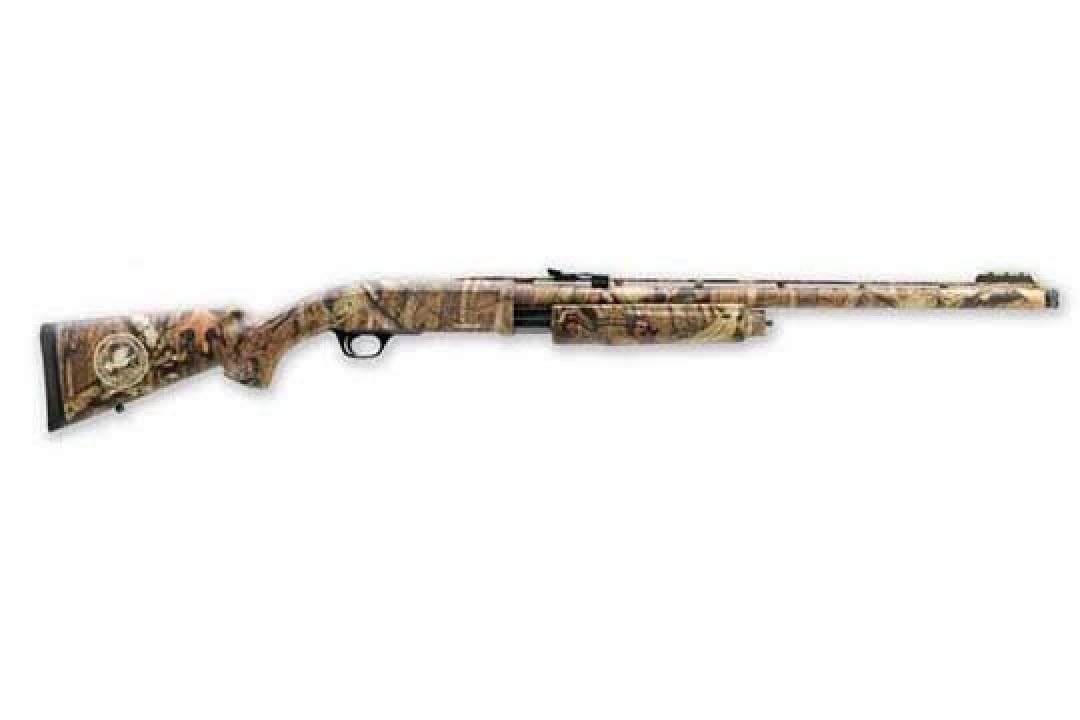
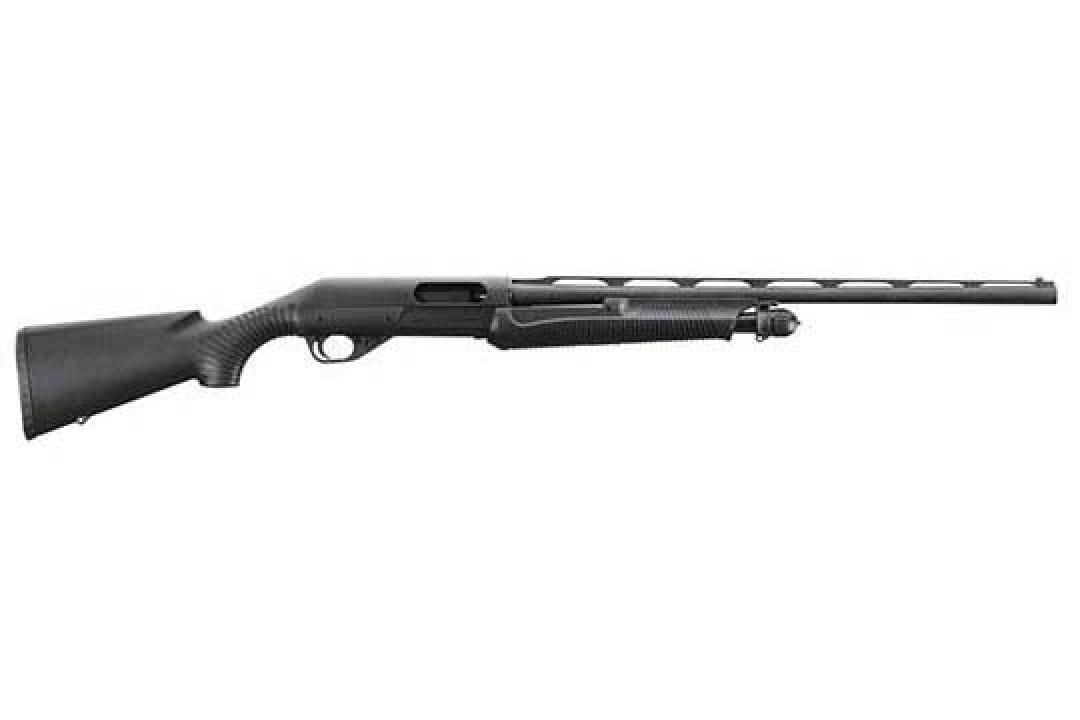
Pull every pump-action shotgun in this catalogue and sort by barrel length, and the distribution has two peaks with a valley between them. At 28 inches there are 305 records. At 18.5 inches there are 294. Between those two numbers the count falls away.
That is not a manufacturing quirk. It is two entirely separate markets sharing one mechanism, and once you can see the split, the barrel length on a listing tells you more about the gun than the model name does.
Same mechanism in both photographs. Nothing else about them is aimed at the same person.
The two peaks
Barrel length
Records
Which market
28 in
305
hunting, the longest common bird barrel
26 in
Invalid Date
More Articles
249
hunting, the general-purpose length
25 in
41
thin ground between
24 in
119
slug and turkey guns
22 in
76
thin ground between
20 in
113
defensive and utility
18.5 in
294
defensive, the shortest ordinary length
18 in
90
defensive
Read the middle of that table. The 22 and 25 inch lengths together account for 117 records, against 554 at 26 and 28, and 497 at 20 inches and below. The industry builds at the ends and thins out in the middle, because a barrel in the middle is not especially good at either job.
Of 1,470 pump-action records, 1,417 record a barrel length at all. The other 53 tell you nothing about which gun they are, which for this category is the specification that matters most.
Where the mechanism came from
The pump action is older than most people assume, and it did not start with Winchester.
Gun
Dates
Note
Spencer 1882
1882 to the early 1890s
Christopher Spencer and Sylvester Roper, the first commercially successful pump shotgun
Winchester Model 1893
May 1893 to June 1897
John and Matthew Browning, 34,050 built
Winchester Model 1897
1897 to 1957
Browning again, over a million produced
Remington Model 870
1950 to present
over 11 million
Mossberg 500
1961 to present
around 11 million by 2021
Christopher Spencer, who had already given the world the Spencer repeating carbine, built the first pump shotgun that actually sold, with Sylvester Roper. Spencer Arms produced roughly 20,000 before 1892, and Francis Bannerman & Sons kept making them until 1907.
John Browning's Model 1893 lasted four years and 34,050 guns before he replaced it with the Model 1897, which ran for sixty years and passed a million. That one became the trench gun, and it is the reason the mechanism reads as American.
The two guns that ate the category
Remington designed the 870 in 1950 and started production in 1951. It was the fourth major pump in Remington's line, after the Models 10, 29, 17 and 31. The Model 31 was the direct predecessor, marketed as the ball-bearing repeater, and it lost on manufacturing cost rather than on quality: it was simply too expensive to build against what Winchester was selling.
The 870 solved that with a bottom-loading, side-ejecting receiver and a tubular magazine under the barrel, built to be made cheaply and repeatedly. The sales record reads like a compounding curve.
Milestone
Reached
2 million
1973
3 million, and the best-selling shotgun in history
1983
7 million
1996
10 million
13 April 2009
over 11 million
since
Mossberg's answer came in 1961, designed by Carl Benson, and by 2021 the Model 500 had reached roughly 11 million of its own, which makes it the most-produced shotgun ever built. The two guns are within a rounding error of each other and between them they define what a pump shotgun is in the American imagination.
The catalogue reflects that. Mossberg's pump surface runs to 321 records and Winchester's to 279, with Remington at 152 and everyone else in double figures.
What the makers actually differ on
Maker
The distinguishing choice
Remington
side ejection, safety in the trigger guard, aluminium or steel receivers by model
Mossberg
tang safety on top, which works the same for either hand
Browning BPS
bottom ejection and bottom loading, so nothing crosses either side
Benelli Nova
one-piece polymer stock and receiver shell
Winchester SXP
rotary bolt, marketed on cycling speed
The Mossberg tang safety and the Browning bottom ejection are the two that genuinely change how the gun works for a left-handed shooter, and neither is described that way in most listings. If handedness matters to you, those two rows are the useful part of this table.
Why the mechanism survived
Semi-automatic shotguns are better at almost everything a pump does, and the pump has not gone anywhere. The reasons are practical rather than sentimental.
Reason
What it means
Cost
the cheap end of every shotgun catalogue is pump-action
Ammunition tolerance
cycling does not depend on the shell producing gas or recoil
Simplicity
the shooter supplies the energy a gas system would have to harvest
Ammunition tolerance is the one that matters most in practice. Light target loads and low-recoil defensive ammunition both give semi-autos trouble, and a pump does not notice either.
That is what keeps the mechanism in police armouries and behind counters. A gun that will cycle anything you put in it, from birdshot to slugs, without a gas setting to adjust, is a genuinely different proposition from one that will not.
Reading a pump-action listing
Step
What to read
What it tells you
1
Barrel length
26 to 28 is a bird gun, 18 to 20 is defensive, 24 is slug or turkey
2
Rib and bead
a vent rib and a front bead means the hunting half
3
Choke
screw-in chokes belong to the hunting half, fixed cylinder to the other
4
Safety position
tang on Mossberg, trigger guard on Remington
5
Ejection side
Browning's BPS ejects downward, most others to the right
The model name is deliberately not on that list. A Mossberg 500 exists at 28 inches with a vent rib and at 18.5 inches with a heat shield, and so does a Remington 870, and so does almost every other model in this category. The family name tells you who made the receiver. Everything about what the gun is for lives in the barrel.
A caution on the specifications themselves: a handful of records here carried an action field that contradicted the gun. A Browning BPS and a Winchester SXP were both filed as semi-automatics, a Remington 870 as a bolt action, and a Winchester SX4, which really is a semi-automatic, was named as a pump. All four are corrected now, but it is worth checking the barrel and the receiver in the photograph rather than trusting a single field.
Nick Sawinyh - Nick Sawinyh is a father, husband, hobby farmer, and gun enthusiast from Kentucky. He founded GunsNation and writes most of what appears on this blog.