John Moses Browning designed the .380 ACP in 1908 for the Colt Model 1903 Pocket Hammerless, and the design brief was not power. It was omission.
A cartridge this mild does not need a locked breech. The slide's own mass and the recoil spring absorb what firing produces, so the barrel can sit fixed in the frame and the whole locking mechanism, the part that makes a 9mm pistol expensive and complicated, simply is not there. Every .380 pistol in this catalogue is downstream of that one decision.
The names, which are all the same cartridge
Listings and imported guns use whichever regional name the manufacturer grew up with, and none of them mean anything different.
Name
Where it comes from
.380 ACP, .380 Auto
American
9×17mm
metric designation
9mm Short, 9mm Browning Short
English and Browning's own
9mm Corto
Invalid Date
More Articles
Italian and Spanish
9mm Court
French
9mm Kurz
German
A Bersa marked 9mm Corto and a Glock marked .380 Auto take the same ammunition. This matters more than it should, because a buyer who searches for one spelling finds a different slice of any catalogue.
Two families, one cartridge
Not needing a locked breech does two different things depending on what the designer wants. It can make a gun cheap to build at any size, or it can make a gun very small. The .380 market went both ways, decades apart, and the catalogue still holds both.
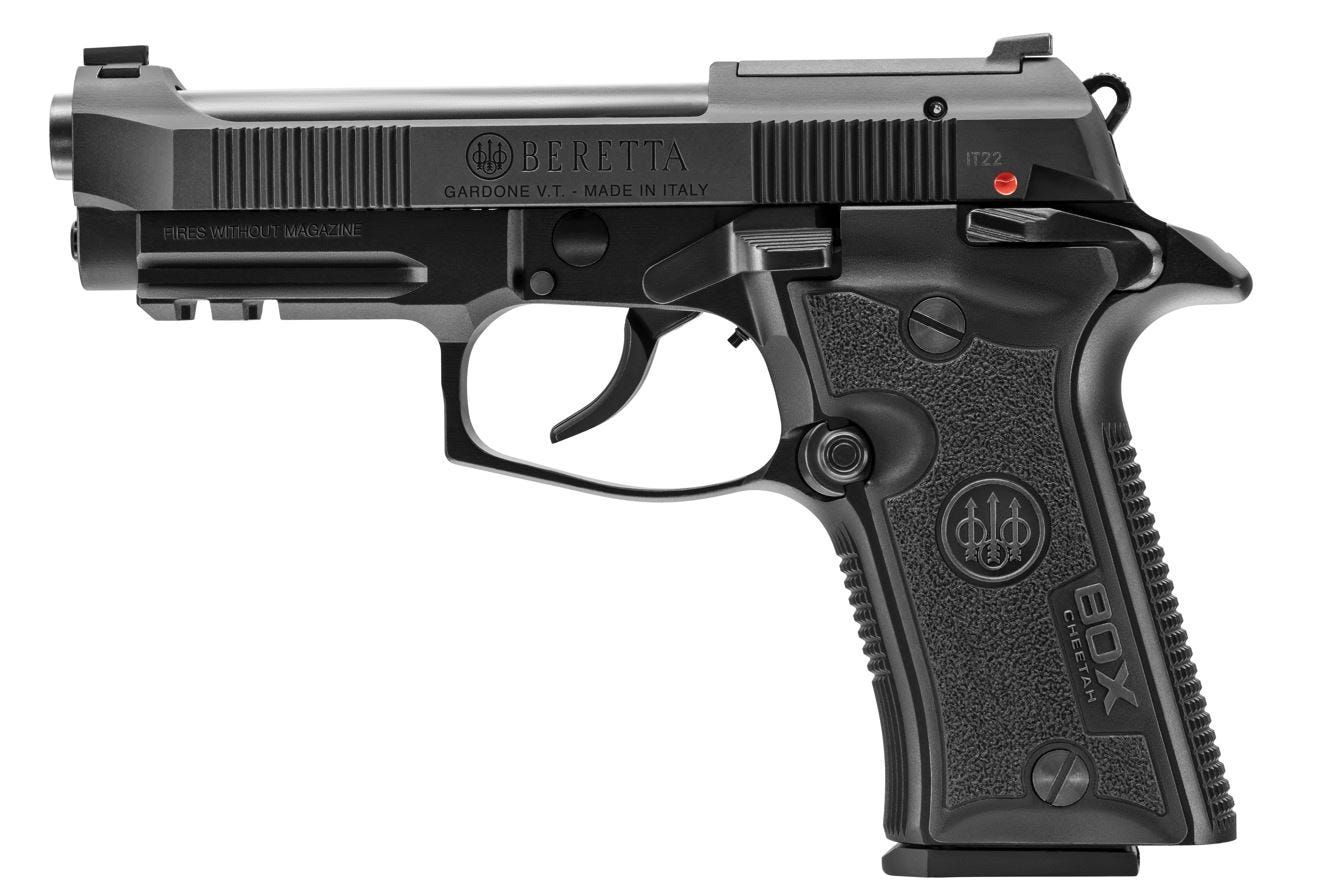
The first family is the all-steel blowback pistol. Fixed barrel, heavy slide, usually a double-action trigger, often a magazine holding well into double figures because the grip has no reason to be thin. The Beretta 84 Cheetah is the archetype: released alongside the Model 81 in 1975 and introduced properly in 1976, chambered in .380, and carrying 13 rounds.
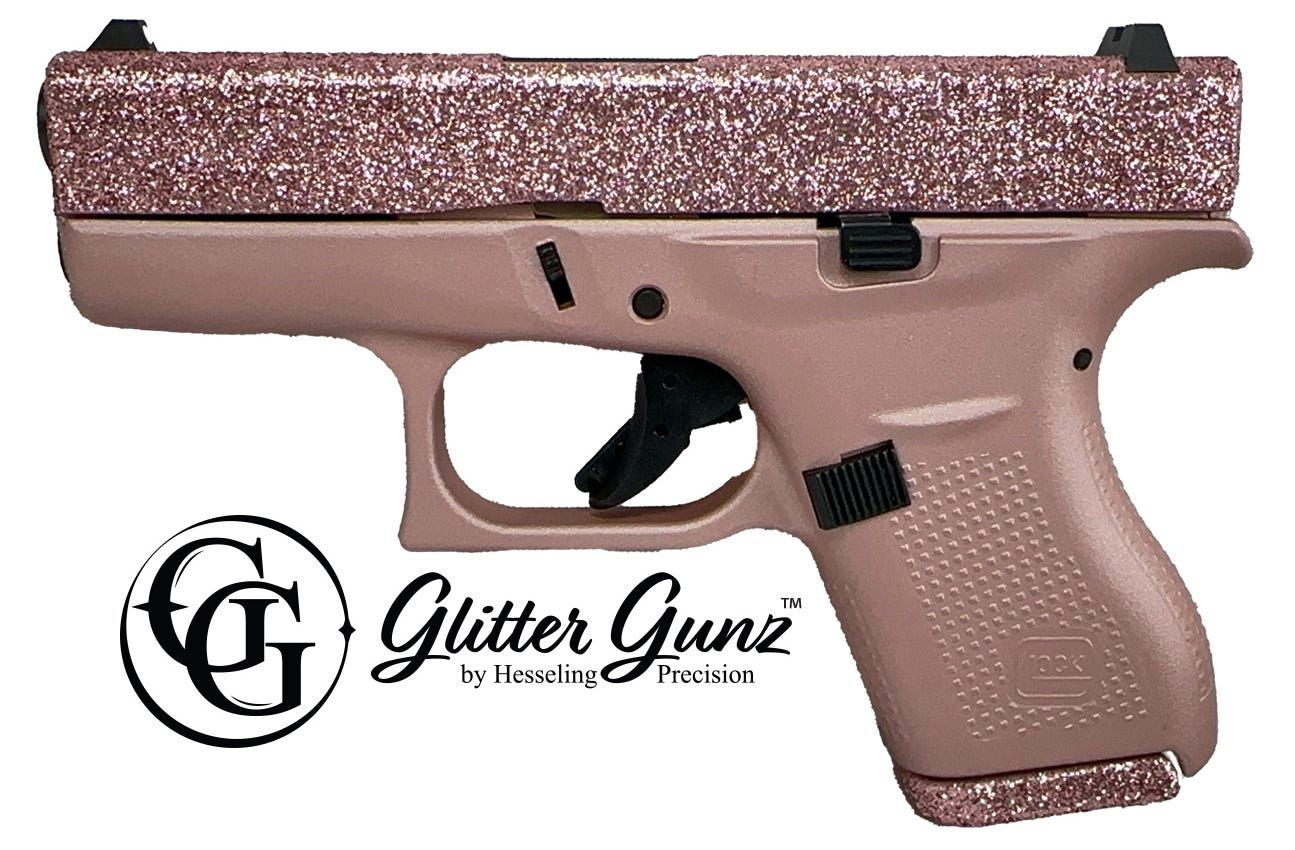
The second family is the modern polymer micro. Same fixed barrel, same absent locking system, but every dimension pared back until the gun disappears in a pocket, and the magazine drops to six rounds.
Blowback service pistol
Polymer micro
Example
Beretta 84 and 80X Cheetah
Glock 42, Ruger LCP
Typical capacity
13 rounds
6 rounds
Frame
aluminium or steel
polymer
Trigger
double action or DA/SA
striker or DAO
What it optimises
shootability
concealment
Same cartridge, same absent lockwork, and a capacity difference of more than two to one. The market chose the six-round version, decisively, and the catalogue records that choice.
What the catalogue actually holds
Action type
Records
Double action
282
Semi automatic, unspecified
281
Single action
140
Single and double action
104
Striker fired
9
Not recorded
100
The double-action count is the tell. In a locked-breech 9mm catalogue, striker-fired guns dominate. Here the old double-action blowback pattern is still the largest identified group, because the cartridge never forced anyone to modernise the mechanism.
By volume the surface is dominated by the micros.
Family
Records
Which family
SCCY
122
micro
Ruger LCP
117
micro
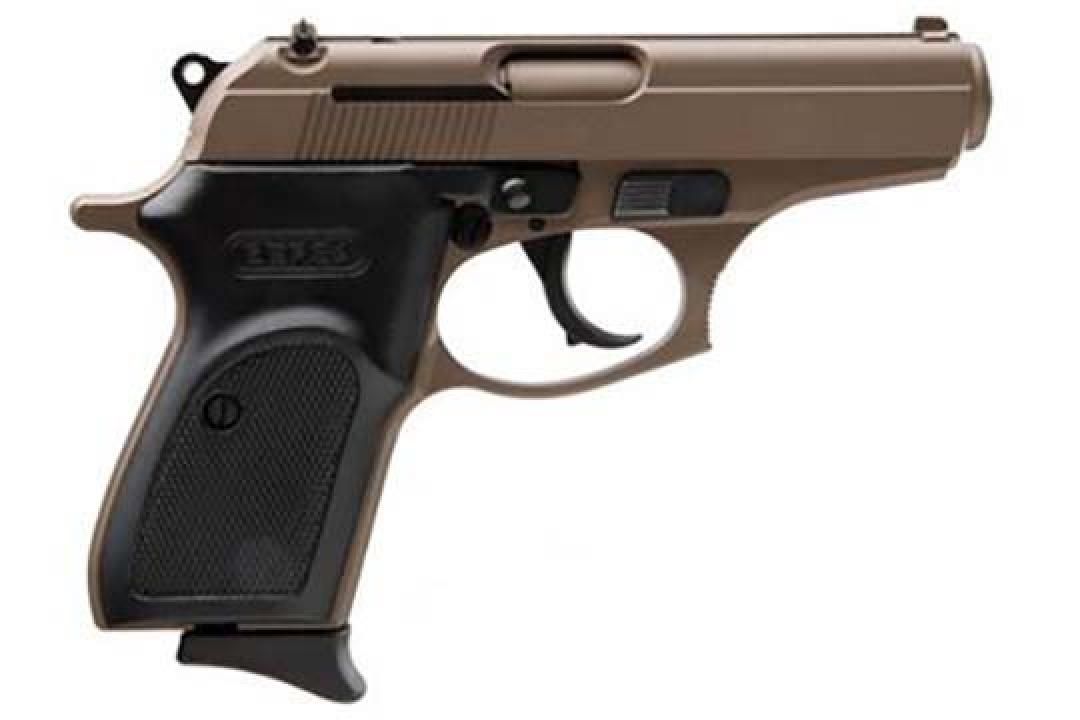
Bersa Thunder
100
blowback service pistol
Sig P238
57
micro, single action
S&W Bodyguard
41
micro
Glock 42
34
micro
Beretta 80 series
33
blowback service pistol
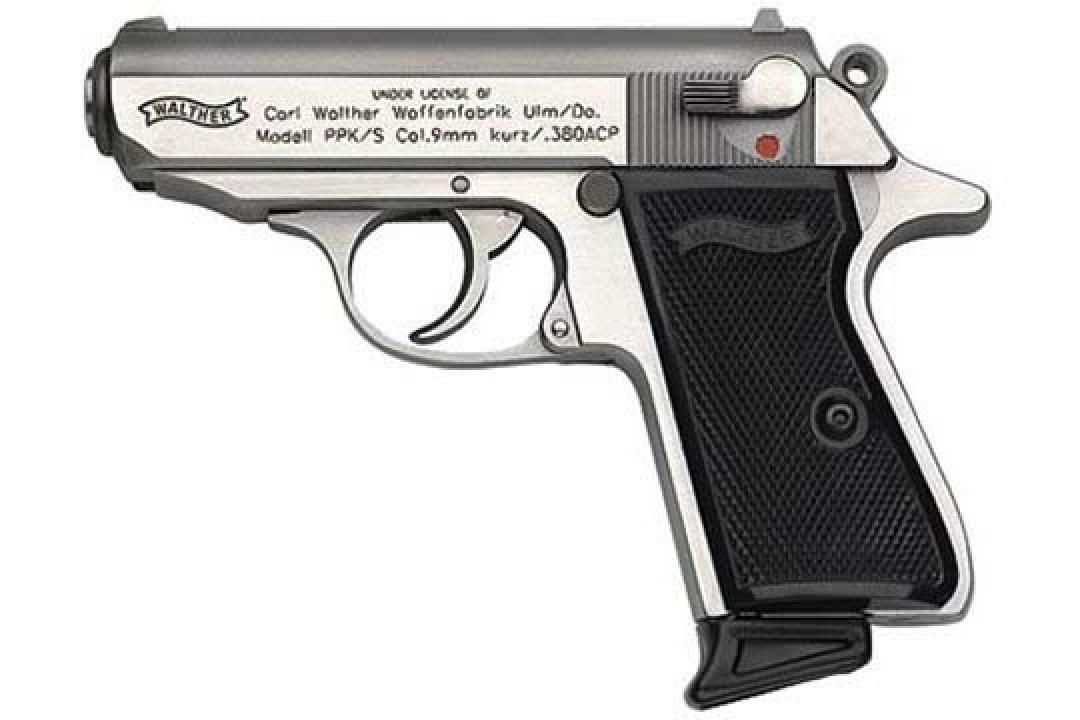
Walther PPK and PPK/S
18
blowback pocket pistol
The blowback service pistols are fewer, and they are the ones with the reputations. That inversion between what sells and what gets discussed runs through the whole category.
The Cheetah, and a gap this site had
Beretta's 80 series is the most interesting corner of the .380 catalogue, and until recently it was also the hardest to find in it.
The family expanded well beyond the 84. The 81 is the .32 ACP version, the 85 is a single-stack .380, the 86 has a tip-up barrel that lets you load a round into the chamber without racking the slide, and the 87 is a .22 LR. Configurations of the 84 alone run 84, 84B, 84BB, 84F and 84FS.
Beretta discontinued the Cheetah in 2017, then brought it back in 2023 as the 80X Cheetah, essentially an 84FS with the improvements from the company's X line, still holding 13 rounds.
Until this article was researched, the tag for this family on this site held four products. The catalogue itself holds 33 Cheetah-family records, most of them 80X variants, and they were simply not attached to anything. That is now a Beretta Cheetah surface rather than a four-item one.
Assembling it turned up two traps, both the ordinary hazard of matching on a name. SCCY sells a 9mm called the DVG-1CV Cheetah. Walther sells a PK380 Cheetah Edition. Neither is a Beretta, and a name search that trusted the word would have put both in the tag.
What .380 actually does
Load
Typical figures
Bullet weights
80 to 120 grain
90 grain hollow point
around 1,000 ft/s
95 grain full metal jacket
around 955 ft/s
Those numbers are why the cartridge gets chosen and why it gets argued about. Very few pocket pistols are made in anything larger, so for a certain size of gun the .380 is the ceiling rather than a compromise against 9mm. In a gun the size of an 80X Cheetah, where a 9mm would fit, the argument is different and comes down to recoil and shootability rather than size.
Reading a .380 listing
Step
What to read
What it tells you
1
Capacity
6 to 7 means a micro, 12 to 15 means a blowback service pistol
2
Frame material
polymer for concealment, alloy or steel for shootability
3
Trigger type
DA/SA and DAO belong to the older pattern
4
Barrel length
under 3 in is pocket territory, 3.9 to 4.4 in is the Cheetah class
5
Cartridge marking
9mm Corto, Kurz and Court are all the same round
Capacity is the fastest read of the five, because it separates the two families before you have looked at anything else. Nothing else in the specification distinguishes them so cleanly, and the photographs can mislead: a micro and a service pistol photographed alone on white look the same size.
Worth checking on any Glock in this category: several records on this site described a Glock 42 as a first-generation pistol. The Glock 42 arrived in 2014 and Glock's first generation ended in 1988, so the designation never existed, and 29 records carried it here until this article was written.
Nick Sawinyh - Nick Sawinyh is a father, husband, hobby farmer, and gun enthusiast from Kentucky. He founded GunsNation and writes most of what appears on this blog.