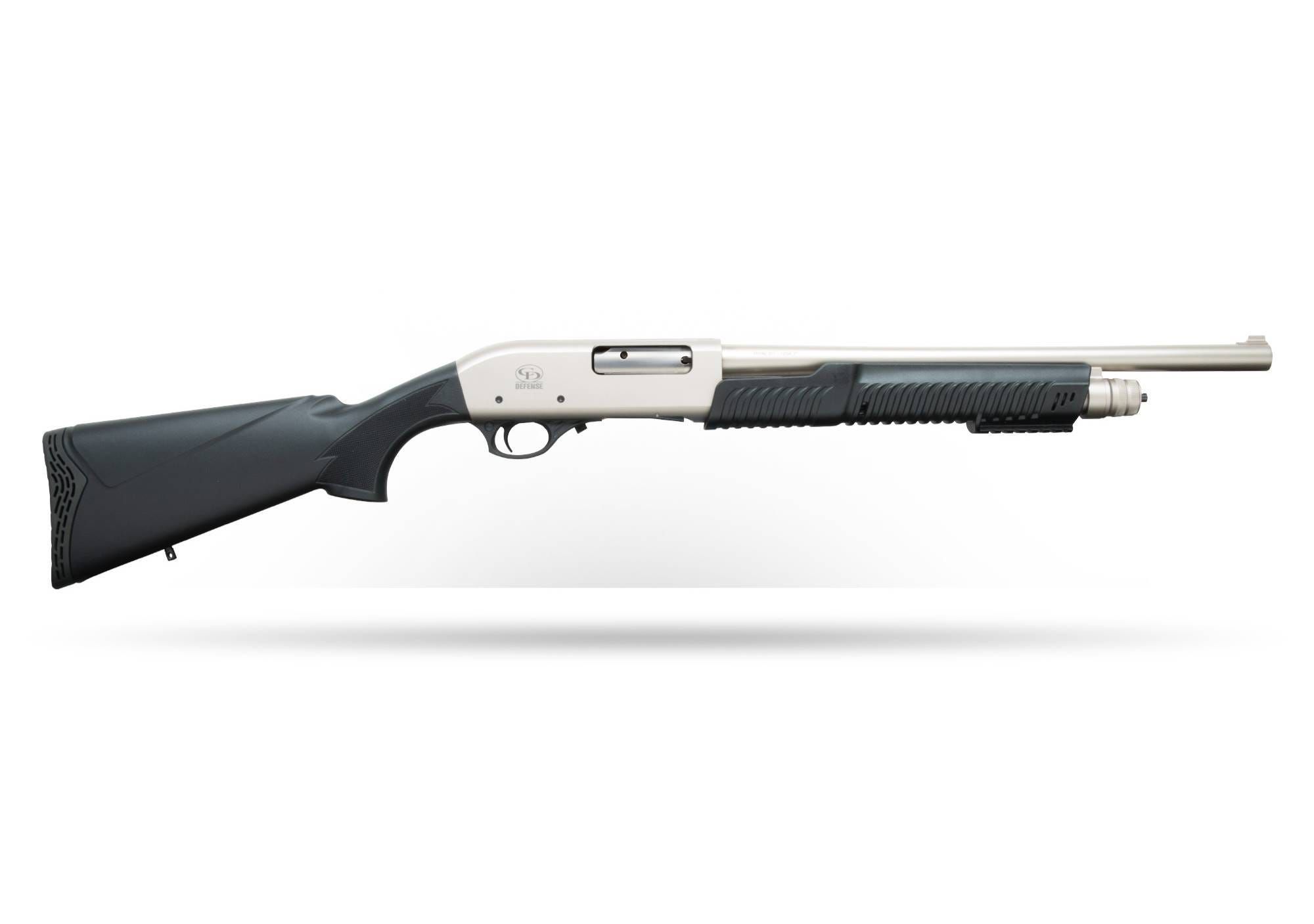
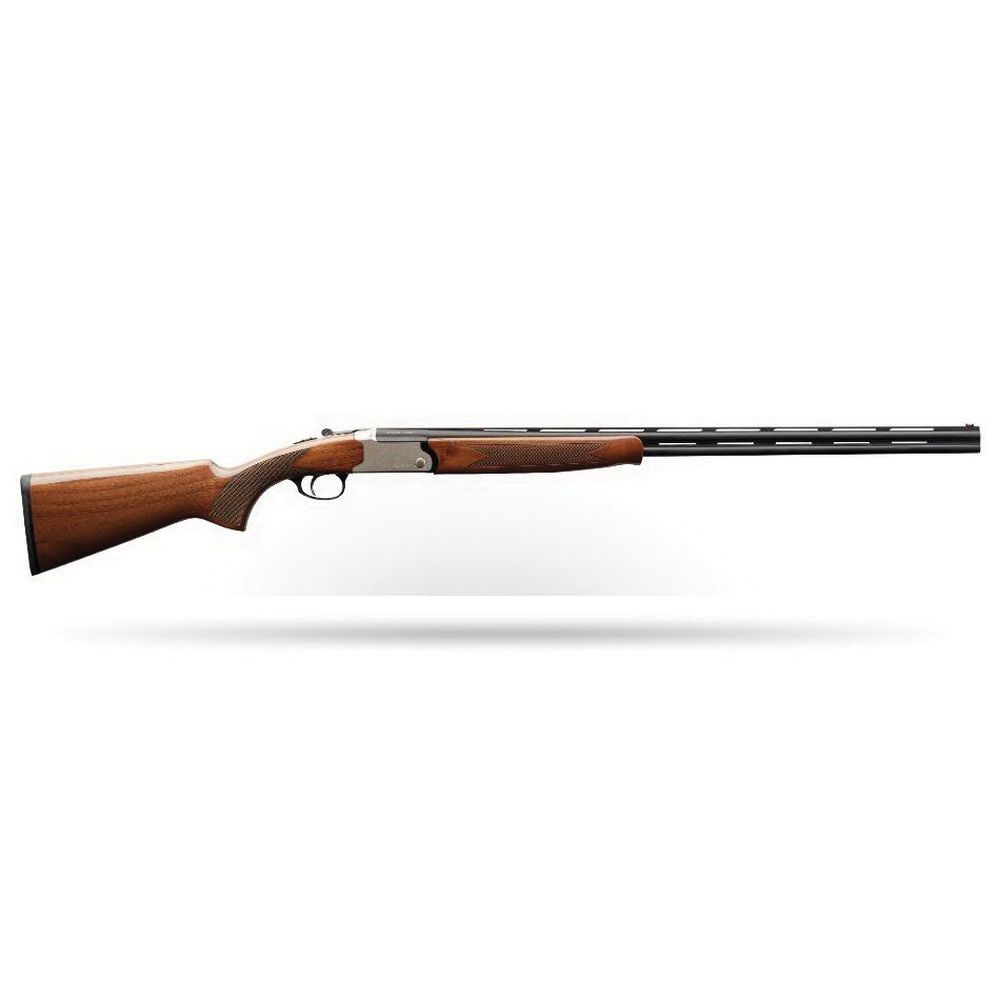
"Turkish shotgun" is a punchline online. The jokes write themselves and people keep writing them anyway, usually attached to a video of a bullpup jamming with two live rounds stuck in the action.
The mockery does something odd, though. It treats "Turkish shotgun" as if it named a product, the way "Beretta" or "Benelli" does. It does not. It names a country of manufacture, and behind it sits a group of factories building guns for a long list of badges, Turkish and American and in one case Italian-owned. Working out which name belongs to a factory, which belongs to an importer, and which belongs to nobody in particular is most of what a buyer actually needs.
The same configuration, several names
Start with what the catalog shows rather than what anybody claims.
Across seven brands sourcing from Turkey, there are 45 distinct combinations of gauge, barrel length and action that appear under more than one badge, covering 559 records.
Configuration
Badges it appears under
12 gauge, 28 inch, semi-automatic
6 of 7
12 gauge, 28 inch, break action
5 of 7
12 gauge, 28 inch, pump
4 of 7
Invalid Date
More Articles
12 gauge, 18.5 inch, pump
4 of 7
12 gauge, 18.5 inch, semi-automatic
4 of 7
20 gauge, 26 inch, pump
4 of 7
On its own that proves nothing. Plenty of unrelated manufacturers build a 28 inch 12 gauge semi-auto, because that is what the market buys.
The model numbers are the tell
Model numbers in this segment run the opposite way to the configurations. They are almost all brand-exclusive.
Family
Records
Action
Sold as
Viper G2
76
Semi-auto, break action
TriStar only
601
63
Semi-auto
Charles Daly
301
50
Pump, semi-auto
Charles Daly
Fear
32
Semi-auto, pump
Garaysar only
Honcho
27
Pump, break action
Charles Daly
500
22
Break action, side by side
Charles Daly
202 / 202A
38
Break action, over/under
Charles Daly
F12
17
Semi-auto
Typhoon Defence only
Triple Crown
12
Break action
Charles Daly
Each badge renames what it sells. That is why a buyer cannot follow a design across badges by name, and why the segment feels like an undifferentiated mass of interchangeable guns. The renaming is what keeps the overlap out of sight.
The leaks are what give it away. The 512 appears under both Charles Daly and Akkar. Charles Daly sells a pump called the 301, Chiappa sells a pump called the 301, and our own catalog carries a record titled "Chiappa 301 Tactical Field Pump-Action Shotgun Combo" filed under the Charles Daly brand, which is what happens when a dealer copies a spec sheet and the two names are interchangeable at the source.
The Triple Crown is the clearest case of all. Charles Daly sells a three-barrelled shotgun under that name, Chiappa sells the same configuration as the Triple Threat, and both are built by Akkar Silah Sanayi, which also sells it under its own badge.
Who is actually who
The names fall into three groups, and nothing on the box distinguishes them.
Name
What it is
Akkar
Turkish manufacturer, sells under its own name and builds for others
Garaysar
Turkish manufacturer, best known for magazine-fed semi-autos
Typhoon Defence
Turkish manufacturer, largely the F12 family
Escort
The shotgun line of Hatsan, a large Turkish maker
Charles Daly
American brand name, now owned by Chiappa, sourcing from Turkey and elsewhere
Hatfield
American brand name on Turkish-built guns
TriStar
American importer, not a factory
The middle group is where the confusion lives. Charles Daly is one of the oldest names in American shotgunning and has changed hands repeatedly. It has at various points put its name on guns built in Japan, Italy, Turkey and elsewhere. A Charles Daly from one decade tells you very little about a Charles Daly from another, and the name reads better as a distributor's label than a maker's mark.
TriStar is the same arrangement, stated more openly. It has never claimed to be a factory. It imports, sets specifications, and handles warranty and parts, and that last item matters more than most buyers expect.
What the reputation gets right
The quality-control complaint is real. At the budget end of this market, variation between individual guns is wider than with established European or Japanese makers. Two shotguns off the same line can differ in trigger feel, in how smoothly the action runs when new, and in finish. People who own several of these guns tend to report exactly that, and the ones who buy a single bad example are the ones who post about it.
Two things follow. Function-check anything from this tier before relying on it. And buy from a badge with a real importer behind it, because when a part breaks, the question is not who built the gun but who will send you a replacement.
What it gets wrong
The label flattens an enormous range. Those three words cover an entry-level break-action single shot, a serviceable pump gun sold by the tens of thousands to people who wanted a shotgun rather than a project, and over-under guns with decent wood competing a tier above where their badge suggests.
It also ignores why the segment exists. When American and European makers moved upmarket, the sub-flagship shotgun did not disappear. It moved to Turkey. A great many people own a first shotgun because that happened.
Reading a listing properly
The badge is the least informative thing on the page. In rough order of what actually tells you something:
Signal
Why it matters
Model family
A 301, a 202A, a 601 and a Triple Crown are distinct designs with distinct reputations
Importer parts and warranty
The practical difference between two otherwise identical guns
Configuration
Barrel length, chamber length, choke system, fixed or interchangeable chokes
Badge
Mostly a proxy for the two items above
One exception is worth knowing. The Triple Crown pattern and its siblings are genuinely unusual guns rather than commodity ones, and there the badge is close to irrelevant, because only one factory makes them.
The bullpups and the clones
The guns generating the mockery are usually neither the pumps nor the field guns. They are the magazine-fed tactical semi-autos and the bullpups, and they earn a fair amount of it.
Feeding a shotgun from a box magazine is harder than feeding a rifle. A shotshell is a soft-walled tube with a rim, and it deforms under spring pressure and under recoil. Getting one to run reliably across different brands of ammunition is a real engineering problem, and the budget end of this segment has not uniformly solved it. When one of these guns is described as ammunition-sensitive, that is usually literal.
The clones are a separate matter. Reproductions of famous designs turn up regularly, occasionally with names close enough to the original to be a joke in themselves. Some run acceptably. Buying one because it resembles a gun from a film is a perfectly good reason, provided that is the actual reason.
Nick Sawinyh - Nick Sawinyh is a father, husband, hobby farmer, and gun enthusiast from Kentucky. He founded GunsNation and writes most of what appears on this blog.