A conventional pump shotgun with an 18.5-inch barrel measures about 39 and a half inches from muzzle to buttplate. That figure barely moves between makers, because the layout is fixed: barrel, then receiver, then stock, in a line.
A bullpup shotgun with the same 18.5-inch barrel measures about 28 inches. Same barrel, same shell, same velocity, eleven and a half inches shorter.
That is the entire proposition, and everything else about these guns is a consequence of it.
What "bullpup" actually means
The action sits behind the trigger rather than in front of it.
On a conventional shotgun, you pull the trigger, and directly behind your trigger finger is the receiver, the bolt, the ejection port and then a stock long enough to reach your shoulder. All of that is length added to the barrel.
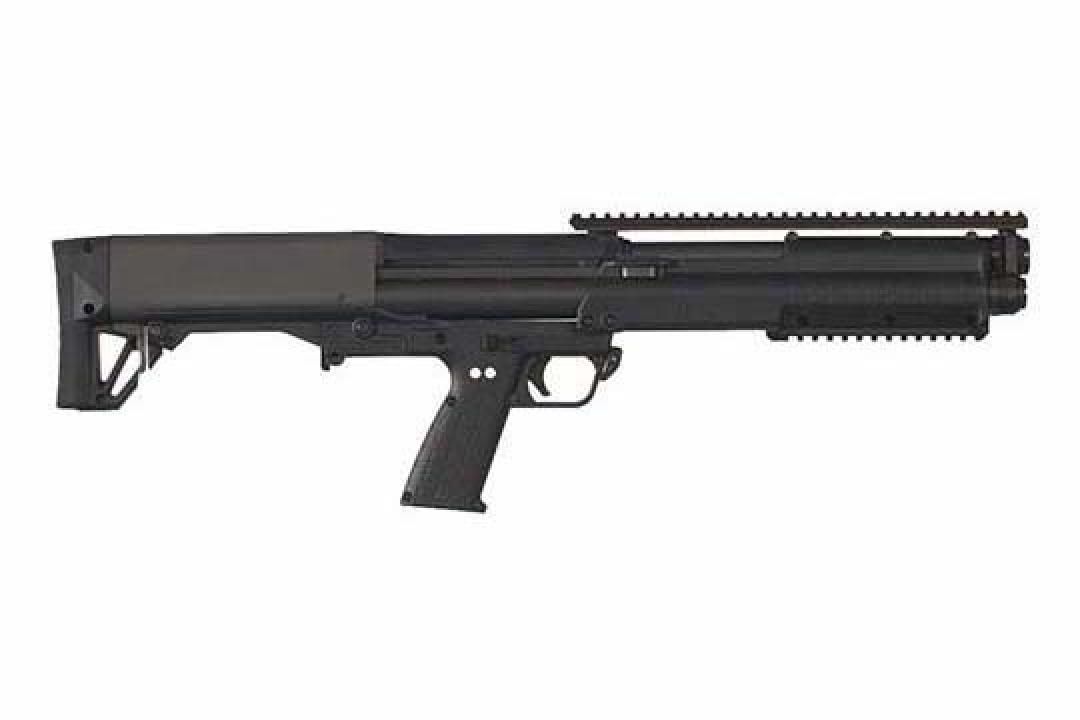
A bullpup moves the trigger forward, to somewhere around where the front of the receiver used to be, and runs a linkage back to the actual firing mechanism. The bolt, the chamber and the magazine all end up alongside or behind your cheek, and the buttplate sits directly behind them. The stock is no longer a separate structure with length of its own, it is the back of the receiver.
Invalid Date
More Articles
Nothing about the barrel changes. That is the point: the length you save comes entirely from the part of the gun that was not doing ballistic work.
The magazine tube is where the designs diverge
A conventional pump carries shells in a tube under the barrel, and its capacity is limited by barrel length. Bullpups broke that constraint in different directions, and it is the clearest way to tell the designs apart.
Design
Tubes
Capacity
Kel-Tec KSG
Two, selectable
14+1 with 2.75-inch shells, seven per tube, six per tube with 3-inch
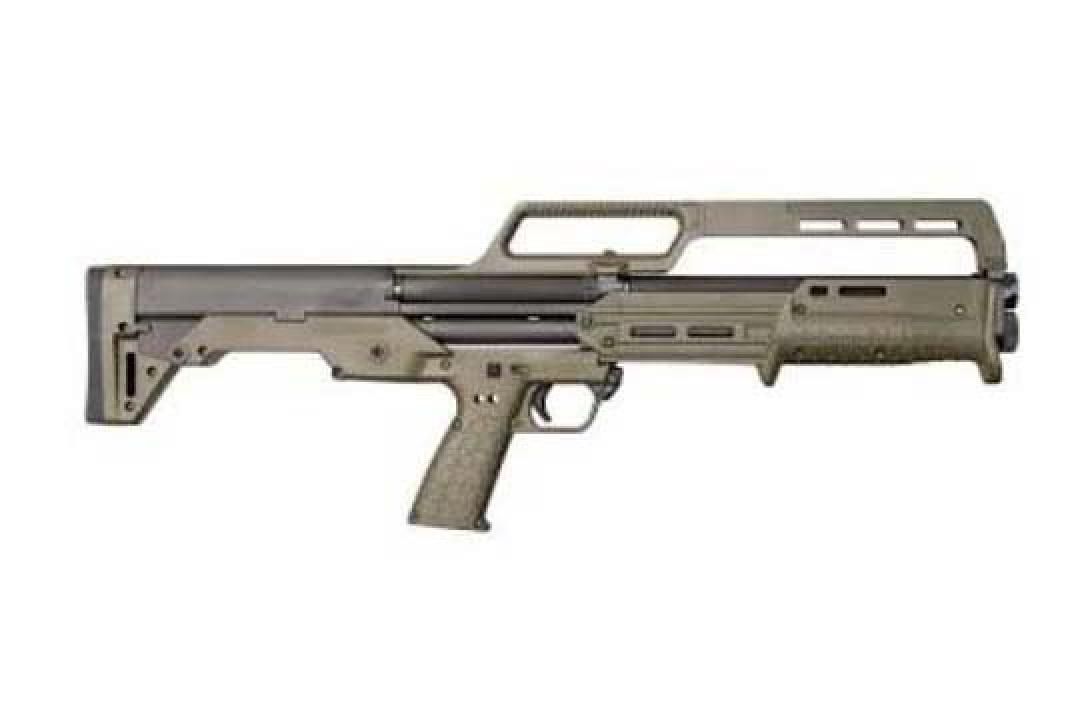
Kel-Tec KS7
One
7+1 with 2.75-inch shells, which is where the name comes from
IWI Tavor TS12
Three, rotating
15+1
Most semi-autos
One, or a box magazine
Varies
The KSG's twin tubes have a selector switch that chooses which one feeds, which lets you keep two different loads in the gun and pick between them. That is a genuinely useful capability and it is also one more thing to get wrong under pressure.
The TS12 goes further with three tubes that rotate into position, indexing automatically as each empties. More capacity, more mechanism.
Kel-Tec's KS7 went the other way and deleted a tube, which halved the capacity and simplified the gun considerably. That it exists at all tells you the twin-tube complexity was not universally welcome.
What you give up
Four things, and they are all real. Anyone selling you a bullpup as a free upgrade is not being straight with you.
The trigger. A bullpup trigger connects to the sear through a linkage running the length of the receiver. That linkage has slack, flex and friction in it, and bullpup triggers are correspondingly mushier than a direct sear engagement. On a shotgun this matters less than it would on a precision rifle, but it is noticeable and it does not go away with break-in.
Reloading. The loading port and the ejection port are back by your face, which makes every manipulation less natural, harder to see, and worse in the dark. Loading a tube magazine that sits behind your cheek is a skill you have to actively learn rather than something that transfers from a conventional gun.
Balance. The mass sits at the rear. This makes the gun feel light and quick to bring up, and makes it noticeably worse at the thing shotguns are usually good at, which is swinging smoothly on a moving target. A bullpup points fast and tracks poorly.
Ejection. A conventional right-hand shotgun throws shells to the right, away from you. A bullpup ejects next to your head, and if you shoot it left-handed on a design that was not built for it, into your face. The KSG solves this by ejecting straight down, which is one of the better bits of engineering in the category. Not all of them do.
What the inventory actually looks like
Two facts about this market stand out, and both are visible in the listings.
The first is that the barrel length is almost invariant. The overwhelming majority of bullpup shotguns here carry an 18.5-inch barrel, with a small number at 18 and 20 inches. Nobody is building a bullpup field gun with a 28-inch barrel, because the entire point of the layout is compactness and a long barrel would defeat it.
The second is that the market has moved to semi-autos. Roughly two thirds of these are gas or inertia operated rather than pump, which is a reversal of where the category started. The KSG made bullpup shotguns famous as a pump design, and the volume since has gone to semi-autos, largely from Turkish manufacturers.
Maker
Position in this inventory
Black Aces Tactical
The largest single group, pump and semi-auto
Kel-Tec
The KSG and KS7, the designs that defined the category
Panzer Arms
The BP-12 and its variants, a large Turkish-built block
IWI
The Tavor TS12
GForce, Tokarev, Charles Daly, Escort
The value tier, mostly Turkish manufacture
If the Turkish-built portion of that list is unfamiliar, it is the same manufacturing base that supplies much of the budget shotgun market generally, and the same caveats apply.
What it is for
The honest use case is a gun that has to live in a small space and be brought to bear in a confined one.
That means a vehicle, a boat, a locker, a compartment, or a room. In each of those the difference between 28 inches and 39 inches is the difference between the gun fitting and not fitting, or between the muzzle clearing a doorway and not. This is the same argument that drives short-barrelled shotguns generally, except a bullpup gets there without giving up barrel length, velocity or the ammunition capacity a longer tube allows.
The dishonest use case is a bullpup as a general-purpose shotgun. It will be worse than a conventional pump at clays, worse at birds, more awkward to load, and it will have a worse trigger. If the gun is going to live in a cabinet and come out at a range, buy a conventional one.
Which to buy
If capacity is the point, the KSG and the TS12 are the two designs built around it, and the choice is between the KSG's selectable twin tubes and the TS12's rotating three. Both are more mechanism than a conventional shotgun and both should be shot before buying.
If simplicity is the point, the KS7 exists precisely because somebody at Kel-Tec agreed with you. Seven rounds in a very small package, one tube, nothing to select.
If you want a semi-auto, the field is mostly Turkish-built and the differences between them are smaller than the branding suggests. Buy on fit, warranty and whether the specific gun has a reputation for cycling light loads, because that is where inexpensive semi-auto shotguns fail.
And whichever you choose, check which way it ejects before you find out on the range.
Nick Sawinyh - Nick Sawinyh is a father, husband, hobby farmer, and gun enthusiast from Kentucky. He founded GunsNation and writes most of what appears on this blog.