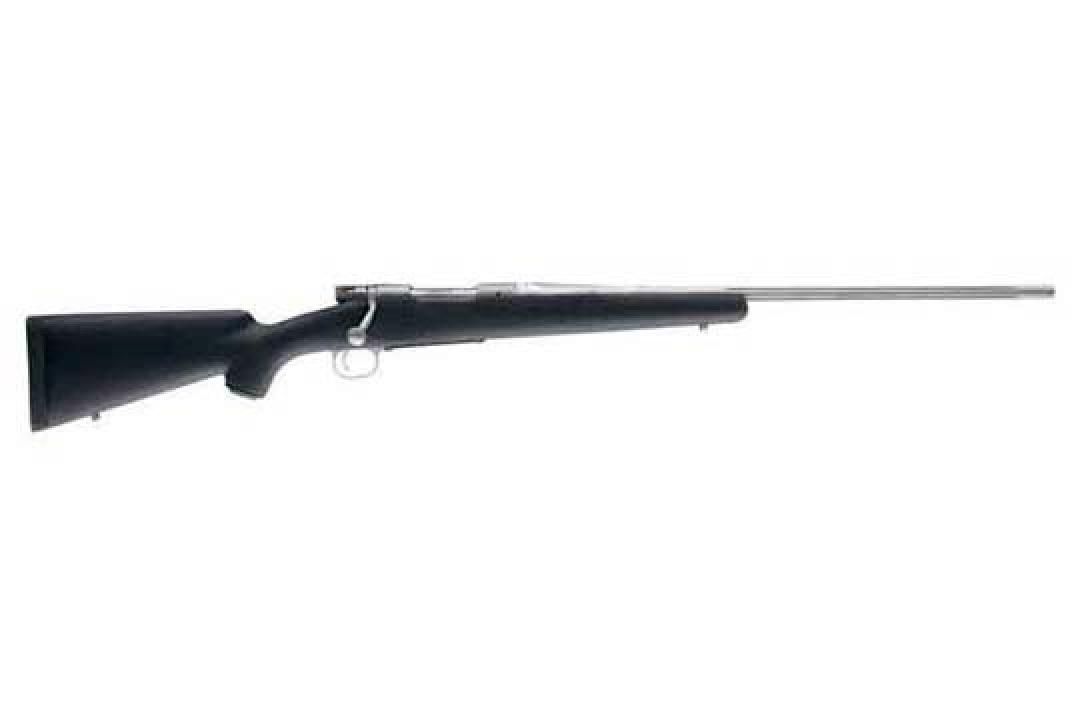
Somebody eventually tells you that you need a pre-64. They rarely explain what happens in 1964, and the shooter who already owns two perfectly good rifles in the same chambering still feels the pull. That reaction is real and it comes up constantly among people who have no rational need for another .30-06.
The Model 70 arrived in 1936 as a replacement for the Model 54, picked up the nickname "The Rifleman's Rifle", and has been through three distinct manufacturing eras since. Most of what confuses buyers is that all three are called a Model 70, and the differences between them are not visible from ten feet away.
What actually happened in 1964
Winchester made a set of cost reductions that year, and collectors have been sorting rifles by them ever since. There were five, and only one of them is about how the rifle works.
Feature
Before 1964
After 1964
Extractor
Mauser-type claw
Small wedge-shaped extractor set into a lug of the bolt head
Checkering
Cut into the wood
Invalid Date
More Articles
Impressed
Bolt
Machined
Bolt handle and body made separately, then brazed together
Bolt face
Open
Enclosed
Barrel
Cut by hand
Hammer forged
The extractor is the one that changed the mechanism. The other four changed how the rifle was made and how it looks up close, which matters enormously to a collector and not at all to a deer.
That distinction is worth holding onto, because the pre-64 premium is usually explained in terms of the extractor while it is mostly being paid for the checkering, the wood and the machining. A post-64 push feed rifle in good condition shoots.
Controlled round feed, and what it does
The Mauser claw extractor is a long spring-steel hook running down the side of the bolt. As the bolt strips a cartridge from the magazine, the rim slides up under that hook and stays there. The cartridge is held to the bolt face from the moment it leaves the magazine until the moment it is ejected.
A push feed bolt does not capture the cartridge. It pushes the round forward into the chamber, and a small spring-loaded extractor snaps over the rim once the round is seated.
In ordinary use the difference is invisible. It shows up in two situations.
Short-stroking a bolt is the first. If you work the bolt part way and then reverse, controlled round feed pulls the round back out with it. A push feed rifle can leave the round loose in the chamber and try to shove a second one in behind it. That is a jam you clear with tools.
Firing at an odd angle is the second. Feed a rifle while it is upside down or rolled hard over, and controlled round feed does not care, because the round is mechanically attached to the bolt. This is why dangerous game rifles are traditionally built on the system, and why the argument stays alive in that corner of the market when it has largely faded elsewhere.
The extractor also does something useful to the ejection cycle. Because the case is held on the bolt face the whole way back, ejection happens against a fixed blade at a moment you can predict, and you can slow the bolt down and drop a case into your hand rather than throwing it into the grass.
The 1992 return and the three production eras
Winchester reintroduced controlled round feed in 1992, marketed as the Classic. It was not a straight revival: the Classic kept the anti-bind locking lug groove bolt guide that had come in with the 1968 push feed rifle, so it is a hybrid of the two designs rather than a pre-64 reissue.
The production history matters more than most buyers expect, because it determines who actually built the rifle in front of you.
Era
What it is
1936 to 1964
New Haven, Mauser claw extractor, cut checkering
1964 to 1992
New Haven, push feed
1992 to 2006
New Haven, Classic controlled round feed alongside push feed
2006 to 2007
No production. U.S. Repeating Arms closed the New Haven plant on 31 March 2006
2007 onward
FN announced production at Columbia, South Carolina in October 2007, moving to Portugal in 2013
The gap is the part people forget. For roughly eighteen months there was no Model 70 being made anywhere, and the rifle that came back was built by a different company in a different state, and is now built on a different continent. Everything on a dealer's shelf now comes from that third era.
Reading the variant name
The chambering and barrel length are printed on the barrel. The variant name is where the actual specification lives, and Winchester's naming is more literal than most.
The Featherweight is the walnut sporter, slim 22-inch barrel and a schnabel forend, the lightest of the wood-stocked guns and the one most likely to be called handsome. The Sporter is the plainer walnut rifle, usually with a longer barrel. Above both sits the Super Grade, which buys you fancier walnut and an ebony forend tip along with a heavier rifle, near the top of the weight range.
The Extreme Weather is the same rifle in black composite and stainless, usually with a fluted barrel, and it looks nothing like its walnut siblings.
Alaskan and Safari Express are the heavy-chambering guns, with open sights and stocks built to take recoil. The Safari Express is where the .375 H&H and the .458 live. Coyote Light puts a varmint-weight barrel in a composite stock for the flat-shooting cartridges.
Super Grade and Featherweight together make up the largest share of the wood-stocked guns in this inventory, with the Extreme and Extreme Weather rifles forming a comparable block on the synthetic side. Alaskan and Safari Express appear in single figures, which is what you would expect of rifles built around dangerous game.
Chambering tells you which Model 70 you are looking at
The Model 70 has been chambered in nearly everything, but the distribution is not flat and it maps onto the rifle's history.
Chambering
Where it sits
.270 Winchester
The largest single group. Jack O'Connor's cartridge, and the reason a great many Model 70s exist
.308 Winchester and .30-06
The two standard-length staples, close behind
.243 Winchester
The light end, usually on a 22-inch barrel
.300 Winchester Magnum, 7mm Remington Magnum
The magnum core, on 24 and 26-inch barrels
.300 WSM, .325 WSM, .270 WSM
The short magnum era, mostly on 24-inch barrels
6.5 Creedmoor, 6.5 PRC
The recent additions
.338 Winchester Magnum, .375 H&H, .458
The heavy end, Alaskan and Safari Express territory
Two cartridges carry the rifle's cultural weight. Jack O'Connor, born 23 January 1902, spent a career attached to the .270 Winchester in a Model 70, and that pairing is why the .270 is still the most common chambering in this inventory. The .30-06 carries the other half: Carlos Hathcock used a Model 70 in Vietnam, and photographs of Marines carrying one topped with a Unertl scope near Da Nang in September 1965 are still circulated regularly.
Barrel length is a proxy for chambering
You can infer a great deal from the barrel alone. In this catalog the lengths cluster tightly, with almost nothing in between them.
Barrel
What it usually means
22 inches
The largest group. Standard chamberings in Featherweight and similar builds
25 inches
The second largest, common on Super Grade and magnum builds
26 inches
Magnums, where the extra length is doing real work
24 inches
Short magnums and some standard builds
20 inches
Rare, compact builds only
A 26-inch barrel on a Model 70 is a magnum tell before you read the rollmark. A 22-inch barrel is a standard-cartridge tell. Weights across the whole range sit close to seven pounds bare, so the barrel is doing most of the differentiating.
What the spec sheet gets wrong
The first failure mode is a weight that has lost its pounds. A Model 70 weighs somewhere between six and nine pounds, so any published weight of two, four, seven or twelve is not a weight at all. It is the ounces remainder of a figure like "6 lbs 12 oz" with the pounds dropped. We corrected sixteen records with exactly this defect while preparing this article. One of them then contradicted itself inside a single line, giving "6 lbs 12 oz (97.92 ounces)", where the parenthetical is a conversion of 6.12 pounds rather than of 6 pounds 12 ounces.
The related trap is the decimal collapse. A listing reading "7.12 lbs" almost always means seven pounds twelve ounces, which is 7.75 pounds, not 7.12. The two figures are ten ounces apart and both look plausible.
The other failure mode is invented variant names. There is no Model 70 "Precision Hunter". Precision Hunter is a Hornady ammunition line, and it had been pasted into nineteen product names in this tag, plus the descriptions and the owner-sentiment text underneath them. All of those have been corrected. If a variant name does not appear on Winchester's own list, treat it as marketing text that escaped from somewhere else.
Which one to buy
If the appeal is the object, buy a pre-64 and enjoy it, but pay for the condition of the wood and the metal rather than for the extractor. That is what you are actually getting.
If the appeal is a rifle to hunt with, the modern controlled round feed guns give you the mechanism the pre-64 is famous for, in a rifle with a better trigger and a barrel made to a tighter standard than anything from 1959. A Featherweight in .270 or .30-06 is the default answer and has been for decades.
If the rifle is going to live outdoors in bad weather, Extreme Weather exists for exactly that and there is no romance to be had about it.
And if you want the one that started the argument, look for cut checkering rather than impressed, and look at the side of the bolt for the long claw. Those two checks settle the era faster than any serial number lookup.
Nick Sawinyh - Nick Sawinyh is a father, husband, hobby farmer, and gun enthusiast from Kentucky. He founded GunsNation and writes most of what appears on this blog.