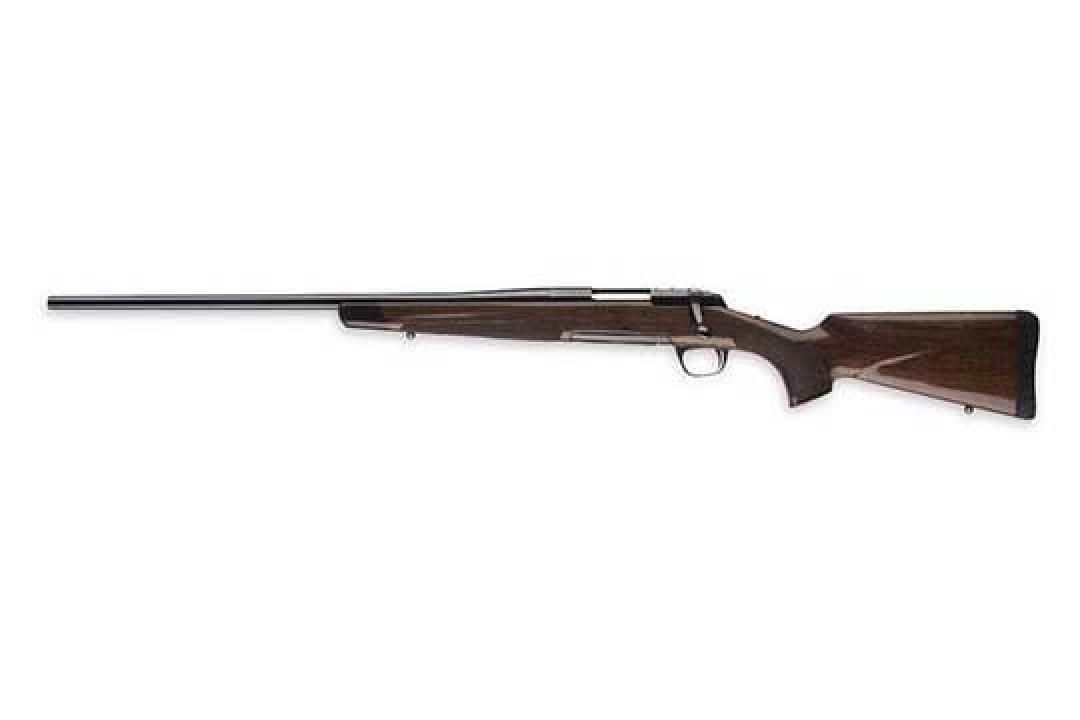
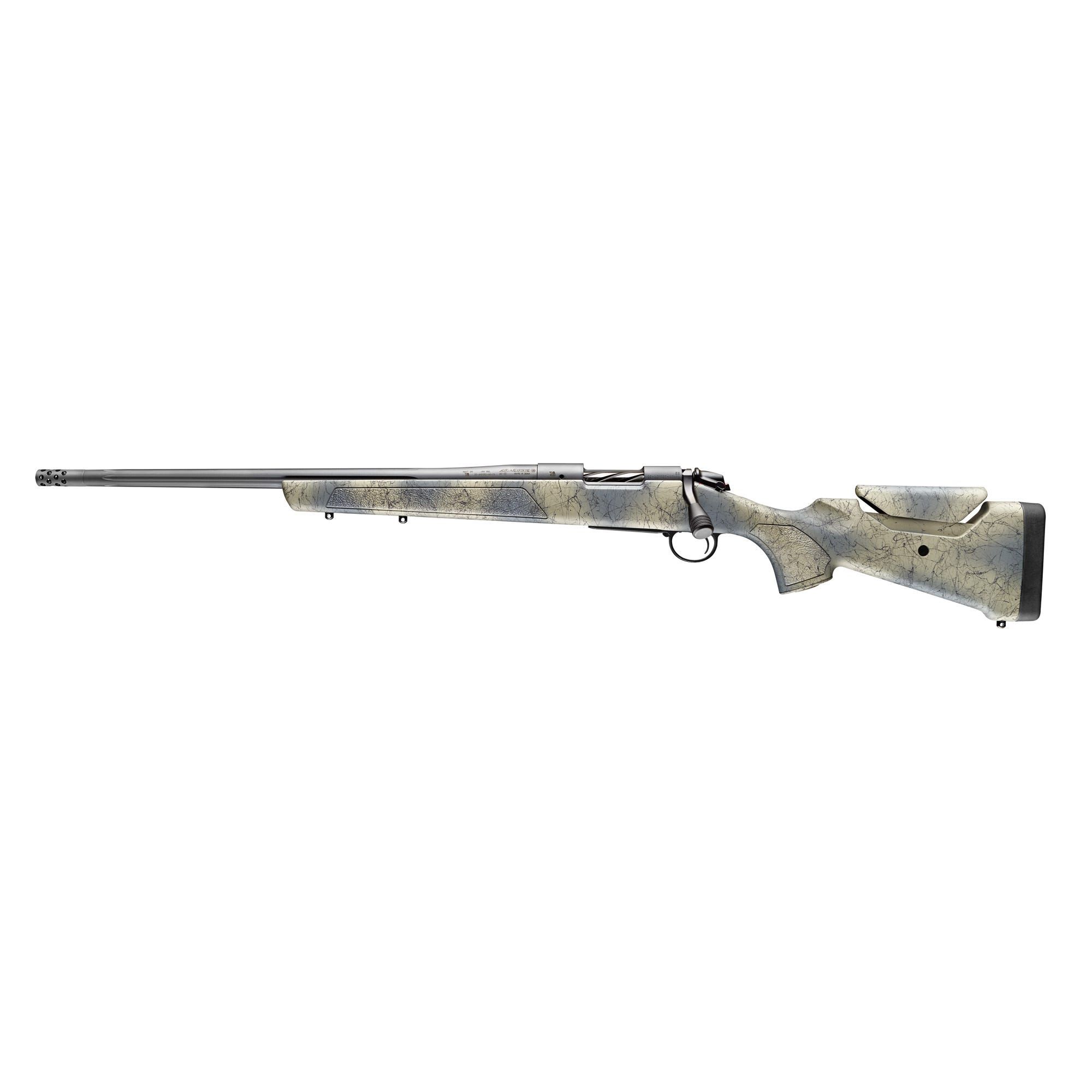
Most left-handed shooters were told at some point to just learn the right-handed gun. Plenty did, and shoot well. The advice made sense when a factory left-hand bolt rifle meant a special order and a long wait.
It is worth revisiting, because the situation changed quietly. Left-hand actions now come out of the same production lines as everything else, in the same model families, from youth rimfires up to .338 Lapua. Finding one is no longer the hard part, so the question has become whether you want one.
What "left-handed" actually means on a rifle
Three different things get sold under the word, and only one of them is a left-hand rifle.
A true left-hand action is mirrored through the receiver. The bolt handle is on the left, the ejection port is on the left, and the locking lug raceways inside the receiver are cut to match. You run the bolt with your left hand without breaking your firing grip, and empty brass leaves the gun away from your face.
An ambidextrous rifle keeps a right-hand action and adds controls both sides can reach, usually a safety and a magazine release. The bolt still throws right and the brass still ejects right.
Invalid Date
More Articles
A left-hand stock is furniture only: the cheekpiece is on the correct side and the palm swell is reversed, wrapped around a right-hand action. Some makers sell this as left-hand friendly, which it is, but the bolt has not moved.
The distinction matters at the ejection port more than at the bolt handle. A right-hand rifle throws brass across a left-handed shooter's line of sight, and on a hot semi-auto it throws it into the face. That is the part you cannot train around.
The argument against buying one
Ronnie Adkins, a left-handed precision shooter, put the case for staying with right-hand guns plainly in May 2026: "Lefty bolt gun circles are always going back and forth about whether to use a left-handed gun. I don't." His reasoning is that reaching over the action with the support hand costs him rear bag support, but that setting the position properly mitigates it and he gets a speed advantage in return, since the firing hand never leaves the grip. He also noted he can see into the magazine and chamber.
The replies split along a line that explains most of the argument. Shooters who work prone off a bag, in competition, largely agreed. Shooters who take offhand shots hunting did not. One put it directly: "I mainly use my lefty bolt gun for hunting. In that case though I've got a scope on it and am planning to take shots offhand, so a left-handed bolt is a lot easier to work in that case." Another was blunter: "For off-hand work, you want a lefty bolt."
So the honest answer depends on the position you actually shoot from. Prone and benched, a right-hand action costs a left-handed shooter very little and may gain a little. Standing, kneeling, or rushed in the field, the mirrored action is easier to run.
Two other things came up often enough to be worth naming. Several shooters said the price gap they grew up hearing about has narrowed. And at least one right-handed shooter deliberately runs a left-hand bolt gun for the same reason the lefties like it: the firing hand stays on the grip.
Eye dominance decides more of this than handedness
A large share of people who end up shopping for a left-hand rifle are not left-handed at all. They are right-handed with a dominant left eye, and mounting the rifle on the left shoulder is what fixed their groups. One shooter in that thread had no choice in the matter at all, being blind in the right eye.
Check this before choosing an action. Handedness and eye dominance disagree in a meaningful fraction of people, and it is the shoulder you mount on, not the hand you write with, that decides which side the bolt should be on.
Confirming it from the listing photograph
Listings get handedness wrong often enough that the picture is worth more than the title.
Gun photographs are almost always taken square to one side of the rifle. If you are looking at the rifle's left side, the muzzle points to the left of the frame. If you are looking at its right side, the muzzle points right. That follows from standing beside a rifle: whichever side you stand on, the muzzle runs away toward that side of your view.
So the check is two steps. Note which way the muzzle points, which tells you which side of the rifle you are seeing. Then look for the bolt handle.
Muzzle points
You are seeing
Bolt handle visible means
Left
The rifle's left side
Left-hand action
Right
The rifle's right side
Right-hand action
A muzzle-left photograph with no bolt handle in view is a right-hand rifle photographed from its blank side, which is the most common way a left-hand listing turns out to be showing the wrong gun. On a semi-auto, use the ejection port the same way, since it sits on the same side as the bolt handle.
Who actually builds them
The makers below all offer left-hand models within their standard lines rather than as custom orders. Savage carries the broadest range by a wide margin, from single-shot youth rimfires to heavy precision rifles.
Maker
Left-hand families
Savage
Axis, Axis II, Axis 2 XP, Trophy Hunter XP, 110 Elite Precision, 110 Precision, 110 Storm, 110 Timberline, 110 Apex Hunter XP, 110 BA Stealth, Mark I FVT, Mark II, B22, Rascal, Model 64
Mark V Accumark, Mark V Apex, Mark V High Country, Mark V UltraLight, Mark V Weathermark LT
Ruger
American, American Predator, Gunsite Scout, Hawkeye Hunter, Hawkeye Guide
Bergara
B-14 HMR, B-14 Timber, B-14R, Sierra Wilderness
Sako
90 Adventure, 90 Hunter, 90 Peak
Stag Arms
Stag 15, Stag 10S, Stag 10L Tactical
Remington
700 SPS, 700 SPS Compact
Others
Fierce Carbon Rogue, Crickett youth, APF Guardian
Chambering coverage follows demand rather than tradition. 6.5 Creedmoor is the single most common left-hand chambering, with 6.5 PRC close behind, and the list runs through .223, .243, .270, 7mm-08, .308, .30-06, 7mm Rem Mag, .300 Win Mag, .28 Nosler, .350 Legend, .400 Legend and .338 Lapua.
Rimfires and youth rifles, where it matters most
A right-handed adult can adapt to anything. A left-handed ten-year-old learning on a rifle that ejects into their face learns to flinch, and that is expensive to undo later.
This is the corner of the market where left-hand availability has improved most. Savage's Rascal single-shot and the Mark II GL bolt-action .22 both come left-handed, as does the B22 in .22 WMR and the Model 64 semi-auto. Crickett makes a left-hand youth rifle. For older shooters moving up, the Tikka T1x and the Bergara B-14R are rimfire trainers built on the same footprint and stock geometry as their centerfire counterparts, so a shooter can learn on one and change nothing about their position later.
Rifle
Type
Chambering
Savage Rascal
Single-shot youth
.22 LR
Crickett youth
Single-shot youth
.22 LR
Savage Mark II GL
Repeater
.22 LR
Savage B22
Repeater
.22 LR, .22 WMR
Savage Model 64
Semi-auto
.22 LR
Tikka T1x
Repeater trainer
.22 LR
Bergara B-14R
Repeater trainer
.22 LR
Semi-autos are the harder problem, and Stag solved it properly
Gas guns are where the ejection port stops being an inconvenience and becomes a real one, because brass arrives continuously and at speed.
Stag Arms builds genuinely mirrored AR-pattern rifles rather than adding an ambidextrous charging handle to a right-hand gun. The ejection port is on the left, the brass deflector and dust cover are on the left, the forward assist is repositioned, and the bolt carrier group is reversed with the extractor and ejector swapped to push brass the other way. The parts are purpose-built and do not interchange: a left-hand bolt carrier will not work in a right-hand upper, and the reverse is equally true.
That last point matters most when buying used or building from parts. A left-hand upper needs a left-hand carrier, and a mismatched pair will not cycle at all.
What you still give up
The rifles themselves are available. The ecosystem around them lags, and that is consistently what left-handed owners raise.
Area
What to expect
Aftermarket stocks and chassis
Fewer options, and left-hand inletting is a separate part number that is often backordered
Optics and mounts
No issue. Scopes, rings and bases are handed-neutral
Triggers
Generally fine. Drop-in triggers do not care which side the bolt is on
Used market
Thinner. Left-hand rifles are made in smaller numbers, so specific configurations take longer to find
Resale
Narrower pool of buyers, though a left-hand rifle in a popular chambering tends to hold interest because supply is limited too
Slings and bipods
No issue
Roughly, anything that bolts to the top of the receiver is unaffected, and anything the receiver sits inside is where the shortage shows up.
Choosing one
If you shoot prone off a bag, in competition, and you already run a right-hand gun well, the case for switching is weak. Adkins is not wrong about the bag and the speed.
If you hunt, take offhand or improvised positions, or you are buying for someone who is still learning, the mirrored action is the better tool and the price difference is no longer the obstacle it once was.
If you are right-handed with a left dominant eye, settle which shoulder you are going to mount on before you shop, then buy the action that matches it.
Nick Sawinyh - Nick Sawinyh is a father, husband, hobby farmer, and gun enthusiast from Kentucky. He founded GunsNation and writes most of what appears on this blog.