A revolver's extractor star works by grabbing rims. It sits behind the cartridge heads, and when you push the ejector rod it pulls all of them out together. Take away the rim and the mechanism has nothing to hold.
The 9mm Luger has no rim. It has an extractor groove cut into the case head, which is what a semi-automatic's extractor claw hooks into, and a case that headspaces on its mouth rather than on a rim sitting against the back of the chamber. Drop five loose 9mm rounds into a revolver cylinder and they will slide too far forward and the star will find nothing to grip.
.38 Special
9mm Luger
Rim
yes, a raised rim the star grabs
none, only an extractor groove
Headspaces on
the rim against the back of the chamber
the case mouth
Loose in a cylinder
sits correctly, extracts correctly
slides forward, star finds nothing
Needs help to work
no
yes, one of three ways
The whole 9mm revolver category is three different answers to that one problem, and which answer a gun uses changes what owning it is like more than any other specification.
Invalid Date
More Articles
The three answers
Solution
How it works
Guns
Moon clips
a steel disc holds the cases and supplies the rim the star needs
S&W 940 and 929, Ruger LCR 9mm, Taurus 905
Sprung extractor
a spring-loaded tip in each chamber catches the extractor groove
Charter Arms Pitbull
Second cylinder
swap in a cylinder cut for a rimmed cartridge instead
Ruger Blackhawk Convertible
Moon clips are the common answer and they solve two problems at once, the missing rim and the headspacing, because the clip holds the case at a fixed depth. That mechanism is covered in more detail in the 10mm piece, where every single revolver in the category depends on it.
What is different about 9mm is that it is the one rimless chambering where somebody built an alternative worth buying.
The clip route, and what it costs
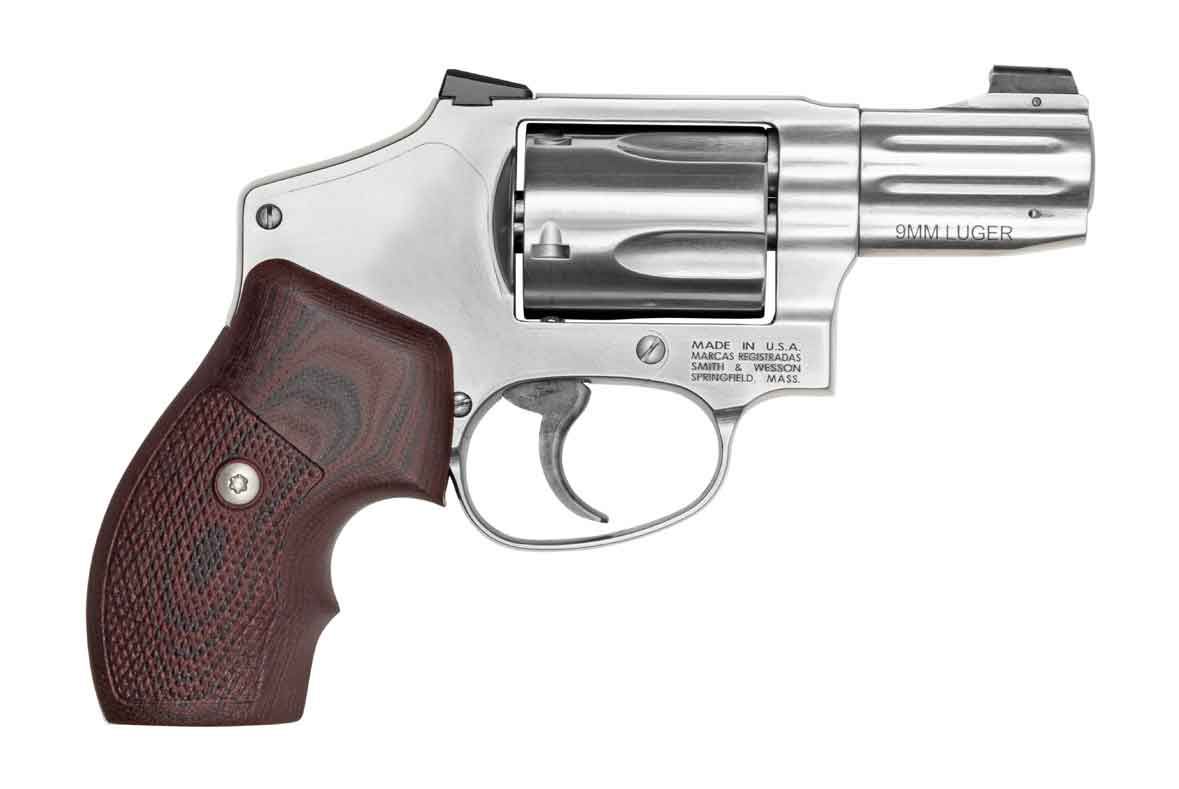
Smith & Wesson introduced the Model 940 in 1991 on the J-frame, the smallest frame the company makes, as a five-shot 9mm loaded and extracted with moon clips. It ran until 1998 and then stopped, and it has been a collector's gun ever since. A 940-3 has since returned to the catalogue.
At the other end of the same idea sits the Performance Center Model 929, which is a competition gun rather than a carry gun: 6.5 inch stainless barrel, titanium alloy cylinder, removable compensator, and a cylinder cut for eight rounds on a clip. Same solution, opposite purpose.
The cost of the clip route is that a clip is a consumable. Bend one and it will not seat. Lose them and the gun is a single-loader. Owners who shoot these seriously buy clips by the dozen and a demooning tool alongside, and that is a real ongoing requirement rather than an accessory.
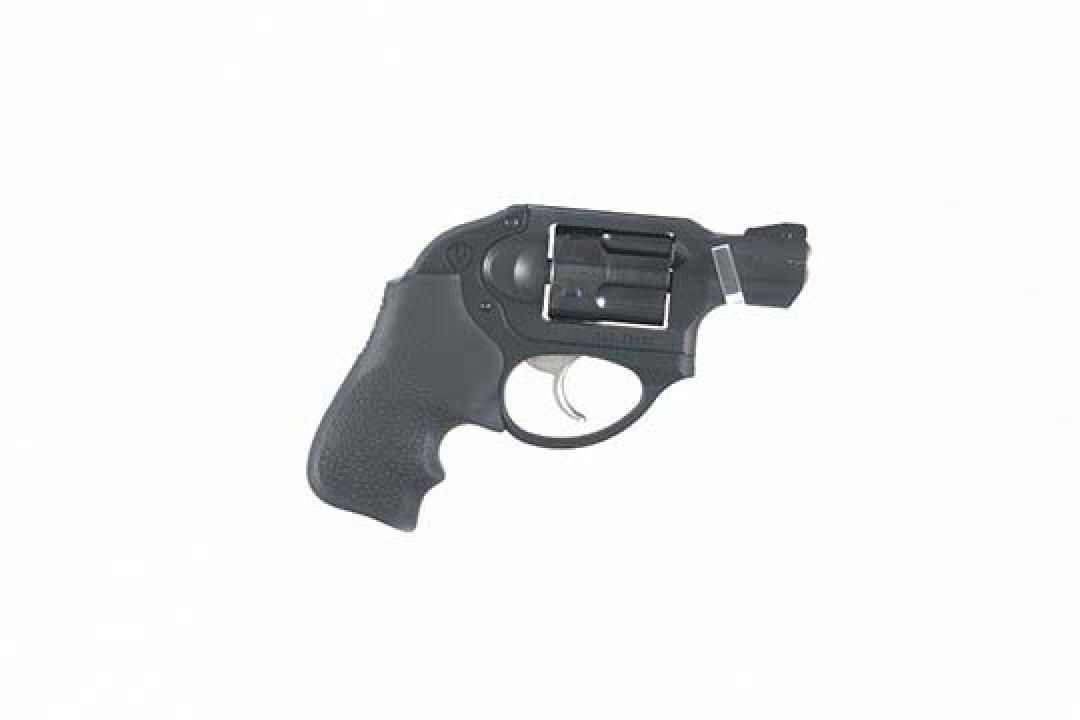
Ruger's LCR in 9mm and Taurus's 905 both take the same approach in a small carry package.
The Pitbull, which does not use clips at all
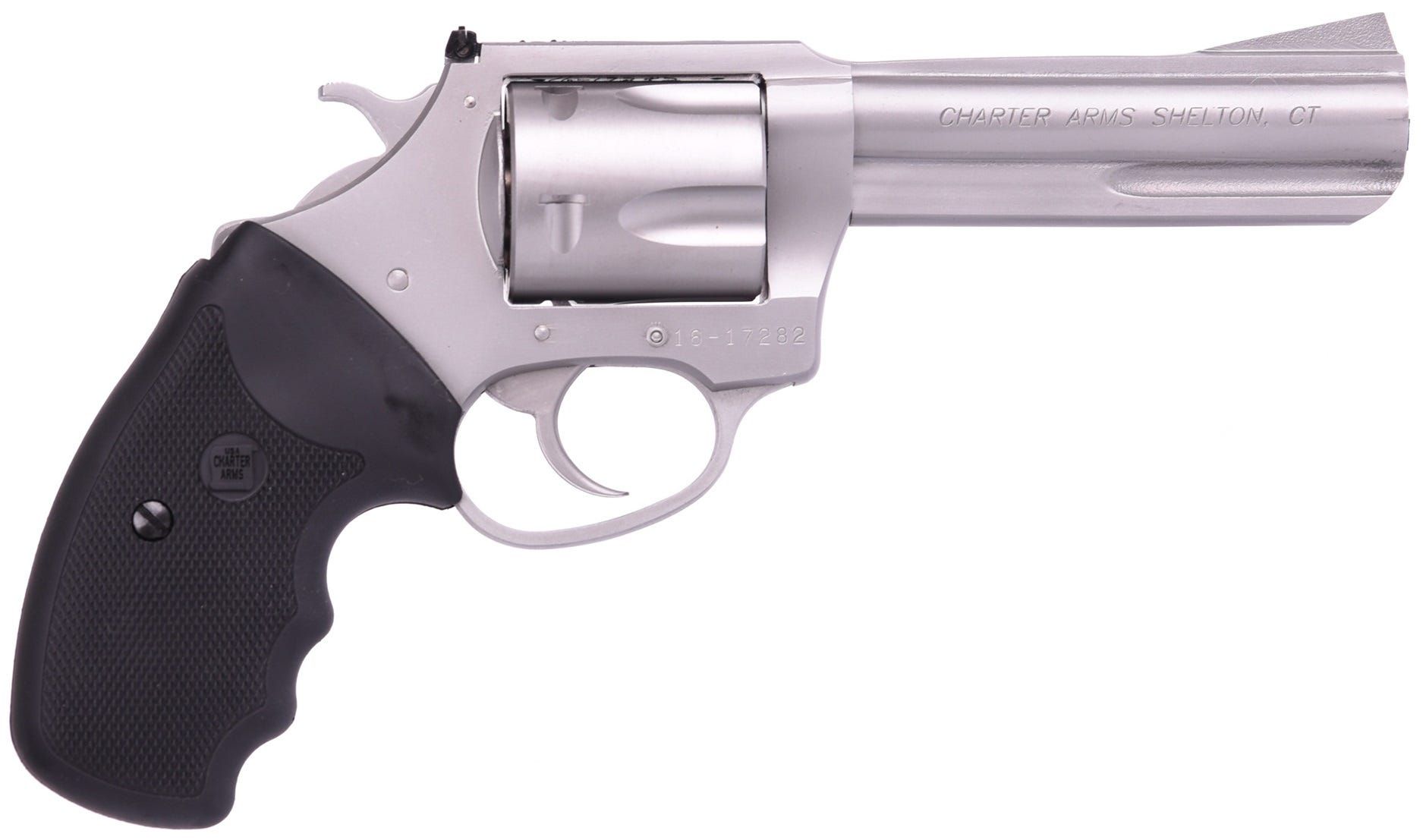
Charter Arms took a different route with the Pitbull, and it is the only production revolver family that did.
Its extractor carries a patented dual coil spring assembly, one per chamber. Push a round in and a spring-loaded tip retracts, then snaps out into the cartridge's extractor groove and holds it there. That groove, the feature that exists so a semi-automatic can pull the case out, becomes the thing the revolver grabs instead of a rim.
The practical result is that you load and unload a Pitbull exactly like a .38 Special. Push the rounds in, shoot, hit the ejector rod, and the empties drop clear. No clips to buy, bend, lose or de-moon.
The Pitbull line runs well beyond 9mm in this catalogue, and the same mechanism carries chamberings no other revolver maker offers at all.
Pitbull chambering
Note
9mm Luger
the volume model, 2 to 6 inch barrels
.40 S&W
a rimless chambering with no other revolver home
.45 ACP
usually a moon-clip job elsewhere
.380 ACP
a chambering only a handful of revolvers offer at all
Every one of those is a rimless automatic-pistol cartridge, which is the point: the sprung extractor does not care which one, because every one of them has an extractor groove.
The convertible, which sidesteps the question
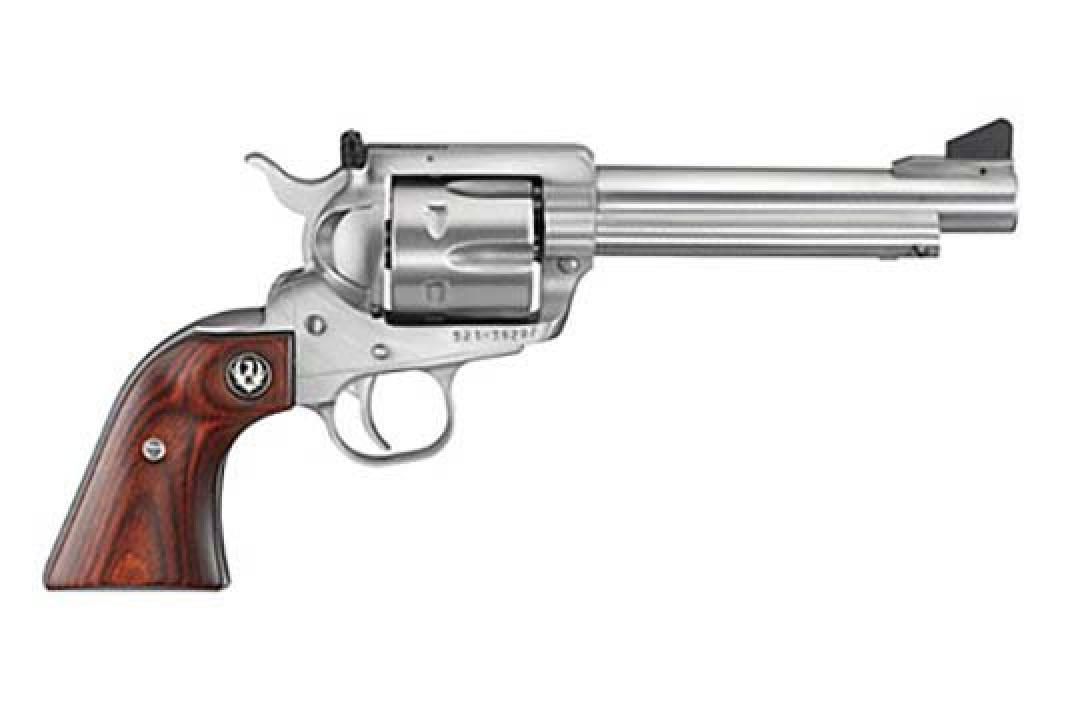
Ruger's answer on the single-action side is not to solve the rimless problem but to avoid it. The Blackhawk Convertible ships with two cylinders, one in .357 Magnum and one in 9mm, and you change the whole cylinder rather than the ammunition's rim situation.
That works because a single-action Blackhawk unloads one chamber at a time through a loading gate, using an ejector rod that pushes each case out individually. There is no extractor star to defeat, so the missing rim matters far less. The 9mm cylinder headspaces on the case mouth, the way a pistol chamber does, and the rod pushes the empties out one by one.
It is the oldest solution of the three and the least discussed, and it is the reason a meaningful share of the 9mm-capable revolvers in this catalogue are Blackhawks.
What else is in the category
Gun
Action
Note
Charter Arms Pitbull
DA/SA
sprung extractor, 2 to 6 inch barrels
S&W Model 940
double action only
J-frame, five shots, moon clips
S&W Model 929
DA/SA
Performance Center competition gun, eight shots
Ruger LCR 9mm
double action only
1.87 inch barrel, polymer and alloy
Taurus 905
DA/SA
compact, moon clips
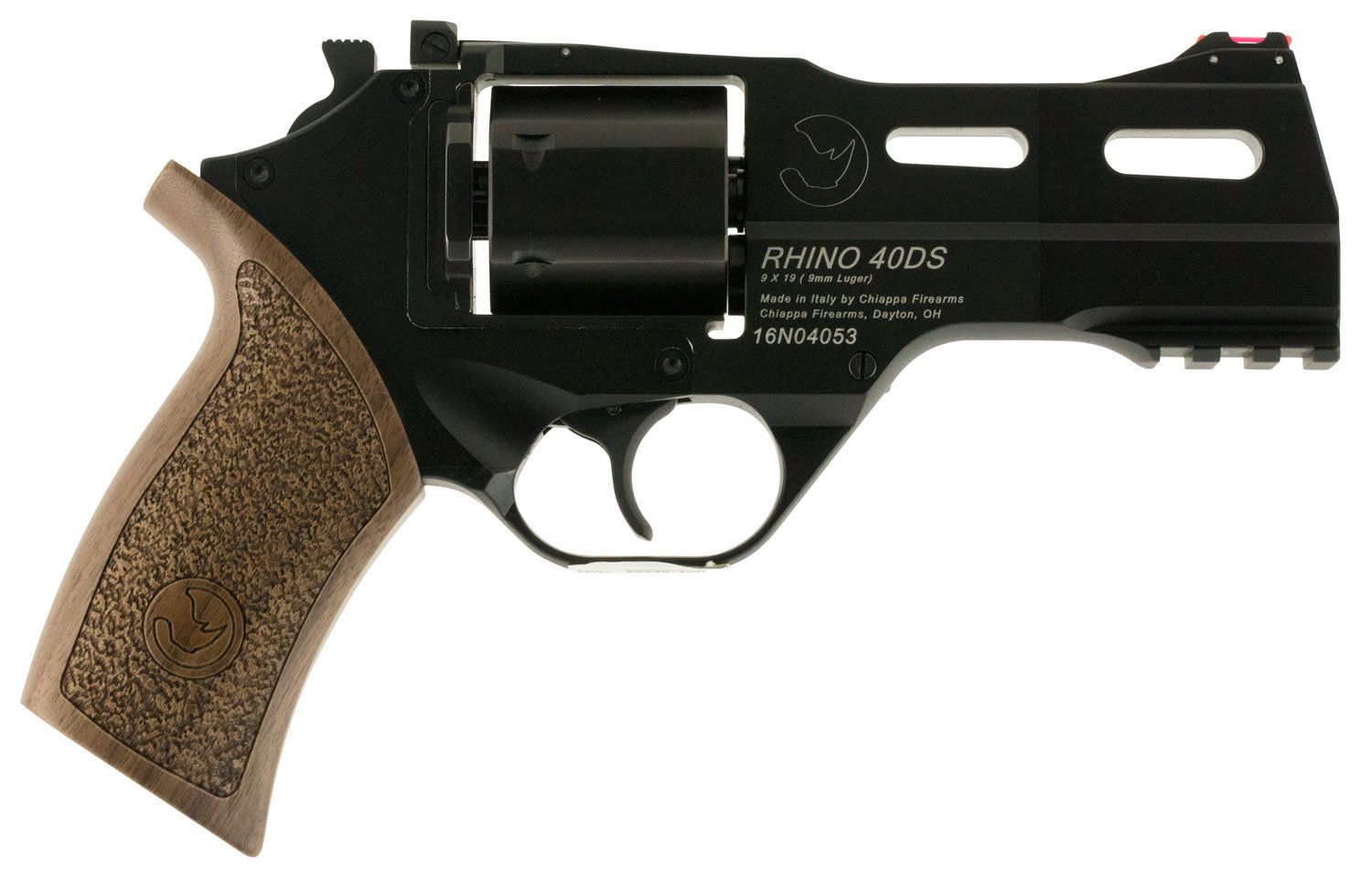
Chiappa Rhino 40DS and 60DS
DA/SA and DAO
fires from the bottom chamber, also offered in 9mm
Ruger Blackhawk Convertible
single action
two cylinders, .357 and 9mm
The Rhino deserves its own note because it stacks two unusual ideas. It fires from the bottom chamber of the cylinder rather than the top, dropping the bore nearly in line with the hand, and it does that in a chambering that already needs a clip. It is the most mechanically interesting gun in a category that is entirely about mechanism.
What the catalogue holds
Surface
Records
9mm Revolver
43
9mm Single Action Revolvers
26
9mm Derringers
29
Thin, for a term people search this often. Part of that is the category itself being small, and part of it was tagging: the 9mm Revolver surface was 28 records until this article was researched, and 15 genuine 9mm revolvers, among them four Charter Arms Pitbulls, a Ruger LCR, a Taurus 905, two Smith & Wesson 940s and four Blackhawk Convertibles, were sitting in the catalogue attached to nothing.
Why buy one at all
The honest answer is ammunition. A 9mm revolver shoots the cheapest and most available centrefire pistol cartridge in the world, which is not something you can say about .38 Special and certainly not about .357 Magnum. For anyone who already owns a 9mm pistol, it means one cartridge on the shelf instead of two.
Against that, a revolver in 9mm gives up the thing revolvers are usually chosen for, which is not caring about the ammunition at all. A .38 Special revolver will fire anything that fits, in any order, and needs no clips or special cylinders. Choosing 9mm means accepting one of the three answers above and living with whichever compromise it carries.
Step
What to read
Why
1
Whether it uses moon clips
this is the biggest single practical difference
2
Whether clips are included, and how many
the gun is unusable without them
3
Barrel length
carry guns run under 2.5 in, competition guns 6.5 in
4
Cylinder count
a convertible ships with two
5
Frame size
J-frame class or a full-size single action are different guns entirely
The first row is the one that decides everything else. A listing that does not say whether the gun takes clips has left out the most important thing about it, and for most of this category the answer is yes.
Nick Sawinyh - Nick Sawinyh is a father, husband, hobby farmer, and gun enthusiast from Kentucky. He founded GunsNation and writes most of what appears on this blog.