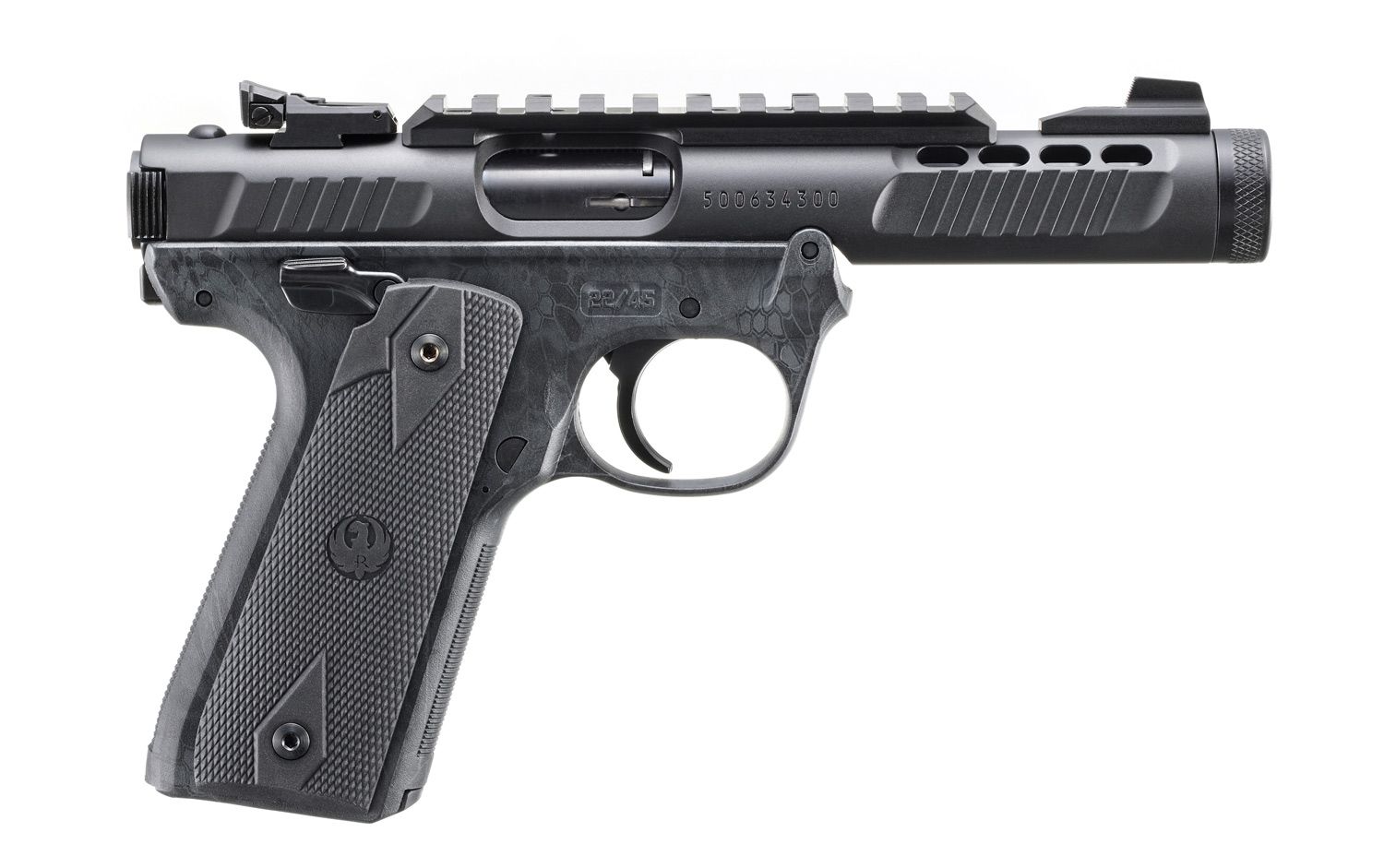
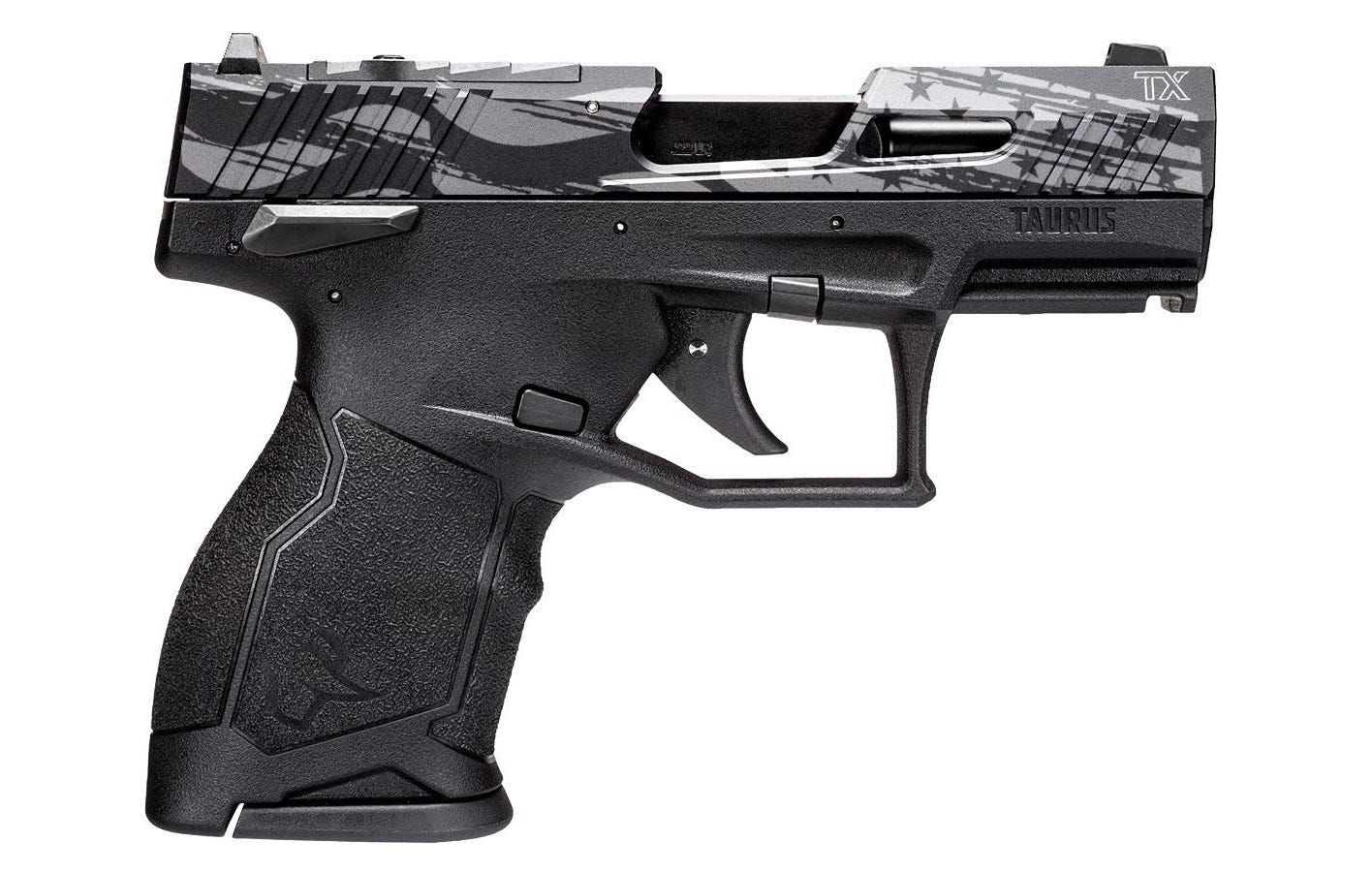
A .22 pistol is not one product. It is three, and they barely overlap.
There is the target pistol, built around a fixed barrel and a good trigger, designed to shoot small groups from a bench or a two-handed hold. There is the understudy, which is a .22 built to feel like a centrefire service pistol so you can practise for a fraction of the cost. And there is the trail and plinking gun, bought because shooting it is enjoyable and ammunition is cheap.
Buy one for the wrong job and it will disappoint you in a way that has nothing to do with quality.
Blowback, and why it makes these accurate
Almost every .22 pistol works the same way, and it is the simplest mechanism in handguns.
A centrefire pistol has to lock the breech, because chamber pressure would otherwise blow the slide back before the bullet leaves. That means the barrel moves, tilting or shifting to unlock, and a moving barrel is harder to make return to precisely the same place every shot.
The .22 LR does not generate enough pressure to require locking. The breech is held shut by the weight of the bolt or slide and the strength of a spring, and nothing needs to unlock. The barrel can therefore be fixed rigidly to the frame and never move at all.
Invalid Date
More Articles
That is why a modest .22 target pistol can be more mechanically accurate than a much more expensive centrefire, and why the classic .22 target pistols all look slightly odd: a fixed barrel with a light reciprocating bolt above or behind it, rather than a slide wrapped around a moving barrel.
The target lineage
Two families dominate this inventory, and both are decades old.
Ruger's line began in 1949 with the Standard Model, the first product Sturm, Ruger ever made, built in a red barn in Southport with a bolt running inside a tubular receiver rather than a conventional slide. The Mark II followed in 1982, the Mark III in 2005 and the Mark IV in 2016. The Mark IV and the 22/45 variant, which swaps the Ruger grip angle for a 1911-like one, together account for a large block of the target guns listed here. Browning's Buck Mark is the other, comparable in numbers and philosophy, and the two have been argued about for as long as both have existed.
Volquartsen sits above both, building competition guns and upgraded components, and appears here in numbers disproportionate to what a small maker would normally hold, which tells you something about how much of this market is people upgrading target pistols.
The Mark IV fixed the thing everyone complained about
The Ruger Mark series has one famous flaw, and it is worth explaining because it is the single most common reason people avoided an otherwise excellent pistol.
On the Mark II and Mark III, taking the gun apart and putting it back together was genuinely difficult. Reassembly required holding the pistol at a particular angle so an internal hammer strut would drop into place under gravity, and getting it wrong meant repeating the process until it worked. The procedure has been described as needing three hands, and the reassembly instructions became something of a running joke.
The Mark IV replaced all of that with a single button at the rear of the frame. Press it and the barrel and receiver assembly tilts up and lifts off the grip frame. There is no strut to align and no sequence to remember.
If you are looking at used Ruger .22 pistols, this is the difference that matters most between generations. The older guns are not worse to shoot. They are worse to own.
The understudy pistols
The other half of the market is .22 pistols built to mimic centrefire guns, and it has grown considerably.
Taurus's TX22 is the largest single model group in this inventory, which surprises people who assume the category is all Rugers. It is a polymer striker-fired pistol shaped like a modern duty gun, with a magazine capacity in the mid-teens rather than the ten rounds that used to be standard for rimfire.
Glock's G44 does the same job in a Glock frame, SIG's P322 in a SIG one, and Smith & Wesson's M&P22 in an M&P. Walther has a long-running line, and a substantial group of 1911-pattern .22 pistols exists, many built by GSG, so that a 1911 shooter can practise on the same controls.
The argument for these is straightforward. If you carry or compete with a particular pistol, practising the draw, the grip and the trigger on a gun with identical ergonomics and a fraction of the ammunition cost is efficient. The argument against is that the recoil impulse is nothing like the real thing, so recoil management is the one skill that does not transfer.
Threaded barrels and the suppressor case
About one pistol in twenty-three here advertises a threaded barrel, and that number is rising for a specific reason.
A .22 pistol is close to the ideal suppressor host. Standard subsonic ammunition is cheap and widely available rather than a specialty item, pressures are low so the suppressor can be small, and the result is genuinely quiet rather than merely muffled. A suppressed .22 pistol is one of the few firearms that lives up to what people imagine a suppressor does.
If a suppressor is anywhere in your plans, buy the threaded version now. Threading an existing barrel is possible but costs more than the price difference, and on a fixed-barrel target pistol it is not always straightforward.
Ammunition decides how well it works
The same rule that governs .22 rifles governs .22 pistols, with one extra complication.
Rimfire ammunition varies a great deal between brands and even between lots, and pistols are pickier than rifles because they have to cycle as well as shoot. A load that groups beautifully might not have enough energy to work the action reliably, and the very quiet subsonic loads that suit a suppressor are exactly the ones most likely to short-cycle.
Buy several types in small quantities and find out what your specific gun likes before committing. Two pistols of the same model can disagree.
Reading a listing without being misled
Two defects turn up repeatedly in this category, and we corrected both while preparing this article.
The first is an invented generation. Seventeen listings here described the Glock 44 as a "Gen 1". Glock does not assign the G44 a generation at all: it uses a Gen 5-style frame and slide, and no generation appears on the gun. The designation had been pasted in by a naming pass, and it is the kind of detail that sounds authoritative and sends buyers looking for a "Gen 2" that does not exist. All seventeen have been corrected.
The second is a weight in the wrong unit. A .22 pistol weighs somewhere between about fifteen and forty ounces, with the target guns at the top of that range and the polymer understudies at the bottom. Published figures of two, five or a hundred and eighty-eight are not weights. Sixteen records here carried one of those, and they have been fixed or cleared.
There is one honest exception worth knowing, because it looks like the same defect and is not. The North American Arms mini-revolvers genuinely weigh four to seven ounces. If a listing says a handgun weighs five ounces and the gun is an NAA mini, the number is correct.
What to buy
If the pistol is for shooting groups, buy a Mark IV or a Buck Mark and put the savings into ammunition and a red dot. Both are decades-refined, both are more accurate than most shooters, and the choice between them comes down to grip angle and which one feels better in your hand.
If the pistol is for practising with your carry or competition gun, buy the rimfire version of that gun, or the closest match you can find. The point is identical ergonomics, so a cheaper pistol that handles differently defeats the purpose entirely.
If the pistol is for the trail, a pack or general enjoyment, buy something light with a threaded barrel and stop optimising. This is the job where almost everything works.
And if you are buying used Ruger, check which Mark it is before you commit, unless you find field-stripping puzzles relaxing.
Nick Sawinyh - Nick Sawinyh is a father, husband, hobby farmer, and gun enthusiast from Kentucky. He founded GunsNation and writes most of what appears on this blog.