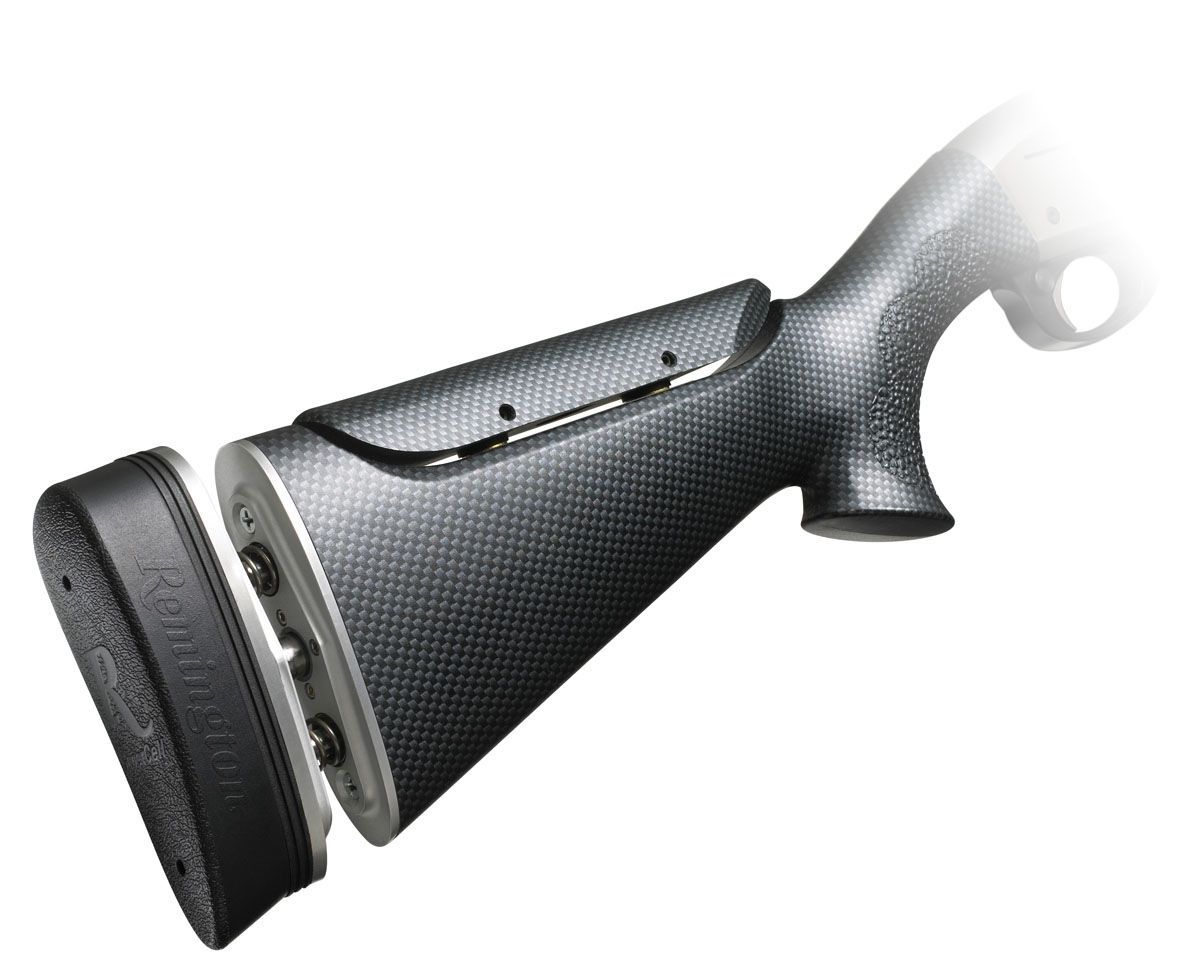
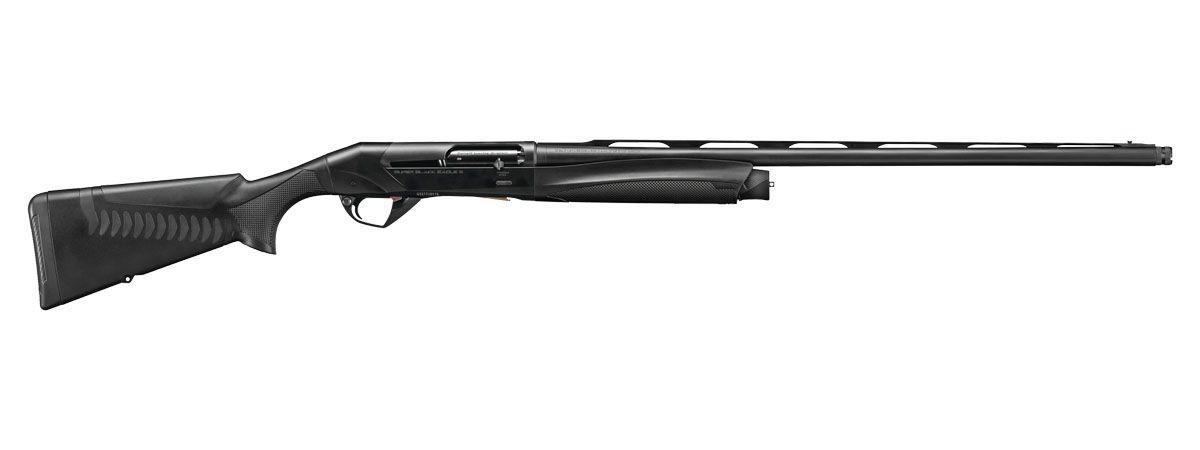
The Model 1100 is the reason most American shooters think a semi-automatic shotgun should be soft to shoot. Remington introduced it in 1963, designed by Wayne Leek and Robert Kelley, and built more than four million of them across 12, 16, 20 and 28 gauge and .410 bore. It replaced the Model 58 and Model 878, and eventually the Model 11-48 as well. For a generation it was the default answer to the question of what to buy if you did not want to work a pump.
What makes it feel that way is gas operation. That single design decision still sorts the semi-automatic shotgun market into two camps, and it predicts which guns run dirty, which guns kick, and which ones refuse to cycle a light target load on a cold morning.
What gas operation actually does
A shotshell fired in a fixed barrel produces a large volume of gas at high pressure. A gas gun drills a port through the barrel wall, bleeds a fraction of that gas into a cylinder around the magazine tube, and uses it to shove a piston rearward. The piston drives the action bars, which unlock and retract the bolt, eject the hull, cock the hammer and compress the return spring.
The part that matters to the shooter is timing. Recoil that would otherwise arrive as one sharp shove is instead spread across the whole cycle, because the gun is still moving parts around for several milliseconds after the shot. That is why a gas 12-gauge feels softer than a pump of the same weight firing the same shell, and it is why the 1100 built its reputation on clay ranges where people shoot hundreds of rounds in a session.
Invalid Date
More Articles
The costs are real too. Gas taken out of the barrel is gas full of burnt powder, and it goes straight into the mechanism. Gas guns need cleaning on a schedule that inertia guns do not, and the piston, rings and seals are wear parts.
The 1100's one real limitation, and how the 11-87 fixed it
The 1100 has an unregulated gas system. The gun does not adjust to the shell; the barrel's gas ports do, and they are drilled for a particular pressure range. That is why 1100 barrels are not universally interchangeable and why magnum guns and field guns were built differently, with the magnum receiver slightly longer.
For an owner this means a gun set up for heavy loads may not reliably cycle light target shells, and a gun ported for field loads should not be fed a diet of magnums. It is a fixed arrangement chosen at the factory.
Remington's answer arrived in 1987 as the Model 11-87. Its barrel carries gas bleed ports covered by a spring-loaded relief valve, so excess pressure vents instead of slamming the action. The result is a gun that runs 2 3/4in field loads and 3in magnums with nothing changed by the shooter, which is what "self-compensating" means on the box.
Model
Introduced
Gas system
Load range
Model 1100
1963
Unregulated, fixed ports
Set by the barrel
Model 11-87
1987
Self-compensating relief valve
2 3/4in through 3in, no adjustment
The other answer: inertia
While Remington was refining the gas gun, an Italian engineer named Bruno Civolani was solving the same problem without touching the barrel at all. His system uses three parts: a bolt body, a stiff spring inside it, and a rotating bolt head. When the gun recoils, the bolt body's own inertia keeps it briefly in place while the rest of the gun moves back, compressing the spring between them. The spring then pushes the bolt body rearward and the action cycles.
The Benelli brothers backed him, forming Benelli Armi in 1967 and producing their first 150 inertia-operated 12-gauges in January 1969.
Nothing is bled from the barrel, so there is no gas port, no piston, no cylinder and no fouling from combustion products in the action. The guns are lighter, simpler and famously easy to keep running. The tradeoff sits in the same physics: the system is powered by recoil, so a light load may not generate enough of it to cycle the gun, particularly in cold weather, and the recoil the shooter feels is not spread out the way a gas gun spreads it.
Gas
Inertia
Powered by
Gas bled from the barrel
The gun's own recoil
Felt recoil
Spread across the cycle
Arrives more sharply
Fouling in the action
Yes, from burnt powder
Very little
Light loads
More forgiving
Can fail to cycle
Weight
Heavier
Lighter
Wear parts
Piston, rings, seals
Very few
Who builds which
The split runs along company lines more than model lines, with one instructive exception.
Maker
Records
Mostly
Benelli
344
Inertia
Browning
318
Both
Beretta
274
Gas
Winchester
274
Gas
Retay
179
Inertia
Mossberg
113
Gas
Charles Daly
112
Mixed
TriStar
108
Gas
Remington
103
Gas
Weatherby
101
Inertia
Franchi
94
Inertia
Stoeger
87
Inertia
Browning is the exception worth knowing about, because it sells both mechanisms under one roof. Of its 318 records here, 118 are A5 variants, which despite the name and the humpbacked receiver are inertia guns rather than descendants of the original long-recoil Auto-5. The other 201 are Maxus, Gold and Silver models, which are gas. Buying "a Browning semi-auto" therefore tells you nothing about how the gun works.
Benelli's ownership of Franchi and Stoeger explains three of the inertia entries at once. That is one family of guns at three price points.
What the catalog shows about who buys these
Across 24 semi-automatic shotgun tag pages here there are 2,534 records from 59 makers, and 2,419 of them state a barrel length. The distribution says plainly what these guns are for.
Barrel
Records
28in
1,011
26in
635
24in
156
22in
107
18.5in
178
Counting broadly, 1,987 records carry a barrel of 24in or more and 315 carry 20in or less, a ratio of about six to one. The semi-automatic shotgun is a hunting and clay-target gun, and the defensive configuration is a small minority of it.
That is a different shape from the pump gun. Running the same measurement across the Remington, Mossberg and Winchester pump tags gives 752 records, 718 with a barrel length, of which 385 are 24in or over and 288 are 20in or under. The pump splits roughly evenly between the field and the front hall. The semi-auto does not.
Cost and mechanism both push that way. A gas or inertia action adds parts and price, and a shotgun bought to sit in a cupboard against an emergency gets no value from a recoil impulse spread across a cycle it will fire twice a decade. A gun shot two hundred times on a Saturday gets a great deal of value from it.
Gauge, and the 3 1/2in question
Gauge in this category is lopsided in the way most shotgun categories are, but the 20 has a larger share here than its reputation suggests.
Gauge
Records
12
1,753
20
616
28
61
.410
39
16
30
A little under a quarter of these guns are 20 gauge, and that is mostly the semi-automatic's doing. A 20-gauge pump kicks less than a 12 but still kicks; a 20-gauge gas gun is genuinely gentle, which is why it turns up so often as a first shotgun and as a gun bought for a smaller-framed shooter.
At the other end, 403 records mention a 3 1/2in chamber. That is the waterfowl market, and it is the place where the gas and inertia argument gets loudest, because a 3 1/2in load in a gas gun is where the softer impulse is worth the most and a 3 1/2in load in an inertia gun is where the sharper impulse is felt the most.
Buying a used 1100
With four million built, the used market is deep, and most of the guns you meet have a history.
Check that the barrel and receiver belong together. Gas ports are drilled in the barrel for a load range, so an 1100 wearing a barrel from a different variant may cycle badly or not at all, and the magnum guns use a slightly longer receiver.
Replace the O-ring on the magazine tube before assuming a cycling problem is serious, because it is a consumable and an old one is the most common cause of a tired-feeling 1100.
Look at the gas ports and piston for carbon. A gun that has been shot a great deal without cleaning will show it exactly where the gas goes.
Then check the listing itself. This catalog held an 1100 filed and titled as a pump-action shotgun, which no 1100 has ever been, along with eight other semi-automatics whose action fields said pump, bolt or single action, and a CZ single-shot trap gun sitting inside a semi-automatic tag. All of those have been corrected.
Nick Sawinyh - Nick Sawinyh is a father, husband, hobby farmer, and gun enthusiast from Kentucky. He founded GunsNation and writes most of what appears on this blog.