A single-action revolver does one thing when you pull the trigger: it drops a hammer you have already cocked by hand. Cocking the hammer is also what turns the cylinder and lines up the next chamber. Every gun in this category works that way, from a Colt Single Action Army to a pocket-sized North American Arms mini revolver. They differ in what happens when the hammer is down and a loaded chamber sits in front of it, and the makers have answered that in four different ways. It is worth knowing which answer you are buying.
Leaving out revolving carbines, double actions, the Chiappa Rhino's single-action variants and a few mislabeled pistols, the catalog holds 1,457 cartridge single-action revolvers, plus 52 black-powder percussion revolvers.
How the Colt pattern works, and why it carried five
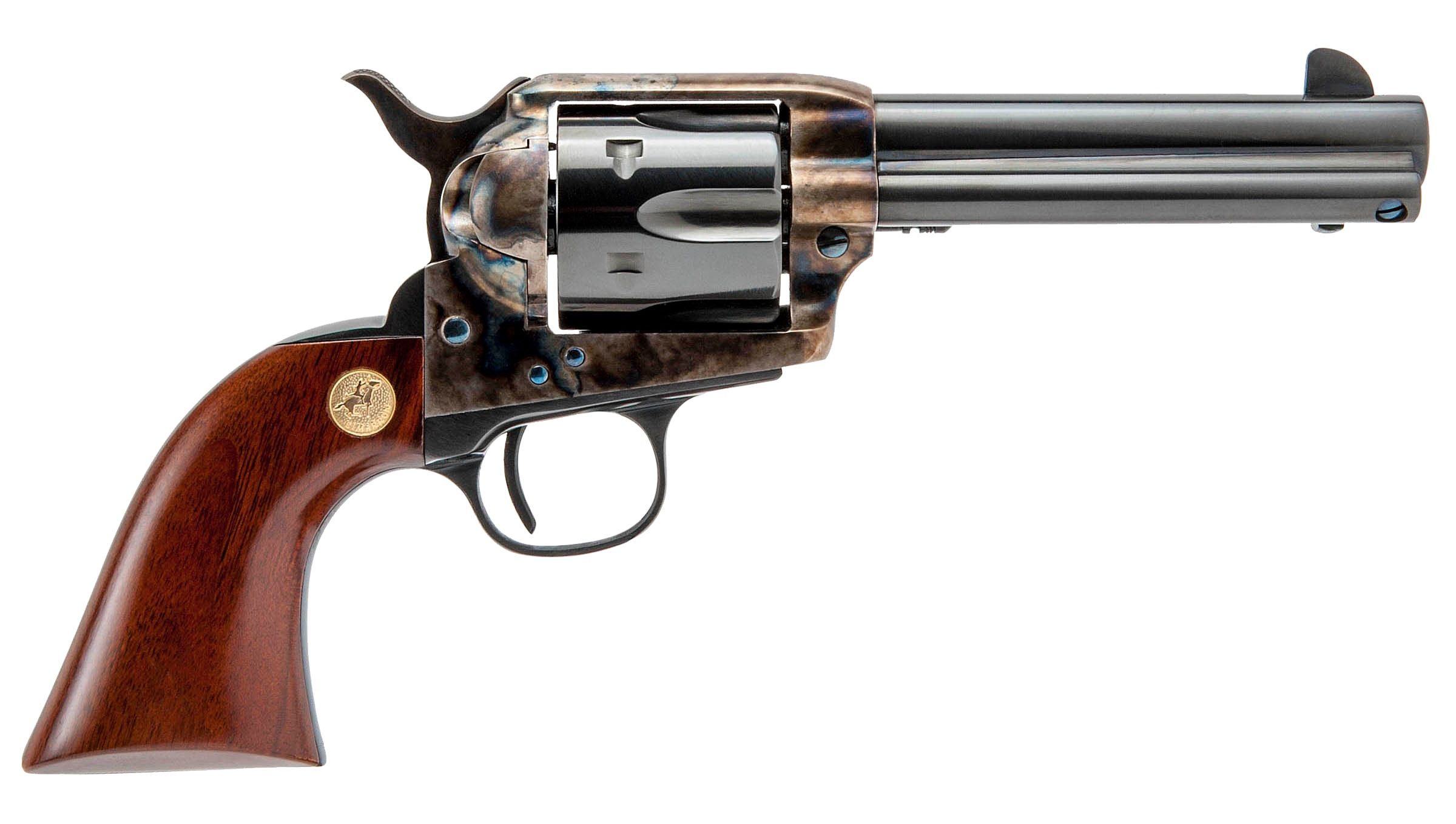
On an original Colt Single Action Army, the firing pin is part of the hammer. Draw the hammer back slowly and you hear four clicks, which collectors spell out as C-O-L-T: the safety notch, the half-cock notch, the cylinder stop rising, and full cock. The half-cock notch is the loading position. It frees the cylinder to turn so you can open the loading gate on the right side of the frame and load one chamber at a time.
Invalid Date
More Articles
The safety notch will not hold up to a hard blow on the hammer spur, which can break it and fire the round beneath, so it is no place to carry the hammer. The old practice, and still the right one for a gun built this way, is to load one chamber, skip one, load four more, cock the hammer and lower it on the empty chamber. That is why a six-shooter built to the 1873 pattern gets carried with five.
Ruger's transfer bar, 1973
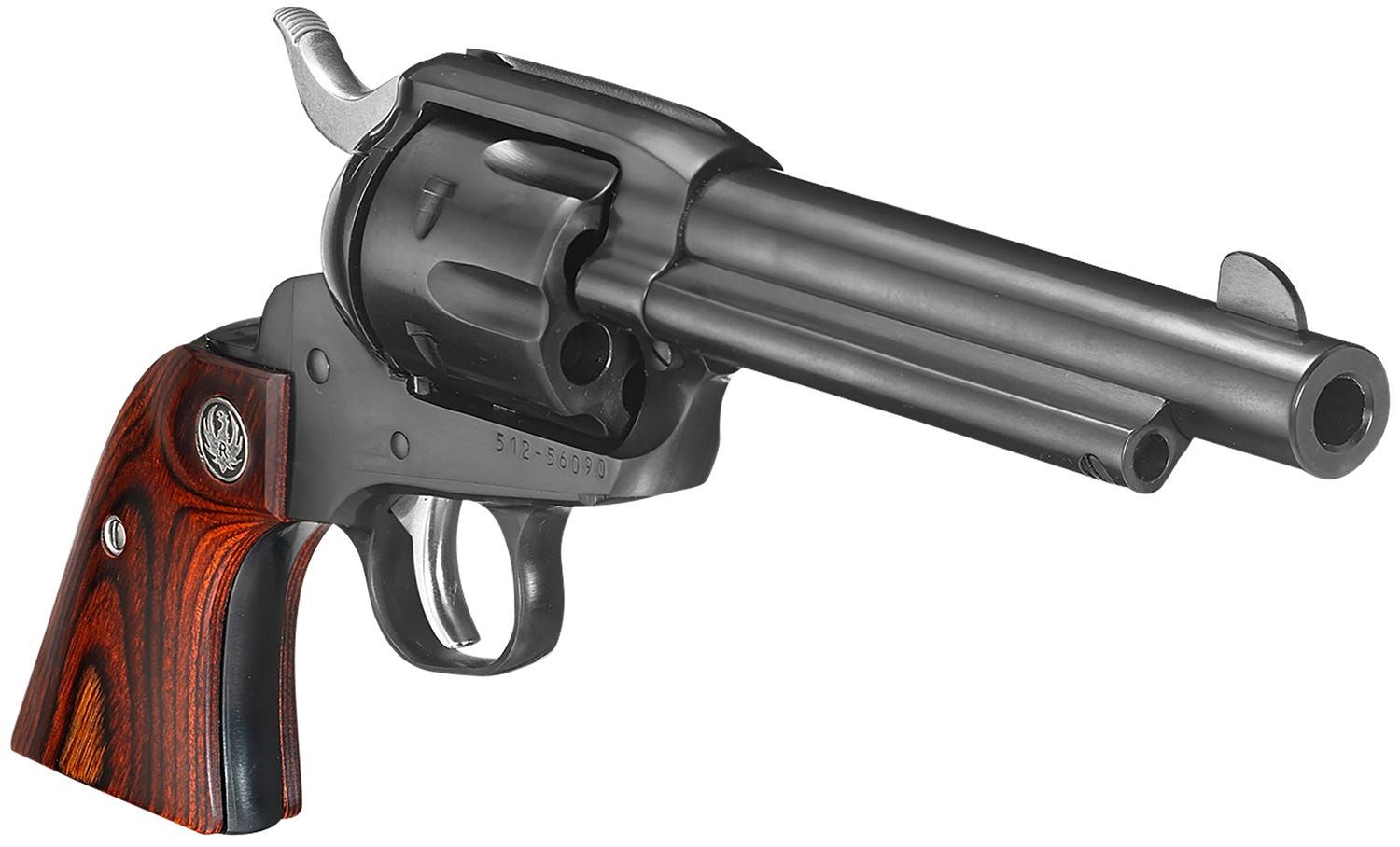
Ruger changed this in 1973 with the New Model Blackhawk. The firing pin moved into the frame, and the hammer no longer touches it at rest. A transfer bar rises between hammer and firing pin only when the trigger is held back, so a blow to a lowered hammer cannot fire the gun. Opening the loading gate frees the cylinder, which did away with half-cock and with the four clicks. Ruger then offered free transfer-bar conversions for its earlier "old model" revolvers.
Every current Ruger single action works this way, which means the Blackhawk, Super Blackhawk, Vaquero, Single-Six, Single-Seven and Wrangler can all be carried with every chamber loaded. Magnum Research and EAA use the same system and say so plainly. The BFR has a transfer bar and a frame-mounted firing pin, and EAA's Bounty Hunter, built by Weihrauch in Germany, uses a transfer bar under license from Ruger.
The hammer block and the notch
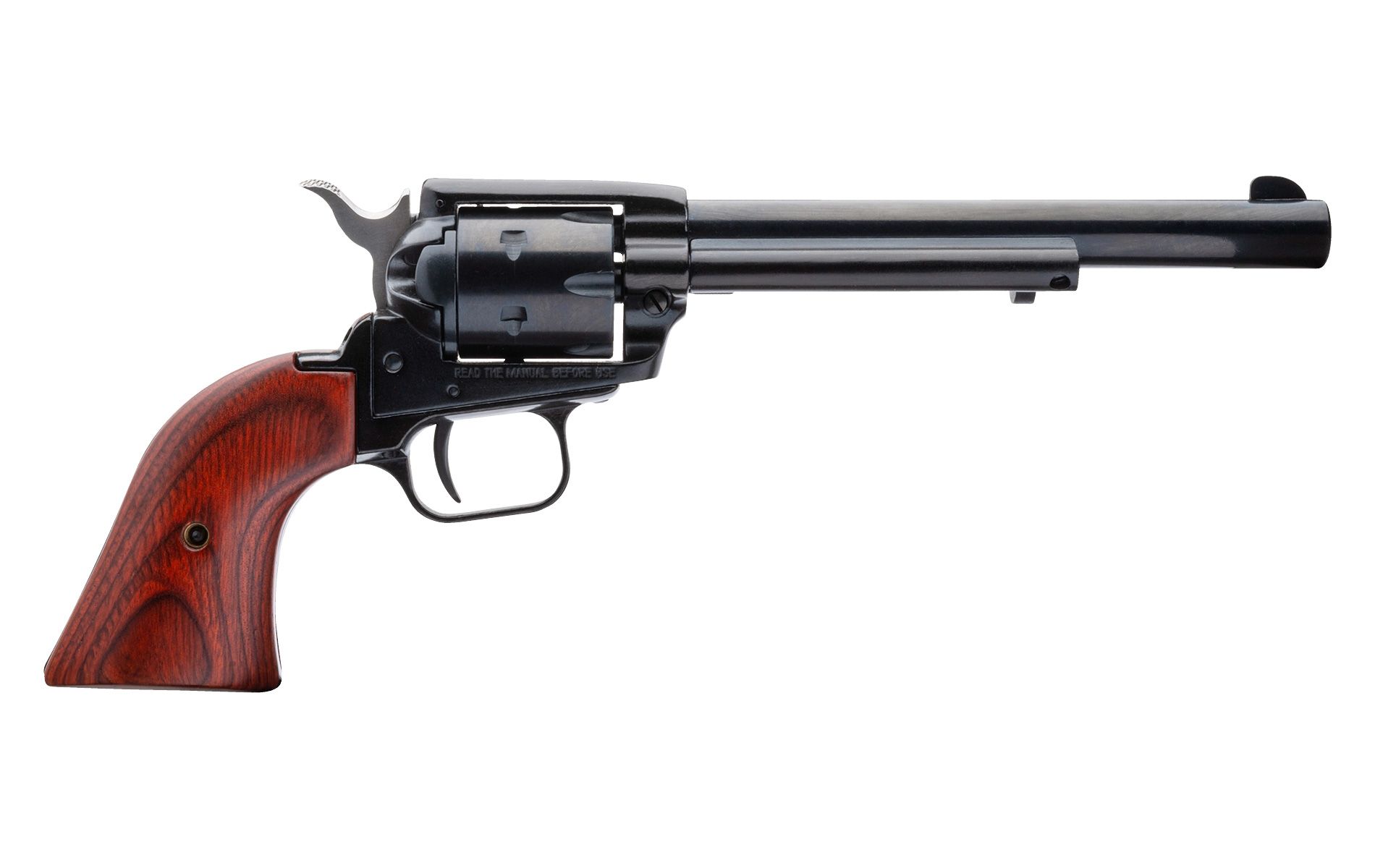
Heritage's Rough Rider rimfire models carry a manual safety on the left side of the frame, a lever that blocks the hammer from reaching the firing pin. Heritage still recommends carrying with the hammer over an empty chamber as well.
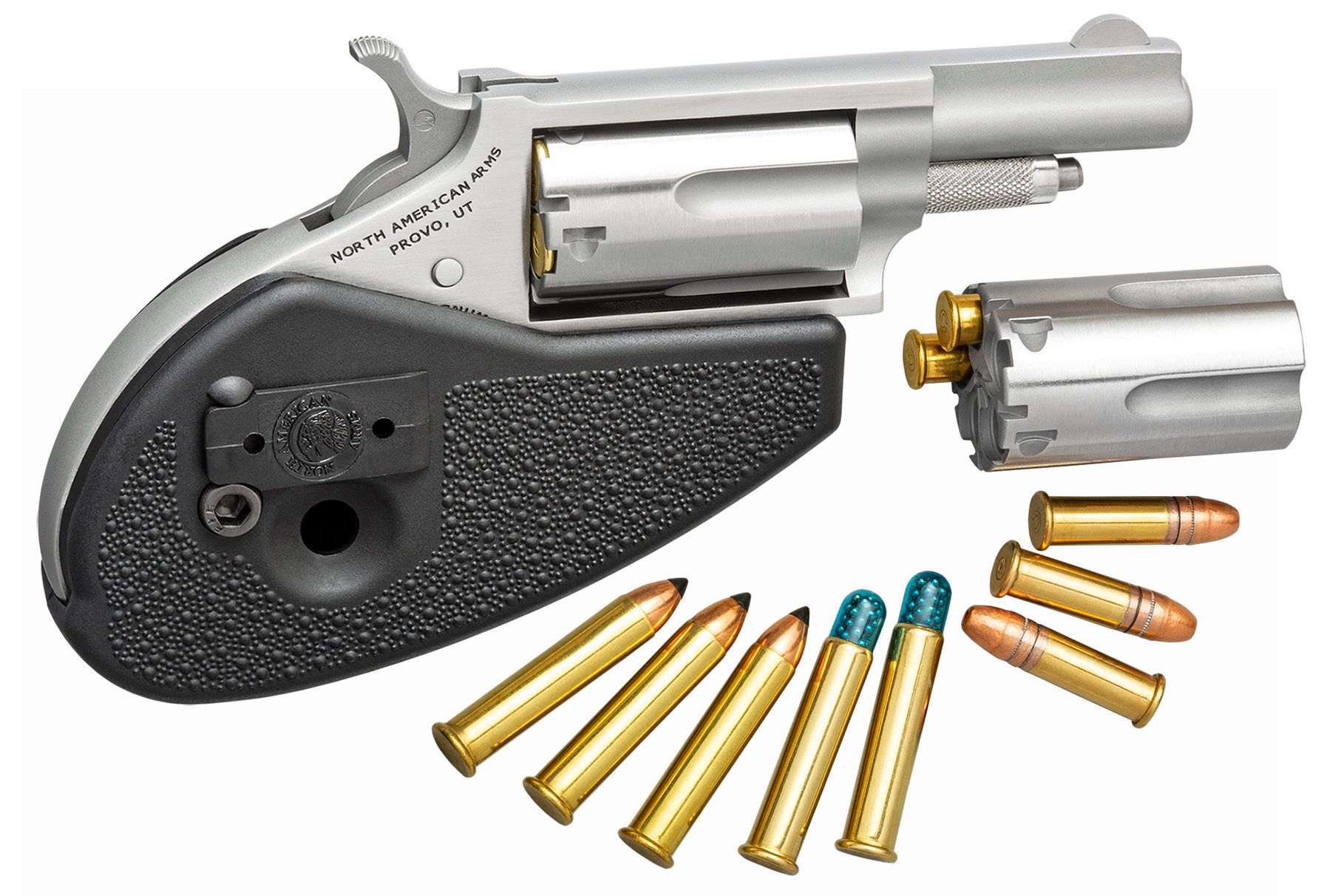
North American Arms mini revolvers have small notches machined between the chambers, and lowering the hammer into one leaves the firing pin resting between two cartridge rims rather than on a live round.
The Italian replicas, where the answer is per model
Most of the rest of the market is Italian. Uberti and Pietta build Colt-pattern revolvers under their own names, and importers such as Cimarron and Taylor's & Co sell guns from both factories under theirs. Their guns come both ways. Uberti builds traditional four-click revolvers alongside its Cattleman II, which uses a firing pin that retracts unless the hammer is cocked. Pietta offers dedicated transfer-bar versions of its 1873 alongside traditional ones. Taylor's and Cimarron even sell kits that convert a retracting-pin Uberti back to the original action.
With these makers you have to check the specific model and its manual to know how the gun is meant to be carried. If a listing does not say transfer bar or retracting firing pin, treat the gun as a traditional Colt pattern and load five.
The black-powder revolvers
The 52 percussion revolvers in the set are reproductions of the guns that came before the cartridge: the Colt 1851 Navy, 1860 Army and Dragoons, and the Remington 1858 New Army, built mainly by Uberti and Pietta and sold under Traditions and the usual importers as well. They are single actions too and cock and index the same way, but each chamber is loaded from the front with loose powder and a lead ball, and fired by a percussion cap on a nipple at the rear of the cylinder.
What the catalog holds
Counted by maker across the cartridge revolvers:
Maker or importer
Revolvers
Safety at rest
Cimarron
277
Per model (Uberti and Pietta sourced)
Heritage
246
Manual hammer-block safety
Taylor's & Co
202
Per model (Uberti and Pietta sourced)
Ruger
196
Transfer bar
North American Arms
145
Safety notches between chambers
Uberti
135
Per model: traditional or retracting pin
Pietta
66
Per model: traditional or transfer bar
Chiappa
36
Check the model
Magnum Research (BFR)
34
Transfer bar
Colt
25
Traditional four-click
EAA (Weihrauch Bounty Hunter)
20
Transfer bar
Heritage alone has nearly ten times as many listings as Colt. The four Italian-sourced labels together account for 680 revolvers, and the three transfer-bar makers for 250.
The three barrel lengths from 1873
Colt's Single Action Army shipped in three standard barrel lengths: 7.5 inches for the cavalry, 5.5 inches for the artillery, and 4.75 inches for civilian sale. Those lengths still dominate the catalog. Of the 1,370 revolvers that state a barrel length, 254 have a 5.5 inch barrel, 339 fall between 4.62 and 4.8 inches (the 4.75 inch length, rounded differently by different sellers), and 166 have a 7.5 inch barrel.
Reading a listing
A Colt-pattern revolver holds six in the centerfire calibers. A listing that gives one a capacity of 10, 15 or 17 rounds is repeating bad data. The catalog carried 34 of these on Uberti revolvers.
A percussion revolver does not fire cartridges. If an 1851 Navy, an 1860 Army or a Dragoon is listed in .45 ACP, the caliber is wrong; these are .36 and .44 caliber black-powder guns loaded from the front of the cylinder.
"SAO" means single action only. A Charter Arms Pathfinder or a Ruger LCRx can be cocked and fired single action, but they are double actions and do not belong with the guns above.
"New Model" on a Ruger means a transfer bar. On a Uberti, "NM" marks the retracting-pin version.
Nick Sawinyh - Nick Sawinyh is a father, husband, hobby farmer, and gun enthusiast from Kentucky. He founded GunsNation and writes most of what appears on this blog.