The advice turns up every time someone asks what shotgun to buy a new shooter, and one X user put it as bluntly as anyone: "Get your kid a .410, 28ga, or 20ga." The reasoning is recoil. A smaller shell kicks less, so a smaller gauge must be the gentle way in.
The 28 gauge does kick less than a 20 or a 12. As a first gun it is still the hardest of the three to live with, mostly because of its ammunition and its small payload, and because the guns sold in it are built for people who already shoot well. The gunsnation catalog holds 347 shotgun records in 28 gauge, and very few of them are beginner guns.
What the number means
A gauge is the number of lead balls, each the diameter of the bore, that make up a pound. A pound of lead makes about 28 balls of .550 inch diameter, so a 28 gauge has a .550 inch bore. The smaller the gauge number, the bigger the hole.
Gauge
Nominal bore
12 gauge
.729 in
16 gauge
.662 in
20 gauge
.615 in
28 gauge
.550 in
.410 bore
.410 in
Invalid Date
More Articles
The .410 breaks the system because it is named for its bore in inches rather than a ball count, which the .410 piece covers in detail.
The traditional 28 gauge load is three quarters of an ounce of lead shot in a 2-3/4 inch shell, at roughly 1,200 to 1,300 feet per second. Heavier 7/8 and one ounce lead loads exist, and steel loads run 5/8 of an ounce. The gauge was developed in England in the second half of the nineteenth century, and Field & Stream credits Parker Brothers' side-by-sides of 1903 with bringing it to American shooters. It survived where the 24 and 32 gauge did not largely because skeet adopted it as one of the sport's four gauges, alongside the 12, the 20 and the .410.
Why it gets recommended to beginners
Recoil is the argument, and it holds up as far as it goes. A 3/4 ounce charge of shot at ordinary velocity is a gentle load, and a 28 gauge with a standard field shell is noticeably softer on the shoulder than a 20 or a 12 with theirs. The trouble starts with what else comes with that shell.
A 3/4 ounce charge carries fewer pellets than the 7/8 or one ounce a 20 gauge throws, so the pattern has less margin when the gun is pointed slightly wrong. An experienced shooter who centres birds gets the 28's reputation for hitting harder than it should. A beginner who is still learning to swing through misses more, and tends to blame the gun.
Upland hunters like the 28 because the guns are light enough to carry all day. Field & Stream gives the Benelli Super Black Eagle 3 and the Ethos in 28 gauge at about 5.5 pounds and the Franchi Instinct SL at 5.2. Across the catalog, the 160 records that state a weight have a median of 6.0 pounds. Less gun weight means more of the shell's recoil reaches the shooter, which gives back some of the advantage the small shell was supposed to provide.
Then there is the ammunition. Field & Stream notes that 28 gauge shells can be expensive, especially in lead, and hard to find. A new shooter learns by shooting a lot, and the gauge that is cheapest and easiest to buy in volume is the one that gets practised with.
What the market actually sells
A gauge sold mainly to beginners would be full of inexpensive pumps, single shots and youth-sized guns. Sorted by action, the 347 records look like this:
Action
Records
Over-under
169
Side-by-side
39
Two-gauge combo sets
12
Semi-automatic
102
Pump
13
Single shot
12
Doubles and combo sets account for 220 of the 347, nearly two in three. Pumps and single shots, the configurations a new shooter usually starts on, make up 25 between them. Only eight names in the whole set say youth, compact, micro or bantam.
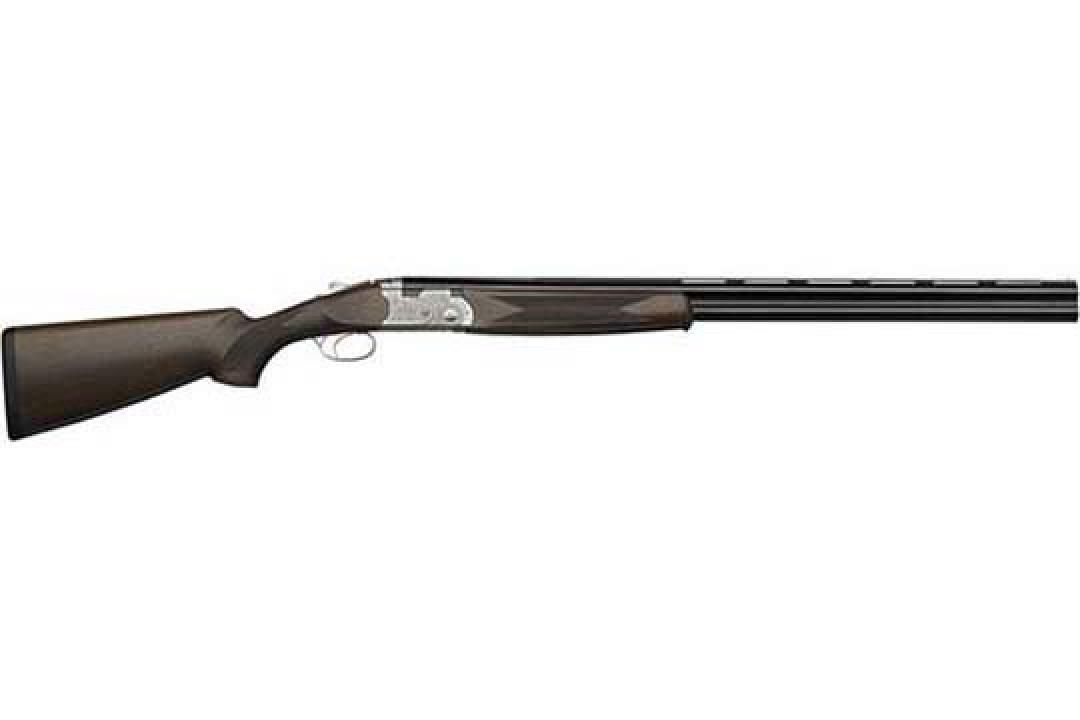
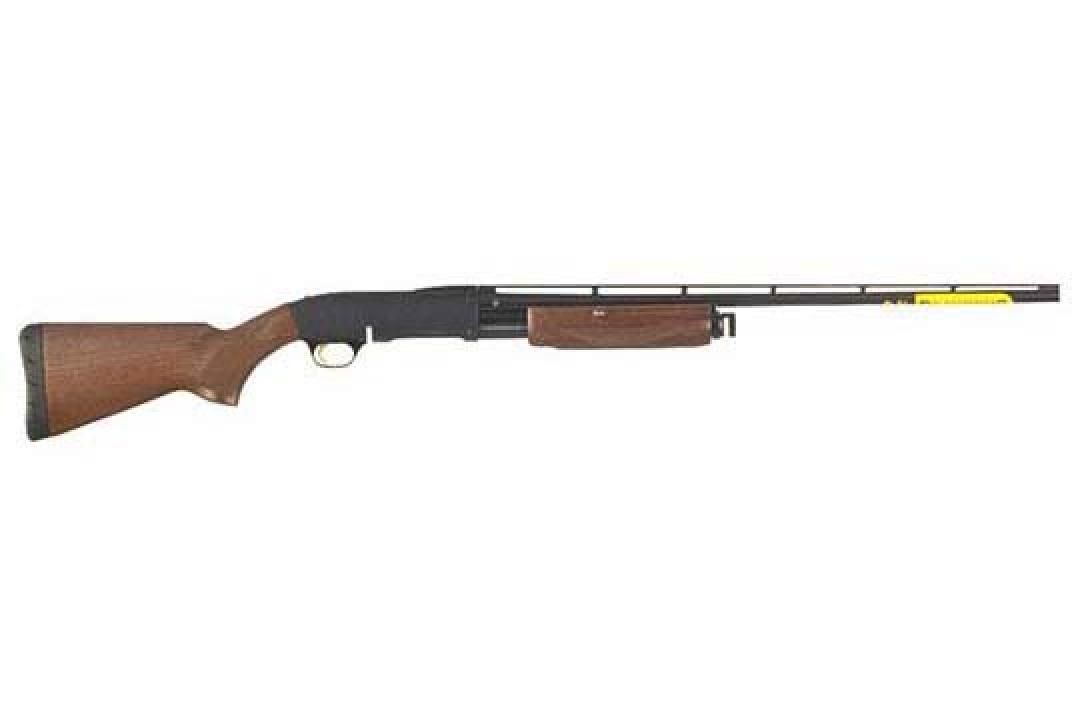
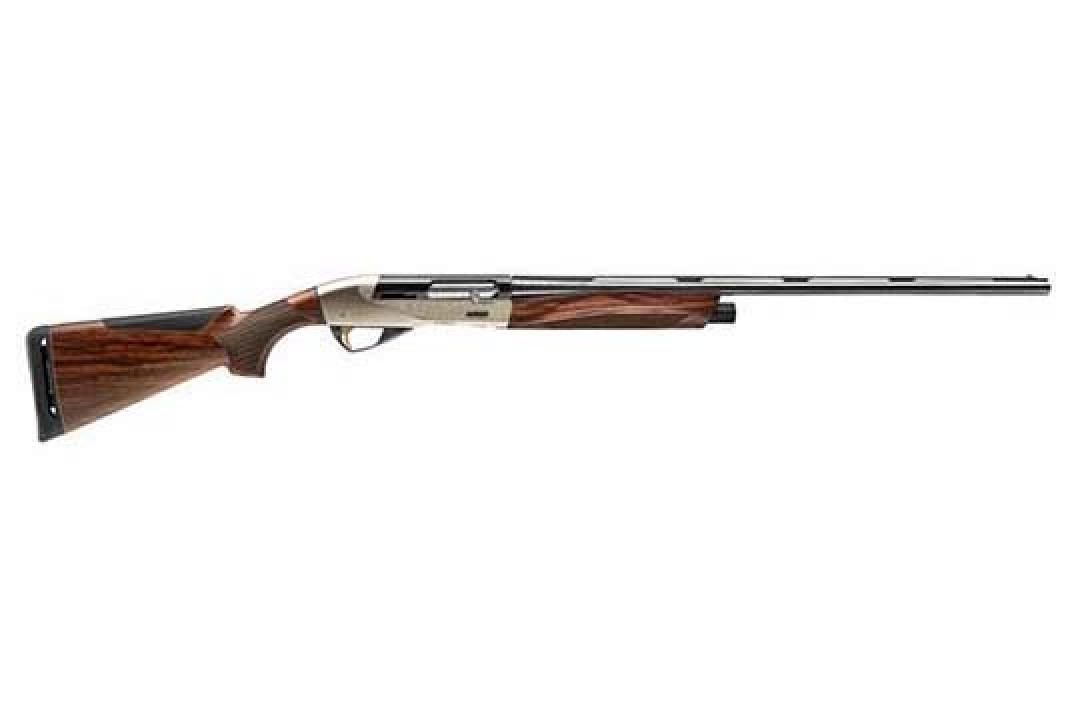
By maker, Browning (52 records), Benelli (40) and Beretta (37) are the three largest, and the over-under list behind them includes Rizzini, Franchi, Chapuis and FAIR. The semi-autos are concentrated in two makers: Benelli and Retay hold 68 of the 102. The pumps are mostly one gun, the Browning BPS, with eight of the thirteen records, and the rest are Remington 870 Wingmasters and 628 pumps from CZ and Akkar.
Of the 275 records that state a barrel length, 258 are 26 inches or longer, and the most common single length is 28 inches with 141 records. These are field and clays guns built to swing smoothly, sized for an adult who already has a mount.
Barrel length
Records
28 in
141
26 in
97
30 in
11
24 in
6
22, 29 or 32 in
12
18.5, 20, 23, 25 or 27 in
8
The 3 inch 28 gauge
For most of its history the 28 gauge was a 2-3/4 inch shell. In January 2016 Benelli introduced its Ethos in 28 gauge with a 3 inch chamber, and Fiocchi supplied what both companies called the industry's first 3 inch 28 gauge load. Field & Stream notes that a 3 inch 28 can be loaded to 20 gauge levels, with loads such as 1-1/8 ounces of lead or 1-1/2 ounces of tungsten shot.
That makes the 28 a more capable hunting gun, and it also erases the one argument for it as a beginner's gauge. A 28 loaded like a 20 recoils like a light 20. In the catalog, of the 181 records that state one chamber length unambiguously, 90 are 3 inch, so roughly half of the catalog is built for the heavier shell.
The same logic is behind the 28 gauge turkey gun. Dense tungsten shot (TSS) lets a small bore carry a lethal pattern to turkey distances, and the catalog holds five 28 gauge guns sold specifically as turkey guns, including Mossberg's SA-28 and Silver Reserve turkey models with 20 and 22 inch barrels. These are specialist tools for experienced hunters.
Who the 28 gauge is for
The 28 makes most sense for the shooter who already hits reliably with a 20 or a 12 and wants a lighter gun to carry: quail and woodcock in thick cover, doves over a field, and skeet, where the 28 has its own event. A shooter who already centres targets gets the light gun and soft shell without paying for the small payload.
For a genuine beginner, the 20 gauge does the same job with fewer catches: its shells are on every shelf and its heavier payload forgives a bad swing. A beginner who wants the 28 anyway should look at the short list of guns built for that buyer: the BPS Micro Midas, the youth SA-28 from Mossberg and the single shots from Charles Daly, CVA and ATI.
Nick Sawinyh - Nick Sawinyh is a father, husband, hobby farmer, and gun enthusiast from Kentucky. He founded GunsNation and writes most of what appears on this blog.